Amazon Agrees to Acquire Decart's Inference Optimization Stack and Team in $7.5 Billion Deal
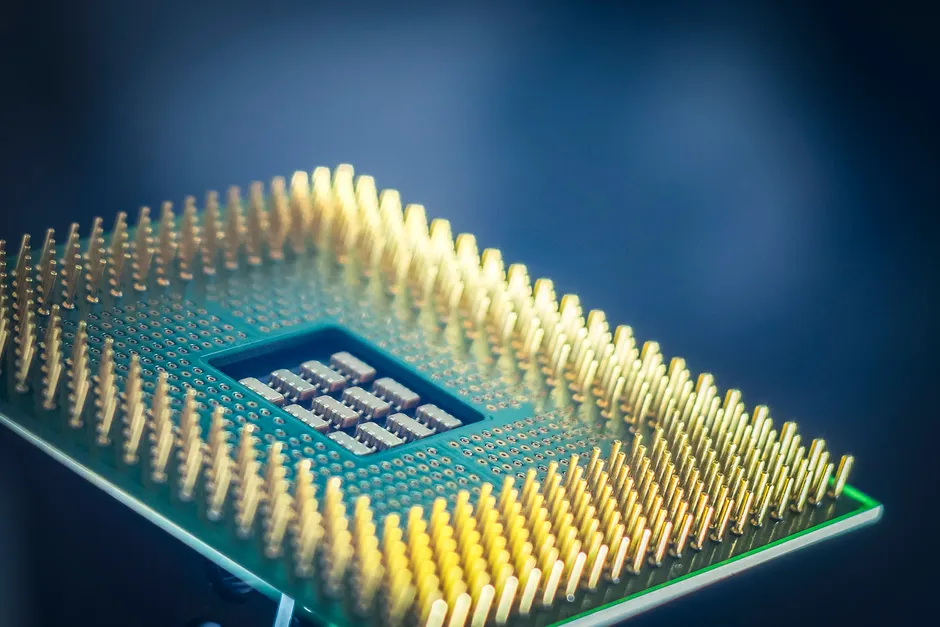
Amazon has agreed to acquire part of Decart, the Israeli AI startup, in a deal that Bloomberg reports at $7.5 billion. TechCrunch reported the agreement on November 23, 2026.
The scope is narrower than a full company purchase. Under the arrangement, Amazon will acquire the technology behind Decart's Decart Optimization Stack (DOS), along with Decart's founding team and its group of AI researchers and engineers. Amazon's announcement describes the transaction in these terms.
DOS is software that helps AI models run efficiently on hardware from Nvidia, Amazon and Google. In practical terms, it is a tuning layer that makes a trained model, the finished program that answers questions or generates content, run faster and cheaper on a given chip. Decart is best known for building interactive, real-time world models, most recently Oasis 3, and for AI video generation tools. The optimization stack is a different product line from those models. The deal brings the stack and its engineers into Amazon, and the broader model business is not part of what Amazon is acquiring.
The timing is tied to Amazon's silicon plans. Amazon has been running its Trainium accelerators, its custom AI chips, in its own data centers, and it is preparing to start selling them to customers as an alternative to Nvidia GPUs. TechCrunch placed the Decart transaction in that context.
In my view, the logic for an accelerator vendor is straightforward. A chip sells on its software ecosystem as much as on its silicon. Teams that have built inference pipelines around CUDA, Nvidia's programming platform, will not move workloads to new hardware unless the compiler and kernel layer brings them close to parity on latency and throughput. Software that runs one model efficiently across Nvidia, Amazon and Google chips lowers the cost of trying something different, which is useful for a company that wants customers to evaluate Trainium on their own workloads. Whether DOS delivers that portability in practice will depend on benchmarks that engineers outside Amazon can reproduce.
The broader context here is a shift in where AI infrastructure differentiation sits. Model architectures are widely published, and training compute is increasingly available through cloud rental. What remains contested is the cost of serving a model at scale, measured in tokens per second per dollar, and the engineering effort needed to port a model from one accelerator family to another. Teams that have spent months hand-tuning kernels for one vendor's hardware know how costly that porting work is. A stack that reduces it can change procurement decisions even when the chip itself is unchanged.
There is also a talent dimension. The acquisition includes Decart's founding team and its researchers and engineers, so the people who built the optimization work are part of the transaction, not only the code. For a company building a merchant chip business, keeping engineers who understand cross-vendor inference performance may matter as much as the software itself.
Amazon has agreed to the acquisition. Trainium sales to outside customers are described as preparation rather than a completed launch. Those distinctions will matter as the deal progresses and as Amazon shows what its chips can do on customer workloads.
For engineers who run inference fleets, the practical question is simple. If DOS-class optimization becomes a standard part of Amazon's accelerator stack, the portability it promises could widen the hardware options available to them. That benefit would appear in lower serving costs rather than in headlines.


