First UL 3700-Certified Plug-In Solar Microinverter Reaches US Buyers
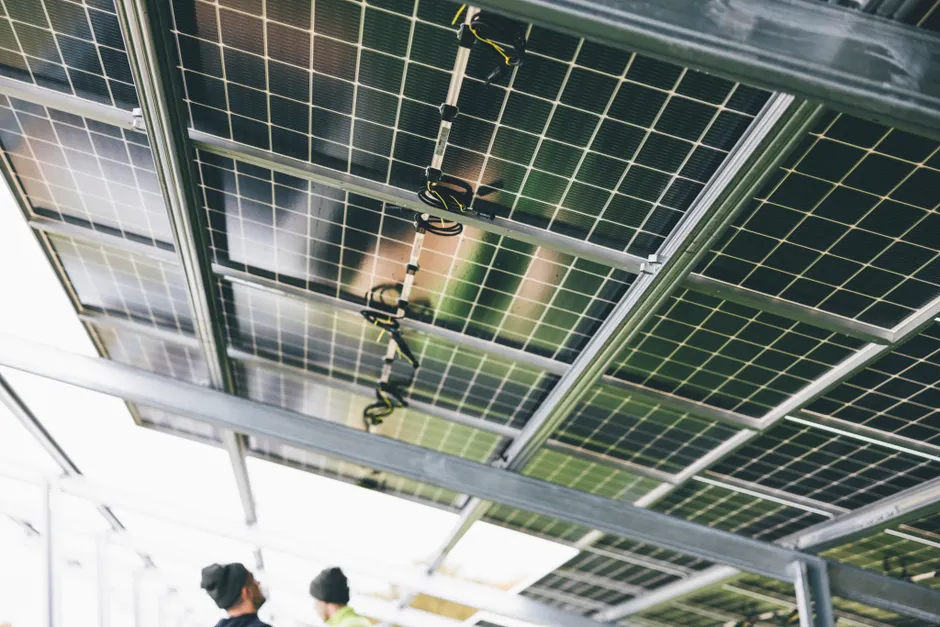
Hoymiles has released the HiFlow Pro plug-in solar microinverter in the United States, making it the first product to meet UL 3700, the North American safety standard for plug-in photovoltaic energy systems. The microinverter is now available to US buyers Engadget.
UL 3700, formally titled "Outline of Investigation for Interactive Plug-In Photovoltaic Equipment and Systems," was released in mid-December 2025 and serves as the first North American safety standard for plug-in PV energy systems, a category often described as balcony solar UL Solutions. In January 2026, UL Solutions launched its testing and certification framework for plug-in solar across the United States, with program evaluation based on the UL 3700 outline UL Solutions.
Hoymiles announced the HiFlow Pro on July 15, 2026 PV Magazine USA, with the company's own product release published the prior day Hoymiles. Engadget confirmed US availability on July 20, 2026 Engadget.
The significance of this launch is architectural rather than purely commercial. Plug-in solar, as the category name suggests, lets a homeowner or renter connect a small solar panel directly to a standard household outlet, bypassing the permitting, inspection, and interconnection processes that govern conventional residential solar installations. A microinverter is the device that converts the direct current (DC) electricity a solar panel produces into the alternating current (AC) that household outlets and the grid use. Until UL 3700's adoption in December 2025, no North American safety standard existed for this class of equipment. The absence meant that products either operated in a regulatory gray zone or were blocked from sale entirely, depending on the jurisdiction and the utility's interconnection rules. UL 3700 provides the testing and certification framework that lets manufacturers bring compliant products to market, and the HiFlow Pro is the first microinverter to clear that bar.
The roughly seven-month gap between the standard's release and the first certified product reaching US buyers is worth noting. Safety standards for electrical equipment typically require hardware vendors to design, prototype, submit for testing, iterate, and certify, a cycle that can easily span a year or more. The fact that Hoymiles moved from standard publication to a shipping, certified product in under seven months suggests either early access to the draft outline or a design that was already largely conformant and needed only incremental changes to pass certification. Either way, the timeline indicates that UL 3700 was not a surprise to manufacturers who had been tracking the plug-in solar category.
The broader context here is that plug-in solar has been a mature consumer category in parts of Europe, particularly Germany, for several years. The German market saw rapid adoption of balcony-mounted, plug-in PV systems after regulatory simplification allowed homeowners to register small systems with their grid operator through a streamlined notification process rather than a full interconnection application. The US market has lagged, in part because the safety-standard void made it difficult for retailers and utilities to accept plug-in systems. UL 3700 addresses that void, and the HiFlow Pro's availability gives installers, DIY-oriented homeowners, and renters a compliant product to build around.
For those tracking distributed energy, the key question is not whether a single microinverter shifts the market. It does not. The question is whether UL 3700 certification opens a viable product category in the US the way analogous regulatory changes did in Germany. That depends on factors the standard alone cannot resolve: state-level interconnection rules, utility cooperation on net metering or feed-in tariffs for plug-in systems, and whether insurers and local building inspectors accept plug-in PV as a routine, low-risk installation.
What UL 3700 and the HiFlow Pro do provide is a foundation. A safety standard plus a certified product means that the conversation about plug-in solar in the US can move from "is this legal?" to "does this make sense for my situation?" That is a necessary precondition for any product category to scale, and it is the precondition that has been missing until now.


