The US-Iran War Spills Across the Gulf: 10 Nights of Strikes and a Widening Map of Retaliation
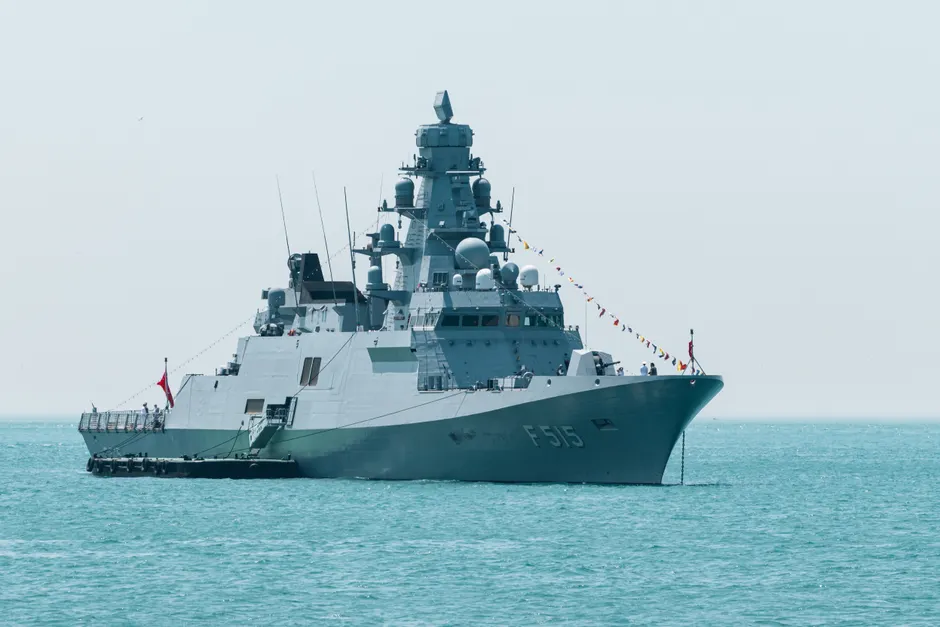
The United States launched its tenth consecutive night of strikes against Iran on July 21, 2026, while Tehran expanded its retaliatory attacks across the Gulf, targeting Kuwait and Jordan. Explosions were reported in the Iranian cities of Bandar Abbas, Qeshm Island, Chabahar, and Konarak (Al Jazeera). The exchange is pulling additional countries into a direct conflict that began as a two-sided fight between Washington and Tehran and has steadily drawn in the broader region.
The US Campaign: Scale and Targets
US Central Command (CENTCOM) — the military command responsible for the Middle East — has steadily escalated its operations since early July. By July 19, CENTCOM completed its ninth consecutive evening of strikes, with an official release noting the conclusion of a weekend wave of attacks (CENTCOM). Earlier operational releases detailed the scale of the campaign: approximately 140 Iranian military targets were struck using precision munitions — guided weapons designed to hit specific targets with minimal collateral damage — launched by land- and sea-based fighter aircraft and drones. A prior round on July 7–8 hit roughly 90 targets. KUNA, Kuwait's state news agency, reported that CENTCOM forces specifically targeted Iranian coastal surveillance and air defense facilities, maritime capabilities, and missile and drone assets (KUNA).
Iran Strikes Beyond US Targets
Iran's retaliatory attacks have increasingly targeted neighboring Gulf states, drawing Kuwait into the direct crossfire. According to the Kuwait News Agency, Kuwaiti air defenses intercepted missile and drone attacks on July 17, and continued to respond to hostile Iranian ballistic missiles and drones entering Kuwaiti airspace since dawn on July 18 (KUNA). The Kuwait Armed Forces stated that Iranian attacks continued to target power facilities as of July 19 (KUNA). Kuwait reported another Iranian attack on a water and power plant that caused a fire (CBS News). Reuters separately reported that Iranian media said a power and desalination plant — a facility that removes salt from seawater to produce drinking water — in Kuwait was struck (Reuters.
The geographic scope of Iran's attacks extends beyond Kuwait. On July 8, Iran attacked sites in Bahrain and Qatar in response to US airstrikes (AP News). Iran's Revolutionary Guards — an elite branch of Iran's military that operates semi-independently from the regular armed forces — claimed responsibility for attacks on the Ali al-Salem base in Kuwait and the Sheikh Isa base in Bahrain (Reuters). On July 20, AP News reported that Iran launched attacks on Jordan alongside Kuwait during the tenth consecutive night of US strikes (AP News). An Iranian missile also hit Jordan's Aqaba Airport (The Hindu.
The Strait of Hormuz: The Chokepoint
The strategic center of gravity remains the Strait of Hormuz, a narrow shipping lane between Iran and Oman through which roughly a fifth of the world's daily oil supply passes. Iran declared the Strait closed on July 11, and an unauthorized vessel was hit in the waterway (Reuters). Reuters reported on July 8 that the US military carried out fresh strikes aimed at opening the Strait (Reuters), and on July 17 that the US boarded a tanker near the strait. Former President Trump stated that Gulf investment deals would replace Hormuz fees — the tolls Iran collects from ships transiting the waterway (Reuters.
A Conflict With Deep Roots
The human cost of the conflict has extended to US personnel. An American service member was killed in Iraq during the Iran-US conflict in July 2026 (CBS News.
The conflict's roots trace back to Operation Midnight Hammer, the US operation against Iranian nuclear facilities including the Fordow Fuel Enrichment Plant — a site buried deep underground where Iran enriches uranium. The operation used 30,000-pound GBU-57 massive ordnance penetrator bombs, designed to burrow through reinforced concrete and rock, in their first operational use (Defense.gov. This followed a 12-day Iran-Israel war in June 2026 (Defense.gov.
What the Pattern Suggests
The broader context here is one of incremental but unmistakable regionalization. Iran's decision to strike infrastructure in Kuwait, Jordan, Qatar, and Bahrain, rather than confining its retaliation to US military assets, suggests a strategy of imposing costs on states that host US bases. Kuwait's air defense intercepts and the targeting of power and desalination plants indicate an effort to strain civilian infrastructure and pressure Gulf states to reconsider their security alignments — the web of defense partnerships and basing agreements that countries in the region maintain with Washington.
On the diplomatic front, Lebanese President Joseph Aoun was scheduled to meet with US President Donald Trump at the White House on July 21, 2026 (The Hindu. The meeting occurs as the conflict's fallout continues to reshape regional dynamics, with the Strait of Hormuz functioning as the central chokepoint in an escalating confrontation.


