Pinterest Lets Parents Set How Much AI-Generated Content Teens See
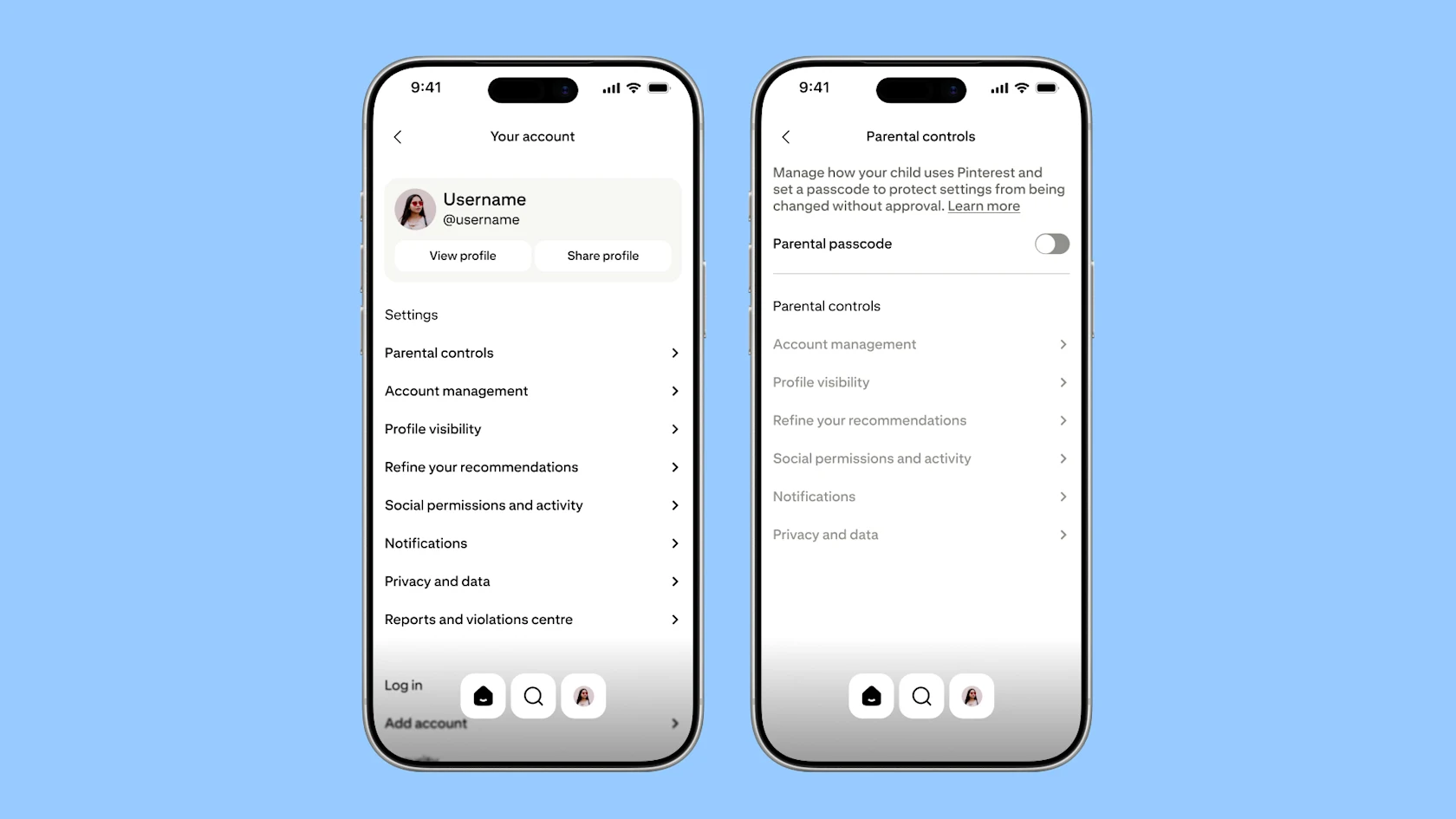
Pinterest has expanded its parental controls so parents can set how much AI-generated content their teenagers see, according to a TechCrunch report published on 24 November 2026. The update is the latest in a series of teen-facing feed controls the platform has built out over the past year.
The expanded settings go beyond the content filter. Parents can now stop videos from auto-playing, a setting that determines whether clips begin playing without a tap. They can also adjust the volume of push, browser, in-app, and email notifications, so the alert frequency for a teen account can be tuned channel by channel rather than switched on or off as a whole.
Pinterest has also redesigned its Parental Controls Page. The stated goal is to make the controls easier to find and configure. The redesigned page also lets parents configure personalized ads settings, placing ad personalization in the same workflow as the feed and notification options.
The AI content control is not entirely new. Pinterest introduced user-level controls in 2025 to limit the amount of AI-generated content in feeds, and the parental settings extend that capability to accounts of teens supervised by a parent. The company's newsroom also carries an article titled "Helping families to navigate controls for teens on Pinterest", which covers the family-facing side of these tools.
In my view, the most useful detail is the granularity. A control with only a blanket on-off switch forces a choice between total exposure and total exclusion. Separate dials for autoplay, notification volume, and the share of AI-generated material in a feed let a parent adjust each one independently, which is closer to how most families actually think about screen time.
The broader context here is classification. A limit on AI-generated content is only as precise as the labeling behind it. The feed must first determine what counts as AI-generated, usually through a classifier (a model trained to sort content into categories), before any slider can act on that determination. Pinterest's announcement, as reported, describes the control, but the reporting does not explain how the labeling works in practice. The effectiveness of the setting will depend on details that technically minded readers will want to test once the feature reaches their own accounts.
Usability is the other question, and the redesign addresses it directly. Parental controls only work if parents can find them and understand them. Consolidating the controls and moving ad personalization into one place reduces the number of menus a parent must navigate. That is a modest change in interface design, but it could matter a great deal for whether the settings get used at all.
Looking at what this makes possible, the update moves feed governance from a platform-wide default toward something a household can shape. Teens' exposure to synthetic media, the autoplay behavior that keeps them watching, and the frequency of their notifications are now separate parameters rather than a single product decision. For engineers building consumer feeds, that points to per-account policy controls, and the classification pipelines beneath them, becoming a standard expectation rather than an add-on.
The change is an expansion of controls, not a verdict on AI-generated content in general. What the announcement establishes is that the levers are now more numerous, more visible, and more finely adjustable than before.


