Trump Says a Pardon for Nvidia's Jensen Huang Is 'an Option,' Not Expected
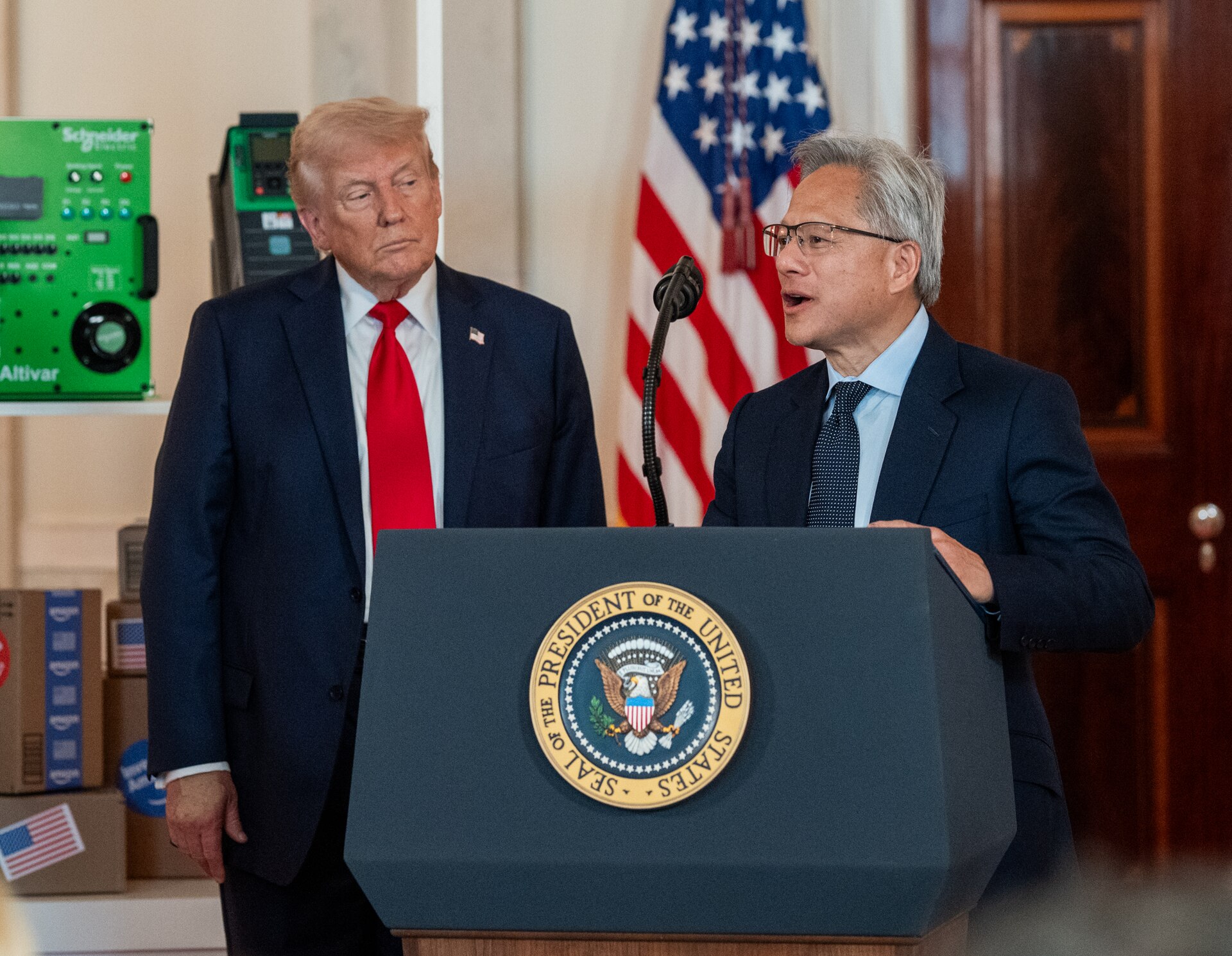
President Donald Trump said on Tuesday that pardoning Nvidia CEO Jensen Huang is "an option," but that he does not think it will be necessary. The remarks came in an interview with the New York Post, and were reported by TechCrunch.
Huang was reinstated as Nvidia's chief executive on Monday, less than two weeks after he had been ousted from the role. The pardon remark therefore arrives in the first days of his return to the top job. Nvidia is the central supplier of accelerators, the specialized chips used for large-scale AI training (teaching a model from vast datasets) and inference (running a trained model to produce answers).
Huang is scheduled to testify at a public Senate Banking Committee hearing next week. Trump said he wants Huang to "just tell the truth" at that hearing. He described Huang as "100% aboveboard" and "very smart," according to TechCrunch.
Asked about Huang's other extramarital affairs, Trump said he did not get into that. He said he preferred to focus on "the business of chips" rather than "the business of sex," according to the New York Post.
Huang also faces questions about his relationship with Alice Huang, an executive with alleged ties to Chinese intelligence. Those questions sit alongside the separate matter of the hearing, and the two are being discussed together in coverage of the interview.
The pardon comment is a statement of possibility, not an action. In the reporting, Trump has not signed or directed any clemency, and the option he described is one he said he does not expect to need. Readers should keep those two categories apart, since a stated option and an executed pardon carry different legal and reputational consequences.
In my view, the hearing is the more consequential event on the calendar. It is the setting in which Huang's own account of the questions about his relationships, and about his company's chip business, would enter the public record. Whatever the White House thinks of the pardon question, the testimony is what the committee, investors, customers and the export-control community will have to work from.
The broader context here is that the chief executive of a company whose hardware underpins much of current AI infrastructure is being discussed in presidential terms, not only corporate ones. For engineers and IT leaders who depend on Nvidia's roadmap and supply, the practical questions are narrower: whether leadership continuity holds through the hearing, and whether the company's public position on China-linked personnel and partnerships becomes clearer once Huang has spoken under the committee's scrutiny. Those answers will come from the hearing record, not from the interview.


