Gritt Exits Stealth With $34M to Automate Solar Farm Construction
Robotics startup Gritt emerged from stealth on July 21, 2026 with $34 million in total funding and two robotic systems already working in the field. The company's $26 million Series A was led by Obvious Ventures, with participation from Union Square Ventures and Active Impact Investment, building on an earlier seed round from First Round Capital, Climactic, Congruent Ventures, and VSC Ventures. TechCrunch
Founded by Carnegie Mellon-trained roboticists CEO Puneet Puri and CTO Vishal Dugar, Gritt takes an unusual approach: it does not build its own robots. Instead, the company rents off-the-shelf hardware — industrial machines like skidders and robotic arms from manufacturers such as Kawasaki — and controls that equipment with its own AI software. The underlying bet is that the real bottleneck in industrial robotics is not the physical hardware but the software that lets machines perceive and navigate messy, real-world environments. That stance aligns with a broader industry trend: the cost of standard robotic arms keeps falling, while the challenge of making them useful outside of factory settings remains the hard part.
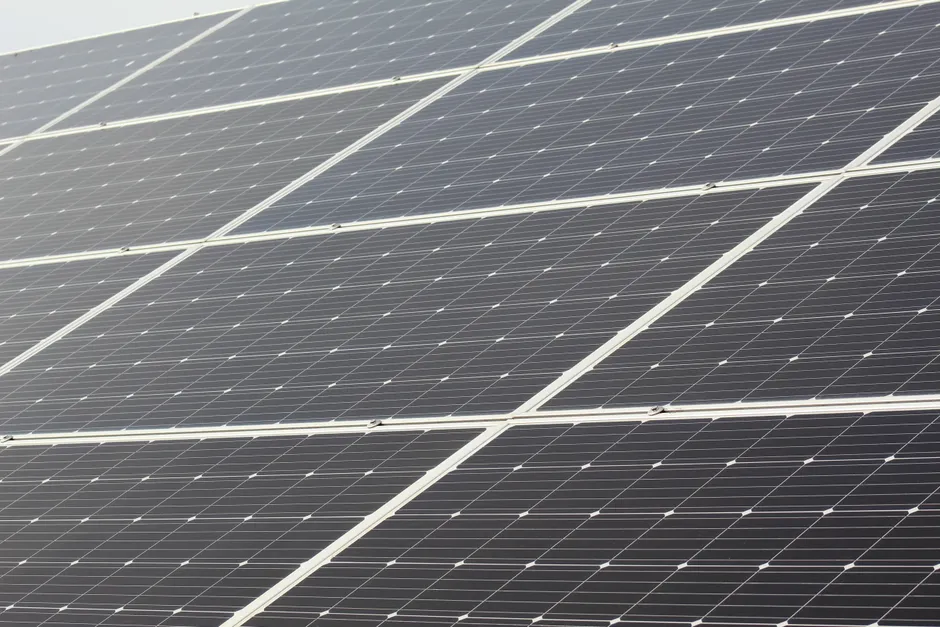
Gritt's first application is solar farm construction. Its systems unload large glass solar panels, carry them to metal frames, and position them with sub-millimeter accuracy so human workers can fasten them in place. A typical eight-person crew installs about 800 panels per day. The same crew working alongside Gritt's systems can install 3,000 to 4,000 panels per day, according to the company. Two systems are currently operating in the field, and Gritt plans to scale to 48 deployed systems within the next six months.
The pipeline behind that ramp is substantial. Gritt is contracted to help install 2.8 gigawatts of solar panels over the next 18 months. Its customers include three of the top 10 US power construction companies. The investor roster blends climate-focused funds (Climactic, Active Impact, Congruent) with mainstream venture firms (First Round, Union Square Ventures), suggesting the company is being treated as both a climate infrastructure play and a general-purpose robotics bet.
Gritt is not alone in targeting solar installation. Competitors include Luminous Robotics, Cosmic, and China's Trinabot, each working on variations of the same problem: placing heavy, fragile solar panels at scale. The competitive landscape is early, with no dominant design or clear market leader.
Gritt's positioning — described by TechCrunch as "robots to build solar plants, then everything else" — signals ambition beyond solar. The software-first, hardware-agnostic design could, in principle, transfer to any construction or industrial task where heavy lifting in semi-structured environments is the bottleneck. The open question is whether Gritt's AI models can generalize beyond solar panel placement, where the task is relatively well-defined, to messier and more varied industrial settings.
The deployment metrics are the strongest signal in the announcement. Two fielded systems and a 2.8 GW contracted backlog give Gritt more validation than most robotics startups can point to at this stage. The claimed 5x throughput improvement, if it holds across the planned 48-system fleet, would meaningfully change the economics of utility-scale solar construction — a sector where labor shortages and slow installation speeds regularly delay projects.
The risk worth tracking is execution. Scaling from two systems to 48 in six months is an aggressive operational ramp by any measure. Field robotics has a long history of systems that perform well in controlled demonstrations running into friction when deployed across varied sites, weather conditions, and panel designs. The 2.8 GW backlog is contracted work, but contracted scope and delivered scope are different things. How many of those 48 systems are actually hitting the claimed throughput figures in real field conditions by early 2027 is the metric that matters.
For now, Gritt has arrived with a credible technical thesis, meaningful early traction, and enough capital to test its scaling hypothesis. The solar construction market needs exactly what the company is building — more panels installed per crew hour — and the competitive field is still wide enough that no incumbent has locked the category.


