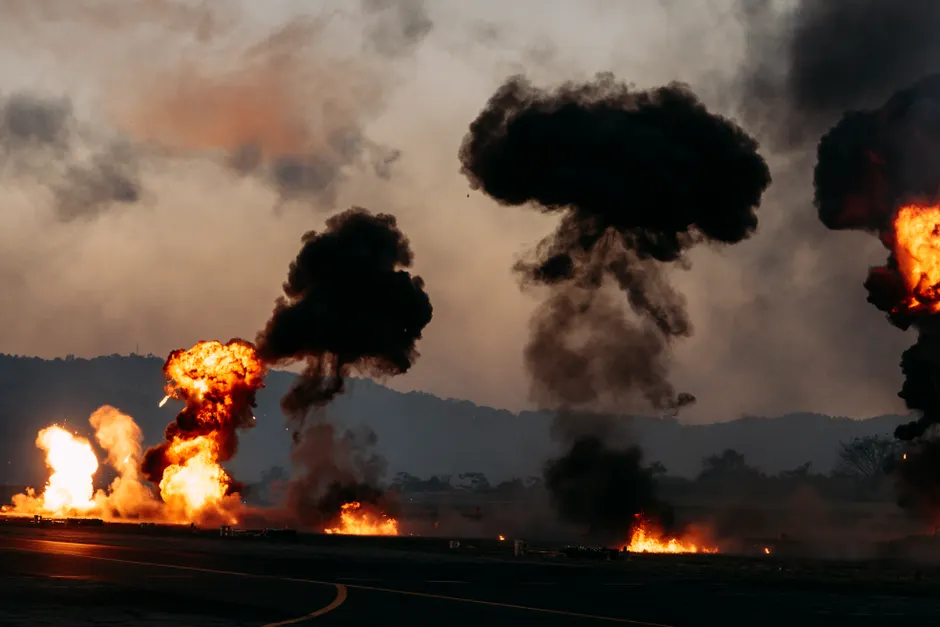
US Army Declares Iowa Lead Azide Detonation a Success

US Army officials have described a controlled detonation at an Iowa installation as tremendously successful, saying the result wildly exceeded their expectations. The operation was meant to destroy 68 drums of lead azide, a volatile compound that had deteriorated over time. According to the Al Jazeera report, the blast took place at 10:15am (16:15 GMT) and destroyed roughly 4,500 kg (10,000 lb) of the material.
Major General Eric Shirley, the Army official in charge of the disposal effort, said overhead footage showed that all of the barrels had been definitively removed. He said there were no secondary explosions, no kick-out and no damage to infrastructure in or around the installation.
To manage the blast, the Army used earthworks, foam barriers and gel blocks, which were meant to absorb the shockwave and the toxic fallout. Preliminary data from real-time air monitors run by the Environmental Protection Agency (EPA), the US federal environmental regulator, reported no detection of airborne lead anywhere in the region after the detonation.
Detonating lead azide breaks the compound down into nitrogen gas and metallic lead. Lead does not biodegrade and cannot be chemically broken down, so it remains in the environment. It is also a potent neurotoxin, meaning a poison that damages the nervous system, and it poses its sharpest risk to children and pregnant women.
Scott Smith, an independent environmental testing expert, said the EPA should also test for breakdown products and for stabilizers and plasticizers containing lead azide. He said some of these substances are endocrine disruptors, which interfere with the body's hormone system, and that some are cancer-causing.
Illinois House Representative Mike Quigley, a member of the US House of Representatives, called the holiday-eve scheduling of the detonation and the lack of communication around it unconscionable.