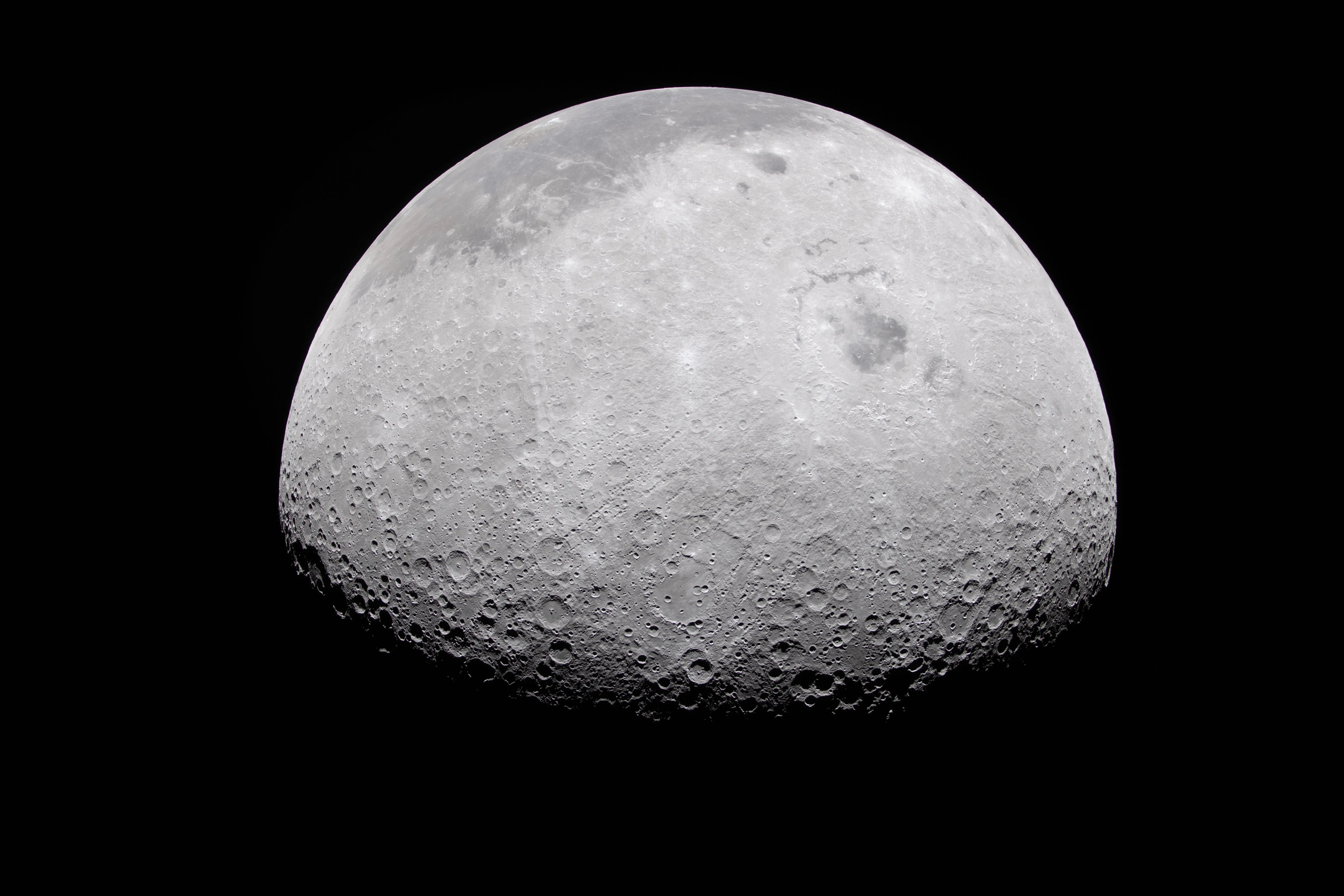
ESA's Hera Images the Crater NASA's DART Left on Dimorphos

The European Space Agency's Hera spacecraft has begun capturing images of the aftermath of NASA's DART impact on the asteroid Dimorphos, and the crater left by the 2022 collision extends across the entire width of the moonlet. ESA's findings, as reported by Engadget describe a feature roughly the size of a sports stadium.
NASA's DART spacecraft struck Dimorphos in a controlled crash in 2022. The impact excavated a crater that is now the most detailed physical record of the test available to the planetary science community. Hera, operated by ESA, has been observing the site from about 25 to 30 km away. It uses three instruments: the Asteroid Framing Camera, the Hyperscout H hyperspectral imager (a camera that records many narrow wavelength bands, which reveal what a surface is made of), and the Thermal Infrared Imager, which maps surface temperature. Patrick Michel, Director of Research at France's CNRS, is Hera's principal investigator.
Two findings matter for modelers. First, the impact did not alter the fields of boulders covering the rest of Dimorphos, so the damage appears confined to the crater region. Second, ESA found that the impact sent Dimorphos tumbling in its new orbit. Both Dimorphos and its parent body Didymos are surrounded by hundreds of orbiting boulders, a detail the new imagery places in sharper context.
ESA plans to move the spacecraft closer to Dimorphos and Didymos in December, a manoeuvre intended to produce higher-resolution images of the impact site. That plan is forward-looking, and the closer images have not yet been captured. In January, Hera is due to deploy two shoebox-sized CubeSats (small satellites built to a standard form factor), Juventas and Milani, which are planned to operate in the asteroid system.
Each CubeSat has a distinct role. Juventas will use radar to probe the interior of the asteroid, and it is expected to eventually land on the surface. Milani will prospect asteroid dust and other material surrounding the bodies. Together, the two instruments would shift the mission from surface imaging toward measurements of what Dimorphos is made of and how it is assembled.
In my view, the tumbling is the most consequential detail. A kinetic impact that changes an asteroid's orbit is one thing. One that also sets the body rotating in a new way adds a term that any future deflection model has to account for. The crater shows where the energy went, while the untouched boulder fields show how far the disturbance did not reach. Both observations constrain the physics more tightly than either would alone.
The broader context here is the question DART was built to answer: whether a spacecraft can change the path of an asteroid. The Hera data move that question from a single measured orbital change toward a detailed structural account of a target that has been hit once. A radar profile of the interior, if Juventas delivers one, would show modelers the rubble-pile architecture beneath the crater, the information needed to predict how a similar impact would behave on a different body.
For the engineers and scientists on Hera, the next few months bring higher-resolution imaging, the CubeSat deployments, and the first operations of two small spacecraft near a binary asteroid system. Each step depends on the spacecraft performing as planned in a dynamic environment, and each adds to a dataset that did not exist before the 2022 impact.