Nvidia Pauses Server Shipments to Four Southeast Asian Countries
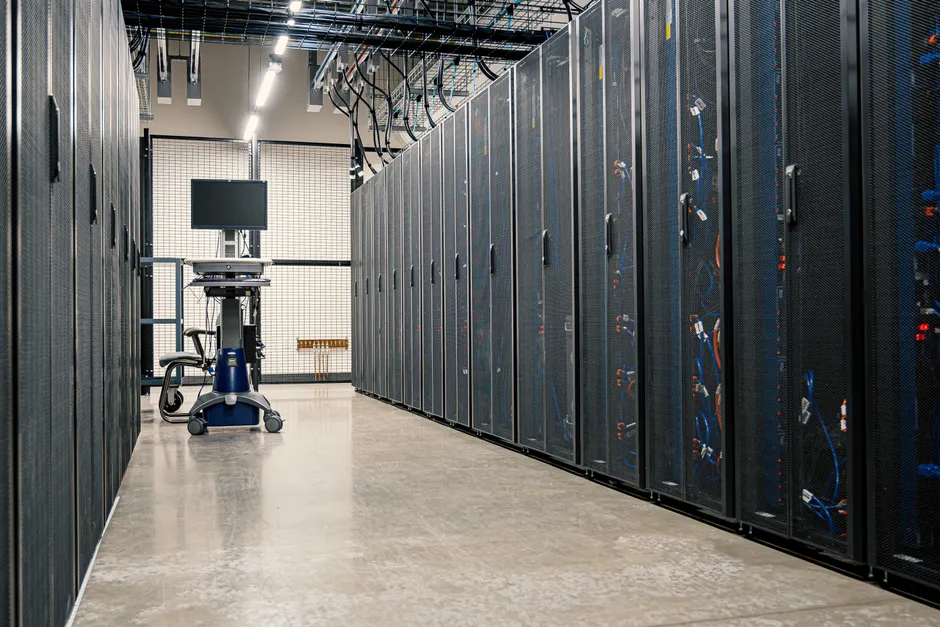
Nvidia has told manufacturing partners, including Dell and Super Micro, to pause server shipments to Malaysia, Singapore, Thailand and Indonesia. The company has not said how long the pause will last. According to TechCrunch, which attributed its report to the Wall Street Journal, the pause allows Nvidia to assess whether its regional partners are meeting U.S. export requirements.
The scope is narrow in one respect and broad in another. It covers four countries rather than a single customer or product line. It is also aimed at the server builders who integrate Nvidia accelerators (GPUs used for AI workloads) into complete systems, not at the chips alone. For a system integrator, that distinction matters. A server build combines a bill of materials (the full parts list), a chassis, a power and cooling design and a GPU allocation. A hold at the integration stage stops all of it at once, whatever the status of the underlying silicon.
The stated purpose is compliance verification. The pause lets Nvidia determine whether partners operating in these markets are satisfying U.S. export rules. No violation has been attributed to any named partner. With no stated end date, however, partners cannot plan around a fixed window, which is the more immediate operational problem for procurement and deployment teams.
The broader context here concerns where compute sits. The Institute for Progress estimates that remote data centers supply about 24% of China's AI computing power, a figure TechCrunch cited in its coverage. Export controls on hardware apply to racks inside a given jurisdiction. Capacity that sits outside a controlled country but is reachable by end users elsewhere falls outside that net. The pause does not, on the reporting available, address remote access directly, and it should not be read as doing so. The figure does suggest that regional data center operators and their suppliers are likely to face closer scrutiny over where systems end up and who ultimately uses them.
Several questions remain open. Nvidia has not described the criteria it will apply to its partners, and the reporting does not indicate whether shipments already in transit are affected. Partners will need to document end-customer identity, deployment location and any downstream resale. How quickly they can produce that documentation will probably determine how fast flows resume.
In my view, the more useful reading for engineers and buyers is that this is a compliance workflow running through the supply chain, not a product decision. Vendors with clean end-user records and auditable shipment chains will be better placed to restart quickly than those that have treated export paperwork as a formality. It is a dull lesson, and the industry has had to relearn it with each tightening of controls. If the review is narrow and concludes quickly, the disruption will be a matter of weeks. If it widens, the question becomes how much regional AI infrastructure can be built with verifiable provenance, and what that costs in time.
For now, the verified position is simple. Nvidia has asked named partners to hold server shipments to four Southeast Asian countries for an unspecified period while it assesses export compliance. Everything beyond that is still to be established.