US-Iran War Escalates: Pickaxe Mountain Threat, Gulf Oil Crisis, and a $37.5 Billion Price Tag

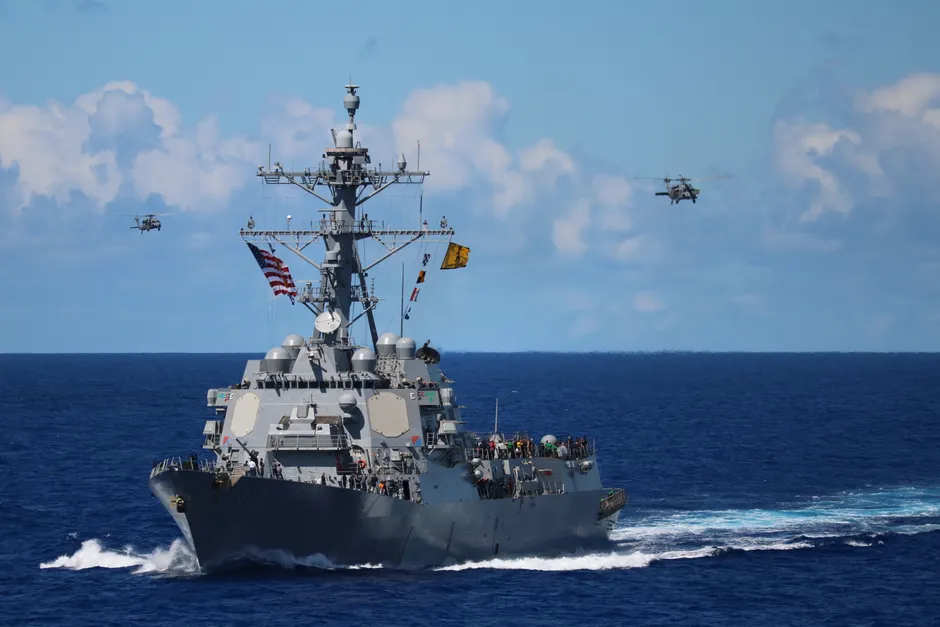
The US military completed its 11th straight night of strikes on Iran on July 22, 2026, hitting aircraft hangars and drone storage sites. President Donald Trump warned that the campaign would intensify and pledged to "soon" target the area near Pickaxe Mountain "very heavily." The underground fortified site sits near one of Iran's primary nuclear enrichment facilities — places where uranium is processed to higher levels of purity for either civilian power or weapons. Iran's military leaders have said that striking it would constitute a major escalation.
Trump first publicly referenced Pickaxe Mountain on July 13, telling reporters the US would "take out" the site and continue hitting Iran hard, according to Reuters. He sharpened that warning on July 21, using the phrase "We'll be hitting that area pretty soon, and very heavily," as reported by ABC News. CNN circulated the remark across its official Facebook and Instagram accounts on July 22. The exact medium through which Trump issued the July 21 threat has not been specified in the available reporting.
Pickaxe Mountain is an Iranian nuclear-linked site currently under construction, according to ABC News. Al Jazeera published an explainer on July 14 examining the site, and Reuters followed with its own explainer on July 15. The site's proximity to one of Iran's primary enrichment facilities gives it particular strategic weight in the context of the broader US-Iran war, which is centered on the battle for control of the Strait of Hormuz.
The Strait of Hormuz is a narrow waterway at the mouth of the Persian Gulf through which roughly a fifth of global oil consumption normally passes. It is currently blocked. Saudi Arabia has been relying on a pipeline to the Red Sea to export crude oil, a workaround that now faces its own threat. Yemen's Iran-aligned Houthis — an armed group that controls parts of Yemen and has ties to Tehran — announced a naval blockade on Saudi Arabia, opening a second front in the disruption of Gulf energy flows. The combination of a blocked Hormuz and a Houthi blockade of Saudi maritime access leaves the kingdom's export capacity dependent on a single overland corridor to the Red Sea.
Oil markets are pricing the squeeze. Brent crude, a global oil price benchmark, traded at $92.09 a barrel on July 22, up 1.2% and its highest intraday price since June 11. West Texas Intermediate, the US benchmark, climbed 1.1% to $85.23 the same day. Both figures reflect the compounding risk of two simultaneous disruptions to Gulf oil transit.
US Secretary of State Marco Rubio told Southeast Asian foreign ministers that Iranian control of the Strait of Hormuz would set a dangerous precedent with repercussions beyond the Middle East, framing the conflict as a global maritime-security issue rather than a regional dispute. The appeal to ASEAN — the Association of Southeast Asian Nations, a 10-member regional bloc — signals an effort to build a broader diplomatic coalition around freedom of navigation in the Strait.
The war's financial and human costs continue to mount. US Defense Secretary Pete Hegseth said the campaign has cost $37.5 billion so far, an increase of nearly $8 billion since the last public estimate. More than 500 US troops have been wounded, according to a US official cited by the Associated Press. No fatality figure was provided in the available reporting.
On the diplomatic track, Iranian Interior Minister Eskandar Momeni visited Pakistan, which has been functioning as a key mediator in the conflict. The visit suggests at least one backchannel — an informal, behind-the-scenes line of communication — remains open, even as the military tempo on both sides appears to be accelerating rather than stabilizing.
In a decision seemingly unrelated to the military campaign, Trump said he would authorize the resumption of direct US airline flights to Lebanon, suspended since the 1985 TWA hijacking. How this fits into the broader US regional posture, if at all, remains unclear from the available facts.
The broader context here is one of several converging pressures. Trump's Pickaxe Mountain threat has been repeatedly telegraphed across multiple platforms and dates, suggesting either deliberate signaling designed to pressure Tehran or a policy commitment being publicly locked in. Iran's characterization of such a strike as a "major escalation" establishes the red line that any actual attack on the site would test. The Houthi blockade of Saudi Arabia extends the conflict's geography from the Strait of Hormuz to the Red Sea corridor, and the $37.5 billion cost figure, growing at roughly $8 billion per reporting cycle, places the war on a fiscal trajectory that will eventually intersect with domestic political constraints in Washington. Whether the Pakistan-mediated channel produces a de-escalation off-ramp before any strike on Pickaxe Mountain is the variable most likely to determine whether this conflict remains contained to its current scope or broadens further.