US Eases Nuclear Guardrails in Saudi Arabia Deal, Raising Regional Arms Race Concerns

The United States is removing key non-proliferation restrictions from a proposed civil nuclear cooperation agreement with Saudi Arabia, according to a document cited by Reuters on February 19, 2026. The shift would allow Riyadh to pursue sensitive fuel-cycle activities — specifically uranium enrichment and plutonium reprocessing — that previous US administrations had sought to block. Those two processes are the main pathways to producing fissile material, the core component of nuclear weapons.
Under the Trump administration, Saudi civil nuclear talks were delinked from diplomatic normalization with Israel, according to two sources cited by Reuters in May 2025. Previously, US nuclear cooperation had been conditioned on Saudi recognition of Israel. Separating the two tracks meant the nuclear file could advance regardless of progress — or its absence — on the Israeli-Palestinian front. The Economic Times separately reported that the advancing US-Saudi nuclear deal was raising Israeli concerns, though that report was undated and should be weighted accordingly.
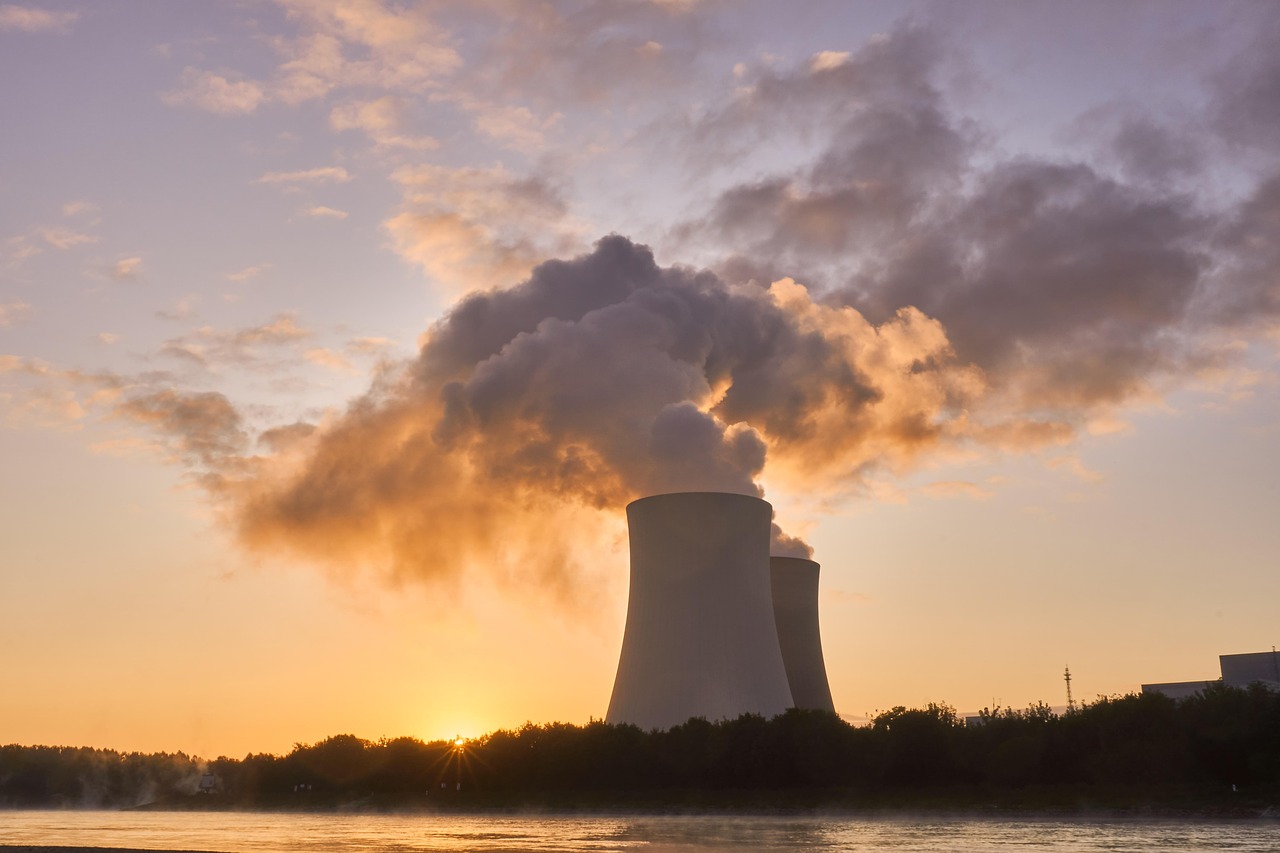
Saudi Arabia, the world's top oil exporter, wants to build nuclear reactors to meet rising domestic energy demand. A US-Saudi civil nuclear agreement — known as a "123 agreement" after Section 123 of the Atomic Energy Act — would put American industry in a strong position to win contracts to build those power plants. A Reuters explainer in May 2025 noted the commercial stakes: a Saudi reactor program would be one of the largest new-build markets available to Western vendors, competing against Russian and Chinese state suppliers who operate without the congressional oversight that governs US nuclear exports.
The guardrails being removed relate to conditions traditionally attached to a 123 agreement. These typically require the partner country to forgo uranium enrichment and plutonium reprocessing. The February 2026 Reuters report, citing the document, indicates the US is prepared to relax those constraints. In April 2026, Ynet News reported via its official social media channels that the proposed deal — specifically its allowance of uranium enrichment — was raising alarm in the region, with critics warning it could trigger a regional arms race.
The Brookings Institution flagged exactly this risk in an April 2024 analysis of a prospective US-Saudi civil nuclear agreement. The think tank noted the dangers of permitting indigenous enrichment in a region where multiple states have latent or active weapons ambitions. Its assessment predates the most recent diplomatic developments but frames the proliferation calculus — the cost-benefit analysis of whether to build nuclear weapons — that US and regional policymakers are now working within.
The strategic environment shifted further in September 2025, when Saudi Arabia signed a mutual defense pact with Pakistan, a recognized nuclear-weapon state that sits outside the Nuclear Non-Proliferation Treaty. According to the Associated Press, the pact was signed after Israel's attack on Qatar. The agreement establishes a formal mutual defense commitment between Riyadh and Islamabad, adding a layer of nuclear-adjacent security to Saudi defense posture that did not previously exist in formal terms.
The broader context here is that the convergence of these developments — a US nuclear deal with loosened non-proliferation conditions, the delinking from Israeli normalization, and a formalized defense pact with Pakistan — creates a configuration that proliferation analysts have long identified as a potential cascade trigger. If Saudi Arabia secures enrichment rights under a US agreement, neighboring states may assess that they face both motive and opportunity to develop comparable capabilities. The Ynet reporting in April 2026 suggests this concern has already begun to register regionally.
Israeli objections add another pressure point. Israel maintains an undeclared nuclear arsenal and has historically opposed any regional nuclear capability that could erode its strategic monopoly. The delinking of the nuclear file from normalization means that Israel's leverage over the process — to the extent it ran through the normalization framework — has been reduced. The Economic Times reporting on Israeli concerns, while undated, is consistent with the trajectory visible in more recent and more authoritatively dated sources.
For US industry, the calculus is straightforward: a finalized 123 agreement with permissive fuel-cycle terms would open the Saudi reactor market to American firms under a regulatory framework Congress can accept. Without it, the field defaults to Russian and Chinese competitors who face no equivalent legislative scrutiny at home.
The central question for the region is whether a US-Saudi agreement that permits enrichment can be structured in a way that satisfies Saudi demands for sovereign fuel-cycle capability without crossing into weapons latency — the state of being technologically close enough to build a bomb without having done so. The Brookings analysis suggested pathways, including multinational fuel arrangements and enhanced safeguards, but those require political buy-in that the current trajectory — toward removing rather than negotiating guardrails — does not indicate. The Pakistan defense pact complicates the picture further by providing Saudi Arabia with a formal security relationship to a nuclear-armed state, potentially reducing the urgency of an indigenous deterrent even as enrichment capability moves within reach.
The document cited by Reuters in February 2026 reflects a policy direction, not a finalized agreement. Congressional review under the Atomic Energy Act still applies, and any submitted agreement would face a disposition period during which lawmakers could vote to block it. Whether the guardrails remain off, and whether Congress accepts their removal, will shape not just the bilateral US-Saudi nuclear relationship but the proliferation dynamics of the entire region.