Burkina Faso's Military Leader Escalates Confrontation with Muslim Scholars
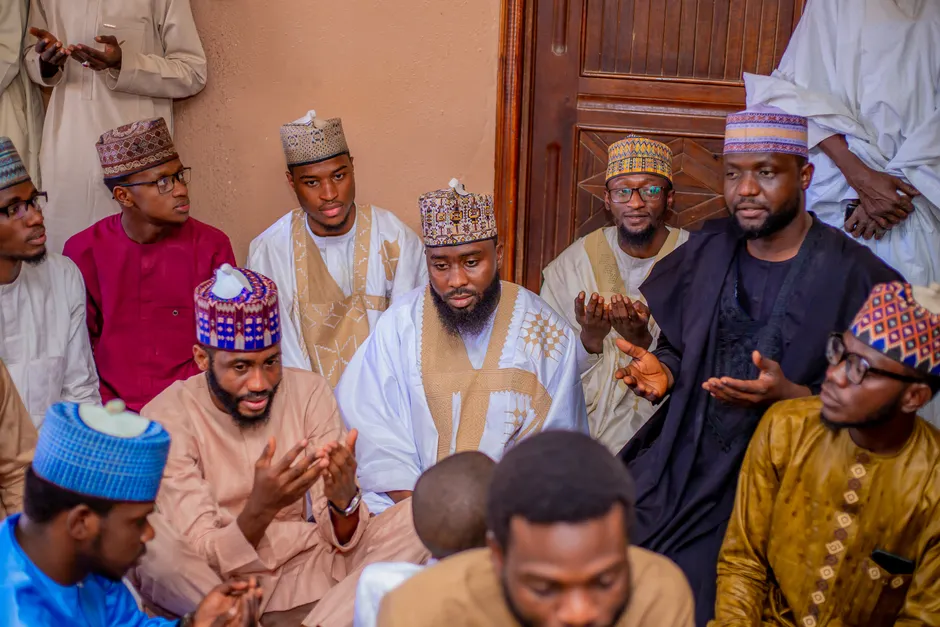
Captain Ibrahim Traoré, Burkina Faso's transitional leader, has intensified a standoff with influential Muslim scholars, declaring that "radical Islam" has no place in the country and warning that "the battle has begun" against those he accuses of promoting religious extremism Al Jazeera.
The confrontation has been building since the spring. On June 20, Burkina Faso's transitional parliament unanimously passed the Religious Freedoms Law, which creates prison sentences and fines for practices classified as religious abuses — including forced begging by children and failures by religious organisations to meet financial transparency rules. The law's approval came after the arrests of at least two prominent imams who had spoken out against the draft legislation.
Imam Mohamed Ishaq Kindo, described as one of Burkina Faso's most prominent Sunni scholars, was arrested in late May after publicly opposing the draft law. When worshippers gathered to demand his release, authorities shut down the largest Sunni mosque in Ouagadougou, the capital, citing public order concerns. AFP reported that roughly 100 of Imam Kindo's supporters were moved to a military camp for what officials called "civic training" Africanews. According to the Dakar-based Timbuktu Institute, a research organisation focused on the Sahel region, Imam Kindo's whereabouts have not been disclosed since the protests were suppressed.
Imam Mahmoud Barro was detained in mid-April in Bobo-Dioulasso, Burkina Faso's second-largest city, under circumstances similar to Imam Kindo's arrest. The two detentions, the mosque closure, and the transfer of supporters to a military facility together form the most visible coercive measures Traoré has taken against religious figures since he seized power.
Traoré has also moved to restrict religious education abroad. He announced plans to recall Burkinabe students studying Islamic law in Arab countries, claiming that more than 800,000 were pursuing religious education overseas without gaining practical professional skills. He warned that students who refuse to return could risk losing their Burkinabe citizenship. In late June, the government issued a directive requiring students seeking to study abroad to obtain prior approval from the Ministry of Higher Education. Traoré has accused foreign powers of exploiting religion to destabilise Burkina Faso, framing the confrontation as a matter of national sovereignty — meaning the right of a state to govern itself without outside interference.
The Timbuktu Institute has assessed that the confrontation marks the collapse of a tacit understanding that had developed between Traoré and Burkina Faso's Muslim community. That understanding was informal and never written into law. It appears to have rested on mutual forbearance: religious leaders refrained from openly opposing the transitional government, and the state refrained from directly intervening in religious affairs. The Religious Freedoms Law, the arrests, and the mosque closure have broken that balance.
The broader context here is a country entering its third year under military rule, with a security crisis driven by jihadist insurgencies — armed groups using religious extremism to justify violence — that have displaced more than two million people. Traoré came to power in a September 2022 coup (a sudden, often violent overthrow of a government) that ousted his own predecessor. His transitional government has pivoted sharply away from Western partners toward closer ties with Russia and other non-traditional partners. The confrontation with Muslim scholars unfolds against this realignment, and Traoré's framing of religious extremism as a foreign-backed destabilisation project echoes rhetoric from neighbouring Mali and Niger, where military governments have similarly blurred the line between domestic religious authority and external interference.
Several factors make this confrontation distinct from ordinary friction between a secular state and religious institutions. The Religious Freedoms Law gives the state enforceable tools — criminal penalties and financial transparency requirements — to regulate religious organisations in ways that go beyond what existed before. The arrest of scholars who criticised the draft law, rather than those accused of specific abuses under it, suggests the legislation may function as a disciplinary instrument as much as a regulatory one. The transfer of 100 supporters to a military camp for "civic training" is a notable choice of venue and language, implying a corrective process rather than a purely judicial one. And the threat of stripping citizenship from students who refuse to return from religious studies abroad would, if carried out, stand as one of the most punitive measures any West African state has proposed against its own citizens on grounds of educational choice.
What remains uncertain is whether the Muslim community will absorb these measures quietly or whether the breakdown of the informal compact will generate sustained resistance. The Timbuktu Institute's assessment suggests the former arrangement is already beyond recovery. Traoré's language — "the battle has begun" — signals he expects confrontation rather than accommodation. In a country already fighting multiple armed insurgencies, opening a second front against domestic religious authority carries risks that extend well beyond the immediate parties involved.