Anduril Industries Lands $5 Billion in New Funding, Joins the Ranks of Mega-Valued Defense Tech Companies

Anduril Industries Lands $5 Billion in New Funding, Joins the Ranks of Mega-Valued Defense Tech Companies
Defense technology company Anduril Industries has closed a $5 billion Series H funding round, bringing its valuation to $61 billion according to the company's announcement. The round was led by Thrive Capital and marks one of the largest venture capital investments in the defense technology sector.
To understand the scale: the company raised $450 million at a $4.6 billion valuation in its Series D round. That means Anduril is now valued at more than 13 times what it was worth at that earlier milestone. This kind of jump signals intense investor enthusiasm for the sector.
Why Defense Tech Is Getting So Much Money
The defense industry is modernizing fast. Traditional defense companies like Lockheed Martin and Raytheon Technologies have dominated military contracts for decades, but they move slowly—developing new weapons systems can take 10 or 20 years. Newer, venture-backed companies like Anduril can move faster, especially on emerging technologies: artificial intelligence, autonomous systems (robots and drones that can operate without a human controlling them in real time), and space-based systems.
Geopolitical tensions have accelerated this modernization. The U.S. military needs new capabilities, and allies worldwide want updated systems. That's driving both government spending and investor interest in defense technology startups.
What Anduril Actually Does
Anduril builds autonomous systems—drones, robotic vehicles, and other platforms—that can see, think, and act with minimal human involvement. The company has developed Lattice, an operating system (software that manages hardware, like Windows or macOS on your computer) that can run on different types of military hardware: small drones, larger autonomous vehicles, and maritime systems.
The core technologies are computer vision (machines learning to "see"), machine learning (algorithms that improve with data), and autonomous decision-making (systems that can decide what to do without asking a human first). These systems use edge computing, meaning the processing happens on the device itself rather than sending data back to a central command center. This matters because in a military scenario, you might not have reliable communication with headquarters, so the system needs to work independently.
Building Hardware at Scale
One of the biggest challenges for defense tech companies is manufacturing. Software companies can scale endlessly on cloud servers. But drones, vehicles, and other hardware require physical factories. Traditional defense contractors are used to building small batches of highly specialized, expensive equipment over many years. Anduril is taking a different approach: designing systems to be modular and standardized so they can be manufactured in larger quantities more quickly.
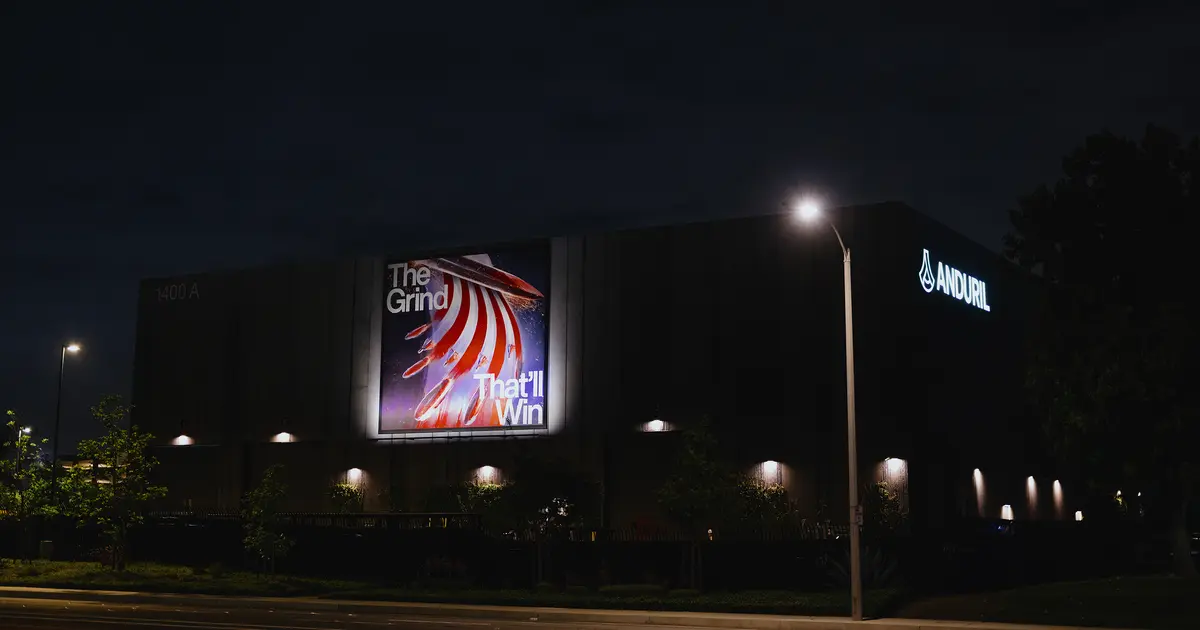
The $5 billion funding gives Anduril the financial resources to build and operate manufacturing facilities at a scale that rivals traditional defense contractors. This is significant because it allows the company to compete for large government contracts that require thousands of units delivered on schedule.
What This Means Going Forward
The broader pattern here is worth noting. In the 1990s, the commercial internet developed its core technologies—the protocols and systems that let computers talk to each other. Those same technologies eventually became foundational to military communications. Today, we're seeing the reverse: machine learning, computer vision, and autonomous systems are being pioneered by commercial companies and startups, and now the military is adopting and scaling them. The technologies that enable consumer products—like facial recognition in your phone—are reshaping how militaries operate, with implications well beyond traditional defense applications.
Anduril now faces the challenge of proving its technology works in real military operations, not just in testing. The company also needs to scale manufacturing to meet demand while keeping the technology reliable under combat conditions. Its $61 billion valuation comes with high expectations: investors are betting the company can capture meaningful market share from traditional defense contractors and deliver systems that militaries actually want to deploy.
For the broader defense tech sector, this funding round sets a new benchmark. It reinforces the investor thesis that software-driven defense systems—rather than the hardware-heavy approach of traditional contractors—can capture significant value from the global defense market, which is worth hundreds of billions of dollars annually.