Husic Breaks Ranks at Labor's National Conference

Ed Husic broke ranks with the Albanese government on the first day of Labor's 50th national conference in Adelaide on July 23, 2026. He backed a gas export tax, endorsed Indigenous truth-telling, and pressed for sharper criticism of Israel's conduct in Gaza — the most public rupture of party discipline at a gathering designed to project unity (The Guardian).
The former industry minister used the conference floor and the ABC's Afternoon Briefing to argue the Labor Party had become "allergic to dissent [and] dispute," warning that the tightly controlled unity on display could backfire. He told the program this approach "does not work in the party's long-term interests." The critique was aimed at the culture under Prime Minister Anthony Albanese, whose opening speech to conference delegates had set the tone: "We choose progress over protest. We choose purpose over chaos. We choose unity over division" (The Guardian).
Behind the scenes, factional powerbrokers negotiated to avert contested debates on the floor. The conference runs from Thursday July 23 to Saturday July 25 at the Adelaide Convention Centre, three years after the 49th conference in Brisbane in August 2023 adopted the 2023 ALP National Platform (ALP).
The Gas Export Tax Push
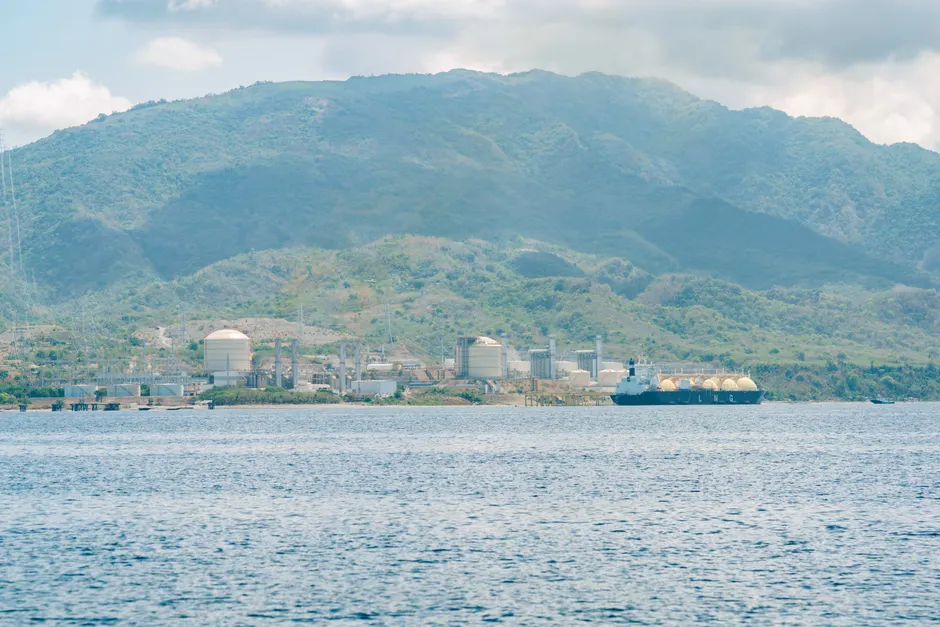
On gas, Husic is playing a long game. He told parliament on March 11, 2026 that most exported gas attracts zero royalties — the payments companies make to governments for extracting publicly owned resources. He later told The Conversation that Australia is "being sold short" on gas exports and should "stare down" the gas sector's arguments against tax changes. Before the conference, he flagged his intention to build momentum for a gas export tax following the inclusion of a new clause in the ALP platform (Hansard; The Conversation; AFR).
The conference did agree to platform language committing Labor to extract a "fairer return" from Australia's natural resources. But Albanese shut down any prospect that the phrasing would translate into a new gas export tax in the foreseeable future. The cabinet is not bound to immediately act on the conference platform — the platform is a statement of values, not a binding legislative agenda — and the government remains reluctant to pursue changes given lingering uncertainty in the Middle East (The Guardian).
Diesel Fuel Credits and Mining
The conference also moved on the diesel fuel tax credit scheme, agreeing to wind back fuel subsidies for big miners — a decision that sets up a potential fight with resources giants. The scheme refunds miners, farmers and other industries 52.6 cents per litre of excise applied to petrol and diesel. Treasury forecasts it will cost the budget $47 billion over four years, rising from $10.7 billion in 2026–27 to $12.8 billion in 2029–30. More than $1 billion a year from the scheme goes to coalmine operators (The Guardian).
More than 350 Labor branches, unions, climate campaigners and mining billionaire Andrew Forrest backed reforms to the scheme. The Labor Environment Action Network (LEAN) secured support to amend the platform to remove tax disincentives to an orderly energy transition, with three federal MPs — Jerome Laxale, Sally Sitou and Ged Kearney — backing the amendment on the floor. Senior ministers had been open to reforming the scheme before the US and Israel's war on Iran and the subsequent global oil shock pushed it off the agenda (The Guardian).
Gaza and the AUKUS Pact
On Gaza, Husic told the conference that "there are elements of fear and loathing that drive the way we respond to these issues" regarding the party's stance. He had previously called on Labor to establish a "red line" on Israel's actions, including its treatment of flotilla activists, in May 2026 (CityNews; The Guardian).
Husic's dissent at the conference fits a pattern stretching back months. In June 2026 he called into question the future of the AUKUS pact — the security agreement between Australia, the UK and the US — and argued Labor needs to renegotiate the deal over second-hand Virginia-class submarines, saying what "sounded and looked like we were being short-changed by the US" prompted his decision. He also said he was "spooked" when he heard Albanese encourage workers to recognise AI was happening — a remark that foreshadowed the jobs fight looming over the conference (ABC; ABC; ABC).
Albanese, for his part, told the ABC the conference would be "a real opportunity to bring the whole Labor movement with us on our direction," and announced on July 23 that the government will create a Fair Work Court (ABC; ABC).
The broader context here is a party machine that has prioritised message discipline above internal debate, and a backbencher with ministerial experience who has decided that discipline has costs. Husic is not a crossbencher or a factional outsider; he is a former cabinet minister who served in the industry portfolio and now sits on the backbench by the government's choice, not his. When someone with that résumé says the party has become "allergic to dissent," it lands differently than a routine backbench grumble.
The question for Labor's strategists is whether Husic's interventions fracture the government's preferred narrative, or whether the conference's choreographed unity holds the line. The platform commitments on resource taxation and diesel credits are real, but Albanese has made clear they are aspirational language, not a legislative program. The gas industry can relax, for now. Whether the backbench pressure Husic is building sustains momentum past Adelaide is another matter entirely — and one the cabinet will have to manage well beyond the weekend.