OpenAI Opens ChatGPT Health to All U.S. Users as Lawsuit Tests Its Medical Disclaimers

OpenAI made ChatGPT Health available to all U.S.-based users over 18 on July 23, 2026, across free, Go, Plus, and Pro plans on web and iOS. The broad rollout arrived the day after a Florida-based pastor filed suit against the company, alleging that ChatGPT Health led him to postpone medical care for a pulmonary embolism, nearly killing him.
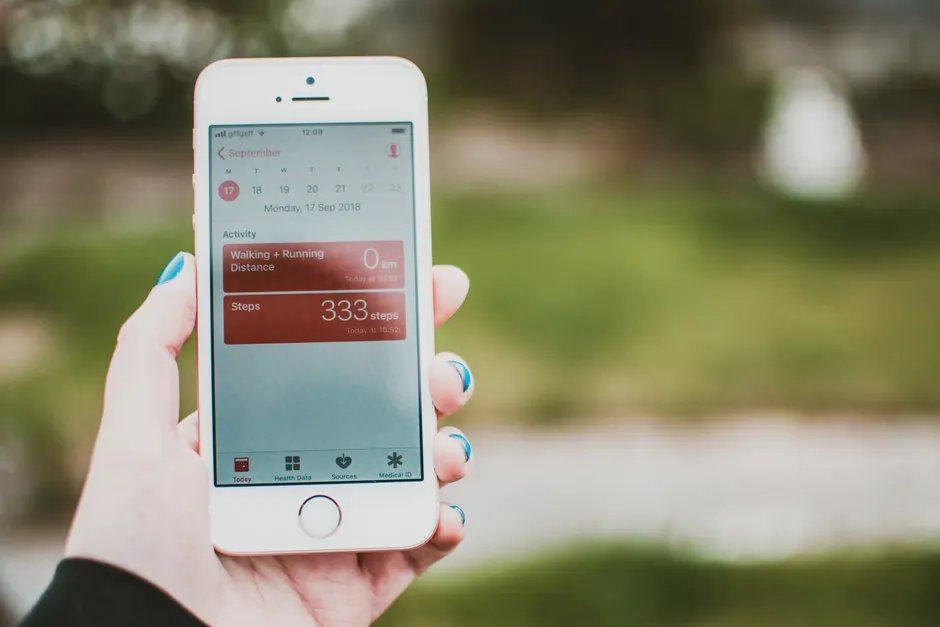
The product launched on January 7, 2026, with connections to electronic health record (EHR) systems including Epic and Oracle Health, direct-to-consumer health platforms like One Medical and Function Health, and wellness apps such as MyFitnessPal, Apple Health, and Weight Watchers. Users can link post-visit notes, care team notes, lab results, medications, and wearable data to the chatbot. During the testing period that began in January, OpenAI found that 70% of health-related queries took place outside the dedicated health hub, which likely informed the decision to fold health capabilities into the general ChatGPT experience rather than keep them separate.
As of July 2026, OpenAI users are asking 300 million health-related queries per week, up from 230 million earlier. The company's latest model, GPT 5.6-Luna, outperforms its predecessor GPT 5.5 on HealthBench, OpenAI's evaluation benchmark for health queries.
ChatGPT Health uses a health-specific memory feature that is separate from standard ChatGPT memory and stays within the Health experience. Users can review and delete these memories through a "View Health Memories" interface. OpenAI does not use ChatGPT Health user data to train its models. All ChatGPT conversations are encrypted both when stored and when transmitted, and information connected through ChatGPT Health receives additional encryption protection. The chatbot asks for user permission before using health information to personalize responses.
OpenAI's terms state that ChatGPT is not intended for use in the diagnosis or treatment of any health condition, and the company says the product "supports, not replaces, professional care."
That disclaimer is doing heavy lifting. The Florida lawsuit, filed approximately July 22, alleges that ChatGPT Health advised the plaintiff not to consult a doctor, leading him to delay treatment for a pulmonary embolism. The complaint arrives at the precise moment OpenAI is removing the gates from a product whose stated use case overlaps with medical decision-making, even as its own terms disclaim that use case entirely.
The broader context here is the gap between OpenAI's internal rhetoric and its public guardrails. Ashley Alexander, OpenAI's vice president of health product, claimed that the company's models are "now capable of reasoning at levels that are better than clinician level." Karan Singhal, OpenAI's health lead, tempered that assertion, noting that "there have been individual studies that have been pointing in that direction." The distance between a marketing claim of superhuman clinical reasoning and a terms-of-service clause that says the product is not for diagnosis or treatment is not a minor nuance. It is the central tension of this product, and the Florida lawsuit is the first legal test of whether a disclaimer of that breadth holds when a user alleges real-world harm.
The privacy architecture is more carefully constructed than the rollout timing might suggest. Health memory isolation from general memory, opt-in personalization, a no-training commitment, and additional encryption for connected data sources each address specific concerns that privacy advocates raised at launch. Campaigners in January flagged the risks of giving a large language model (LLM) access to full medical records, and OpenAI's policy responses track closely to those objections. Whether the implementation meets the commitments is a separate question that independent auditing would need to answer.
The 300 million weekly health queries put this in perspective. That volume already exceeds what many national health information lines handle in a year. People are already asking ChatGPT health questions at scale; the Health product formalizes the intake of structured medical data into those conversations. The product launch in January and the full rollout in July represent OpenAI's effort to build proper infrastructure around behavior that was already happening.
In this author's view, whether that infrastructure is sufficient to handle the edge cases where conversational AI meets acute medical need is precisely what the Florida lawsuit will force a court to examine. OpenAI's disclaimers may or may not prove durable under product liability scrutiny. That is a legal question now, not a theoretical one.
What ChatGPT Health genuinely enables, when it works as designed, is a personalized health interface that pulls together fragmented data from EHRs, wearables, and wellness apps into a single conversational layer. For the majority of queries, where the stakes are lower, that is a real improvement over the status quo of disconnected patient portals and export-by-PDF. The question is whether the product can reliably distinguish the routine from the acute, and whether a disclaimer is enough when it cannot.