Geekbench 7 arrives with real-world media tests and a smarter multi-core approach
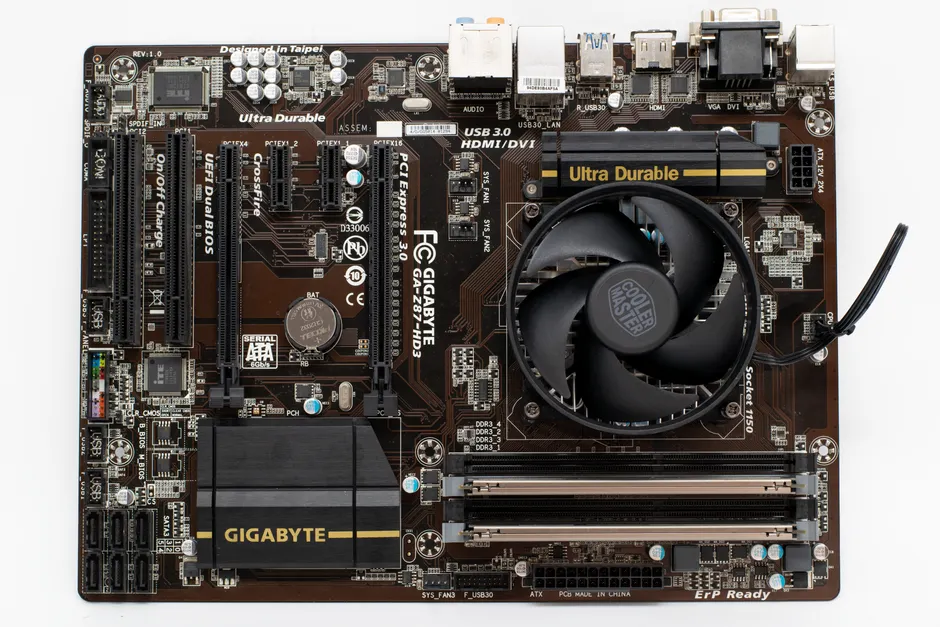
Primate Labs is releasing Geekbench 7, the latest version of its cross-platform benchmarking tool, adding new audio and video codec tests, a redesigned multi-core test, and larger datasets for both CPU and GPU evaluation. The release was announced on July 23, 2026 The Verge.
The most notable addition is a set of audio and video encoding and decoding tests that Primate Labs has modeled around real-world usage: video conferencing, streaming, and content consumption. These workloads include AV1 and Opus codecs, bringing modern, royalty-free media formats into the benchmark suite for the first time. AV1 has gained significant traction across streaming platforms and browser engines over the past several years, and Opus is now the default audio codec in many real-time communication stacks. Their inclusion means the benchmark now exercises the same codec paths that end users encounter daily, rather than relying on older or more synthetic stand-ins.
A codec is software (or hardware) that compresses and decompresses audio or video data. AV1 handles video; Opus handles audio. Both are open and royalty-free, meaning device makers and software developers can use them without paying licensing fees.
The multi-core test has also been redesigned. In Geekbench 7, multi-core benchmarks run multi-threaded workloads only when the modeled real-world tasks are themselves multi-threaded. This is a departure from simply splitting every workload across all available cores regardless of whether the underlying task has a natural multi-threaded structure. The practical effect is that scores should better reflect how a chip performs on tasks that genuinely scale across cores, rather than rewarding raw core count on workloads that would never be parallelized in real software. Primate Labs has published an official CPU Workloads documentation PDF on geekbench.com that details the benchmark's test categories, including data compression tests among other workload types Primate Labs.
Both CPU and GPU tests in Geekbench 7 use larger, more demanding datasets than the previous version. Primate Labs has historically tuned dataset sizes to keep benchmark runtime reasonable while still exercising enough of the memory hierarchy to produce meaningful results. Larger datasets place greater pressure on cache and memory bandwidth, which is where many contemporary architectures, particularly those with heterogeneous core topologies or integrated GPUs, differentiate themselves.
Geekbench 7 scores are not compatible with Geekbench 6 scores. Users comparing results across the two versions will need to re-benchmark on Geekbench 7 to establish a new baseline. The Geekbench Browser, Primate Labs' public results database, will presumably accumulate Geekbench 7 results alongside the existing archive of prior-version scores, though cross-version comparisons will not be valid.
A Geekbench 7 Pro license is priced at $99, with an introductory discount bringing it to $79 through August 6th. The Pro license covers Windows, macOS, and Linux desktop platforms and enables offline benchmarking, meaning results are not automatically uploaded to the Geekbench Browser. For enterprise environments, hardware reviewers, and security-conscious organizations that need to evaluate systems without exposing results publicly, the offline mode addresses a practical constraint that has existed since the browser-upload model became the default behavior.
The broader context here is how Geekbench 7's design choices reflect an industry-wide shift in what matters for system performance evaluation. The inclusion of AV1 and Opus workloads signals that codec performance, much of it now accelerated by fixed-function hardware or dedicated media engines on modern chips, has become a first-order concern for users. A chip that posts strong CPU integer scores but struggles with AV1 decode will deliver a poor experience in exactly the scenarios Primate Labs is now modeling: joining a video call, watching a stream, or consuming media.
The redesigned multi-core test is arguably the more consequential change for the enthusiast and professional audience. For years, benchmark suites have grappled with the tension between synthetic parallelism, which rewards core count, and realistic parallelism, which reflects how software actually behaves. By constraining multi-threaded execution to workloads that are genuinely multi-threaded in practice, Primate Labs is making a statement about what multi-core performance should mean. Whether the industry accepts that framing or continues to lean on more aggressively parallelized metrics will be worth watching as results populate the Geekbench Browser in the coming weeks.
What this enables, ultimately, is a benchmark suite better aligned with the workloads that dominate everyday computing in 2026. The tradeoff is a clean break from prior-version comparability and, for Pro users, a license fee. For hardware reviewers and system architects who rely on Geekbench as one data point among many, re-establishing baselines on Geekbench 7 is a straightforward if necessary step.


