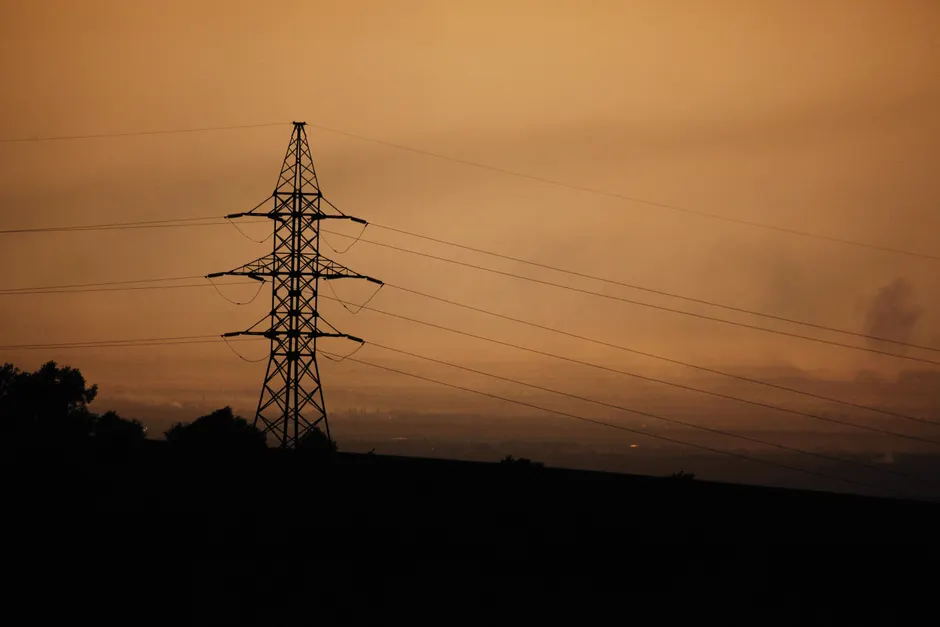
Why Your Electricity Bill Is Rising: Data Centers and the Power Grid

Why Your Electricity Bill Is Rising: Data Centers and the Power Grid
Wholesale electricity prices in the PJM Interconnection — a grid serving 13 states from the mid-Atlantic through the Midwest — jumped 76% in the first quarter of 2026. That means prices climbed from $77.78 per megawatt-hour in Q1 2025 to $136.53 per megawatt-hour in the same period this year. Monitoring Analytics LLC, the grid's independent market monitor, attributes the surge directly to a wave of new data center construction across the region.
For context: a megawatt-hour is a unit of electricity roughly equivalent to what a thousand homes use in one hour. Data centers — the massive facilities that power artificial intelligence, cloud computing, and internet services — consume enormous amounts of power. And they're arriving faster than the electrical grid was designed to handle.
The Real Cost to Electricity Bills
The financial impact is being felt by residential customers. New Jersey residents, for example, have seen roughly 22% increases in electricity prices since 2024, driven largely by the costs of supplying power to these data centers. The cost shows up in two ways: first, through direct price increases at the wholesale level where power is bought and sold; second, through the capacity market — essentially, the long-term contracts power companies sign to ensure they'll have enough electricity available when demand peaks.
In PJM's most recent capacity auction, data center expansion alone added $7.27 billion in supply costs — an 82% increase compared to what costs would have been without that new demand. According to Monitoring Analytics, these cost impacts on customers "have been very large and are not reversible." That means existing customers are subsidizing the power infrastructure expansion that data centers require.
How Fast Is Demand Growing.
PJM's forecasters expect 30 of 32 gigawatts of new electrical demand over the next five years to come from large data centers and similar industrial facilities — a category known as Large Load Additions. For scale, one gigawatt is roughly the output of one large nuclear power plant. Summer peak load growth is projected to average 3.6% annually over the next decade — a pace far above historical norms and one that challenges the traditional way utilities plan for the future.
The grid operator estimates a potential shortfall of 24 gigawatts by 2030 — equivalent to roughly two dozen large nuclear plants' worth of generating capacity. Without new power plants coming online much faster, electricity prices will likely continue climbing.
What Regulators Are Doing
Federal regulators have begun to respond. The Federal Energy Regulatory Commission (FERC) has directed PJM to propose ways to accelerate new power generation, with reports due by January 19, 2026, and a decision expected by June 2026. The core problem is what's called the interconnection queue — a years-long backlog of power plants waiting to connect to the grid.
Historically, the electrical grid evolved gradually, with steady growth in demand and incremental additions of generating capacity. The current data center wave is different: it represents concentrated, massive jumps in demand concentrated in specific geographic regions, arriving faster than utilities and regulators are accustomed to managing.
The Broader Picture
Consider a parallel from the late 1990s. When the commercial internet was exploding, telecommunications networks couldn't keep up with exponential traffic growth. We saw bottlenecks, rising costs, and eventually massive infrastructure buildout. The current power situation echoes that pattern — except data centers are even more geographically concentrated, and each facility consumes staggering amounts of electricity.
For data center operators themselves, this dynamic is reshaping where they build. Rather than picking locations based solely on real estate costs and network access, companies increasingly factor in electricity prices and reliability. Some are now exploring direct deals with power plants or co-locating with renewable energy projects to lock in stable, predictable power costs.
The grid as it exists today was designed for a different world — one where factories and offices added demand gradually and predictably across many locations. Data centers don't fit that pattern. They're step-function load increases: either a facility isn't there, or it suddenly consumes as much power as a small city. This mismatch between how the grid was designed and how it's now being used is creating the price signals we're seeing.
The technology sector's expansion shows no signs of slowing. AI training and cloud migration continue to drive relentless demand for computing power. And that demand will keep pushing on electricity markets until the supply side catches up — if it can catch up fast enough.
How regulators and utilities respond to this challenge in PJM will set a template for other parts of the country. The region is effectively running an experiment in real time: can an electricity market designed for a slowly changing, distributed economy adapt quickly enough to the infrastructure demands of modern computing. The answers being developed here will matter far beyond the 13 states PJM serves.