China's Chipmaking Breakthrough Triggers a 7.5% Plunge in Asian Semiconductor Stocks
Asian semiconductor stocks tumbled on July 28, 2026, with a broad index of regional chip shares falling as much as 7.5% — the steepest one-day drop since early March (HedgeWeek). The selloff hit hardest in South Korea, where Samsung fell 13.4% and SK Hynix dropped 14.7% (Reuters). China's ChiNext 300 index, heavy with tech and semiconductor listings, slid 4.7% the same day (CNBC).
The trigger was a July 27 report from The Information disclosing that China has started mass-producing its own immersion DUV lithography systems through a state-backed firm (The Information). Reuters confirmed the reporting the same day (Reuters). Tom's Hardware called the development a major breakthrough in semiconductor manufacturing equipment (Tom's Hardware).
Bloomberg reported that the global selloff in chip stocks deepened in Asian trading on July 28, identifying China's progress in advanced lithography as the catalyst (Bloomberg). The declines followed losses in prior sessions, extending a rout that had already been pressuring valuations across the global chip sector.
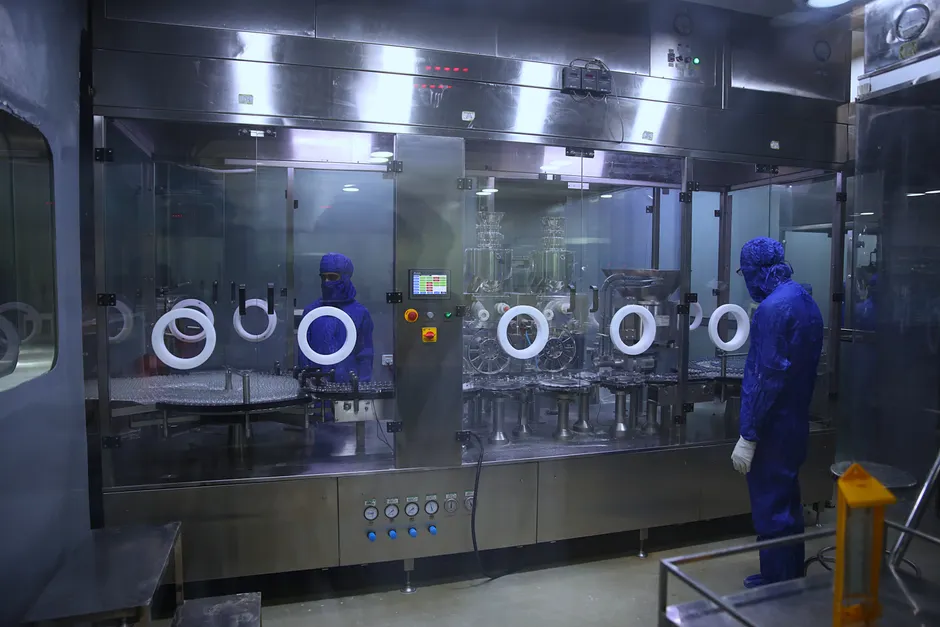
Here is why this matters. Lithography is the step in chipmaking where light is used to print microscopic patterns onto silicon wafers — the finer the pattern, the smaller and more powerful the transistors. DUV stands for deep ultraviolet, the type of light used. Immersion DUV systems use a layer of water between the lens and the wafer to sharpen the pattern, and with a technique called multi-patterning (printing overlapping patterns in multiple passes), they can produce chips with features as small as roughly 7 nanometers. Until now, ASML, a Dutch company, has been the only commercial supplier of these immersion DUV tools, and export controls have blocked it from shipping the most advanced versions to Chinese factories.
If a Chinese state-backed entity is now building equivalent machines at scale, the key bottleneck for China's domestic chipmaking ambitions narrows — at least for mature and mid-range manufacturing processes. That is the threat investors reacted to.
The selloff's epicenter in South Korea reflects direct competitive exposure. Samsung and SK Hynix are two of the world's largest memory chip makers, and their share prices embed substantial assumptions about pricing power and market share in DRAM (the memory used in computers and servers) and NAND (the storage memory in phones and SSDs) over the coming years. A China that can supply its own lithography equipment for domestic fabs poses a structural threat to those assumptions. A 13–15% single-session decline in companies of this market value is not routine; it signals a re-evaluation of the competitive moat Korean memory makers have relied on.
The ChiNext's 4.7% drop is more ambiguous. The index is heavily weighted toward Chinese technology companies, some of which would theoretically benefit from domestic lithography independence. The selloff suggests that on July 28, fear of an intensifying U.S.–China technology conflict — and the retaliation or sanctions it could provoke — outweighed any near-term enthusiasm for self-sufficiency. Market participants may also be pricing in the risk that accelerated Chinese progress draws sharper export-control responses, disrupting supply chains for Chinese chip designers who still depend on foreign inputs.
The breadth of the selloff matters. A 7.5% decline in a broad Asian semiconductor index is not specific to one company or one country's competitive position. It implies a regional reassessment of where the semiconductor cycle is heading. If investors are pricing in both increased Chinese supply capacity and the geopolitical friction that comes with it, the compression of valuations across the sector could persist beyond a single trading day.
What remains uncertain is the actual production capability and yield of the Chinese-made immersion DUV systems. Mass-producing the tools is not the same as deploying them in advanced factories at the yields — the percentage of working chips per wafer — required for competitive chipmaking. The gap between manufacturing lithography equipment and operating it at commercial yields is substantial. The market, however, is pricing the threat now rather than waiting for verification, a pattern familiar to anyone who has watched how semiconductor stocks discount geopolitical and technological risk.


