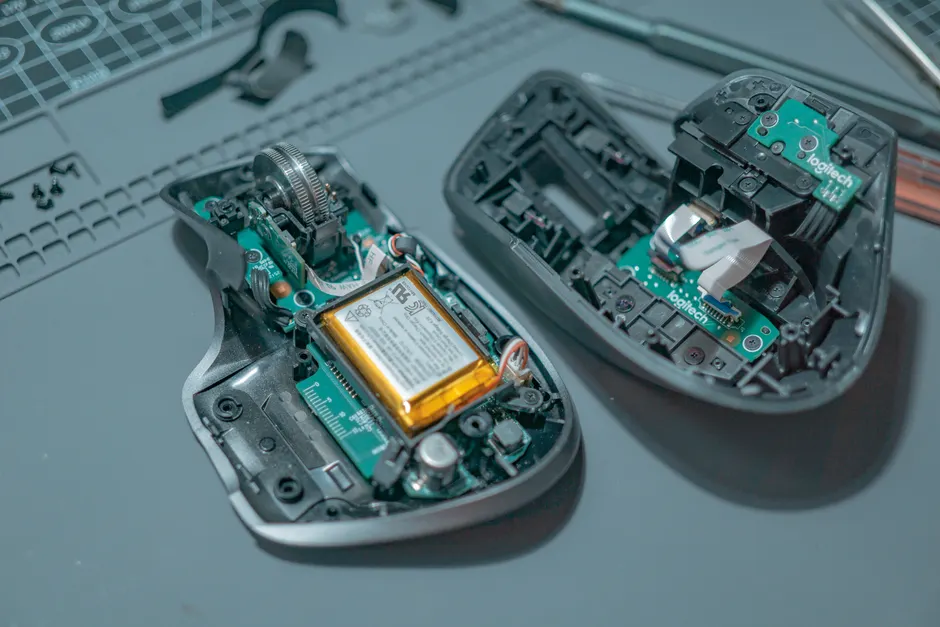
Logitech's New Gaming Chief Says No Handheld Follow-Up to the G Cloud Is Coming Anytime Soon
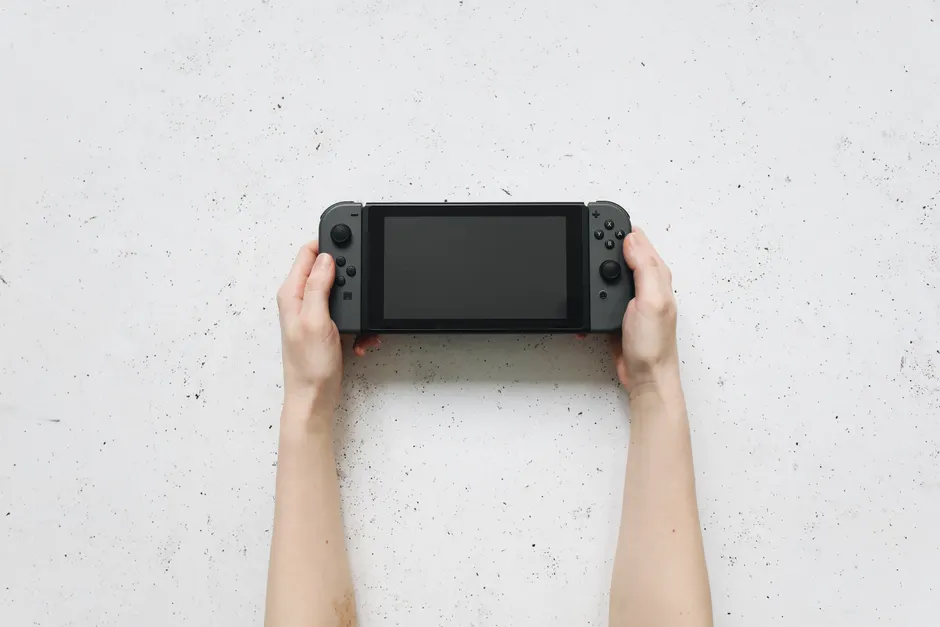
Robin Piispanen, who took over as global head of Logitech G on May 4, 2026, succeeding the retiring Ujesh Desai, told The Verge that Logitech is not currently building a gaming handheld and is uncertain whether it ever should try again after the G Cloud.
Piispanen joined Logitech in 2008. His appointment was announced via the company's official newsroom in April 2026 (Logitech Newsroom).
The G Cloud, a handheld device designed primarily for cloud gaming (playing games that run on remote servers and stream to your screen over the internet), was co-developed with Tencent. It launched in 2022 at $350 with a 7-inch Full HD touchscreen, remappable controls, and a 12-plus-hour battery. It expanded to nine European markets — the UK, Germany, France, Italy, Spain, Norway, Denmark, Sweden, and Finland — in May 2023.
By Piispanen's own assessment, the device's real-world usage tells a stark story: roughly 80 percent of buyers "bought it, tried it, and then it ended up in a drawer."
"We tried something that we really believed in, and it didn't really materialize into the use case people wanted," Piispanen said. He attributed the outcome partly to the broader environment, noting that cloud gaming "really stagnated." He also pointed to cost realities flagged by the industry's largest platform holder: "Microsoft clearly said cloud is expensive, cloud gaming is expensive to run."
The decision to step back from handhelds is grounded in structural economics as much as in the G Cloud's specific performance. A handheld gaming business "only works when you get to a really big scale, and most of the handheld companies also own the content," Piispanen said. He cited Asus as a cautionary parallel, noting that hardware-only players in the space "operate on slim margins and they don't own anything." Logitech's core strengths, in his framing, are design and input — the keyboards, mice, and controllers it has built its reputation on. The company would likely need to partner externally for the rest if it ever built another standalone device.
On the question of a successor specifically: "Right now, in this moment in time, there's bigger things for us to focus on than doing a second G Cloud." Piispanen said he is not sure when or if Logitech should try another handheld after the G Cloud.
The G Cloud's trajectory illuminates a problem that has shadowed cloud gaming since the category's earliest experiments: the consumer value proposition depends on infrastructure economics that remain unresolved. When a product's viability hinges on data-center operating costs, bandwidth availability, and latency tolerances (how much delay a player will tolerate between pressing a button and seeing the result on screen) that vary by geography, a hardware device built around that proposition inherits all of that fragility. The G Cloud was a well-engineered piece of input hardware attached to a service layer the industry could not yet sustain at scale.
Piispanen's candor about the drawer rate is notable on its own. An 80 percent abandonment figure, volunteered publicly by the division's new leader, is a degree of transparency that most hardware executives would avoid. It reframes the G Cloud not as a modest commercial success that underperformed expectations, but as a device whose core use case failed to take hold for the large majority of purchasers. The European expansion in mid-2023 occurred after the initial U.S. launch but evidently did not alter the underlying adoption pattern Piispanen now describes.
The structural argument Piispanen makes about content ownership is the more durable point. Companies that both manufacture the device and control the software library — whether Nintendo in the dedicated handheld space or Sony and Valve in their respective domains — capture profit at two layers: the hardware and the software. A peripherals-first company like Logitech entering the standalone device market starts with only the hardware layer, and the G Cloud's reliance on third-party streaming services meant even the software experience was not fully under Logitech's control.
The G Cloud did find an unexpected secondary use case: compatibility with Shadow's fully virtualized PC service (a cloud-based Windows PC you access remotely) extended the device beyond gaming into remote desktop and productivity scenarios. But that is an adjacent application, not the cloud-gaming future the device was built to serve.
For Logitech G, the immediate signal is that the division will concentrate on the categories where its design and input expertise translate directly into competitive product: mice, keyboards, headsets, and controllers. The handheld question is parked, not closed. But the conditions Piispanen has set for revisiting it — content ownership or a major partnership — are steep enough that a second G Cloud does not appear to be a near-term priority.