Amnesty Urges Iran to Halt Executions of Protesters as 2026 Death Toll Exceeds 400

Amnesty International called on Iranian authorities on July 28, 2026, to stop what it describes as an escalating campaign of arbitrary executions and death sentences aimed at protesters. The appeal comes as monitoring groups document a sharp rise in state executions that has continued through and after a recent ceasefire — a halt in fighting, not a halt in killings.
According to Radio Free Europe/Radio Liberty, 424 people had been put to death in Iran in 2026 as of July 27. That figure follows more than 100 executions in June alone, as reported by a human rights group cited by the Jerusalem Post. Iran Human Rights previously documented over 370 executions in the first six months of the year. Since the broader surge in capital punishment began, at least 1,800 executions have been recorded.
The targeting of political dissent sits at the center of this increase. Human Rights Watch reported that authorities executed Mehdi Khanaki on July 22, making him the 24th known individual arbitrarily executed on politically motivated charges since March 18, 2026. The New York Times reported in May that rights groups observed a post-ceasefire surge in executions, with many of those killed having been detained during Iran's January 2026 mass protests.
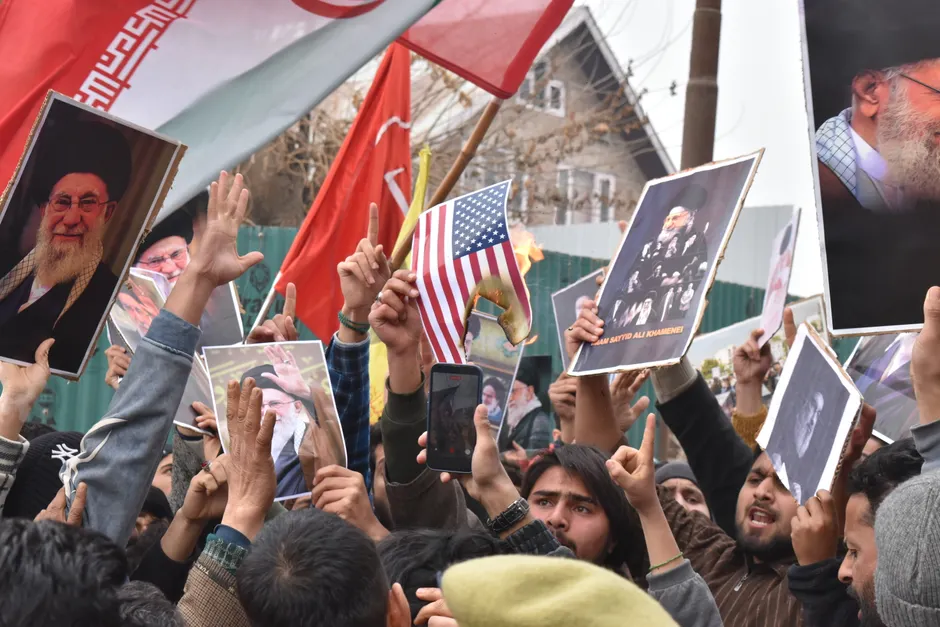
Those protests, which escalated nationwide on January 8, drew a severe security response. Human Rights Watch reported in February 2026 that security forces carried out mass killings of protesters. Activists recorded at least 6,221 people killed in the state crackdown. The scale of the violence led the United States to request a UN Security Council emergency meeting on January 15, 2026, to address the crisis.
Amnesty International has consistently tracked the state's use of capital punishment as a tool for political repression. The organization reported that Iranian authorities used the cover of 'wartime conditions' to intensify repression of dissent through mass arbitrary arrests and political executions. Reuters reported on April 3, 2026, that rights groups warned about 'rushed executions' during wartime after Iran hanged at least seven political prisoners during the conflict.
This escalation builds on a record set in 2025. Amnesty International's 'Death Sentences and Executions 2025' report recorded the highest global execution figure in 44 years. Iran accounted for 80 percent of that global surge. Reuters reported in November 2025 that executions in Iran reached their highest level since 1989. Human Rights Watch documented at least 110 executions in April 2025 and at least 87 in the month following the late June 2024 presidential elections.
The broader context here is that the current scale of executions reflects what appears to be a deliberate consolidation of state force. The integration of protest detentions from January 2026 into the execution pipeline suggests a shift from crowd-control tactics to procedural penal enforcement. The timeframe from March 18 to July 22, during which Human Rights Watch identified 24 arbitrary executions on political charges, points to a systematized approach to eliminating dissent leadership.
This pattern of post-conflict or post-unrest escalation is not without precedent in the region, yet the specific linkage of 'wartime conditions' to domestic penal policy creates a distinct opening for international legal scrutiny. By maintaining external hostilities or ceasefire conditions, the state apparatus effectively narrows domestic avenues for legal appeal. The continued use of blasphemy charges, as seen in a rare case reported in 2023, further widens the legal pathways available for execution.
For international institutions and foreign policymakers, the available data presents a two-sided challenge. The UN Security Council's January 15 meeting established a formal diplomatic baseline, but the subsequent acceleration of executions through July 28 suggests that current international mechanisms lack sufficient deterrent capacity. With over 400 executions recorded in seven months and Amnesty International's July 28 statement on the record, the baseline for diplomatic engagement with Tehran now explicitly includes the state's internal penal code enforcement.