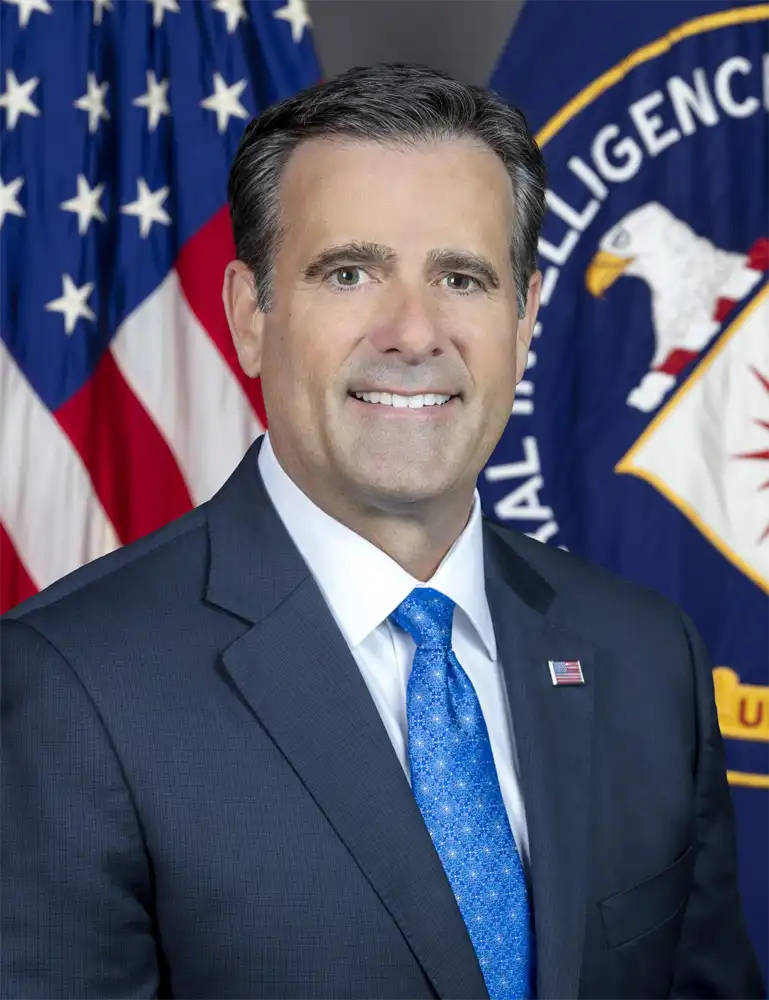
Jay Clayton Confirmed as Director of National Intelligence in Party-Line Vote
The US Senate confirmed Jay Clayton as Director of National Intelligence on July 28, 2026, in a 51-47 vote that split strictly along party lines, with every Republican in favor and every Democrat opposed (The Guardian). Clayton, officially listed in the Senate nomination record as Walter Clayton, of New York, under calendar designation PN1092 (Senate Executive Calendar), was serving as US Attorney for the Southern District of New York at the time of his confirmation. He replaces Bill Pulte, who had served as acting DNI since June 2026 following the resignation of Tulsi Gabbard, Trump's first confirmed Director of National Intelligence (Congress.gov).
The Director of National Intelligence oversees the entire US intelligence community, coordinating the work of agencies like the CIA, the NSA, and the FBI's intelligence division. The DNI briefs the president daily and is responsible for making sure intelligence is shared across agencies rather than siloed.
Clayton's path to confirmation saw unusual procedural friction. President Trump personally intervened to postpone Clayton's confirmation hearing before the Senate Intelligence Committee, overruling Senate Republicans who had wanted an earlier timetable (The Washington Times). The hearing eventually went ahead on July 15, 2026, at 106 Dirksen Senate Office Building (Congress.gov). The Senate began procedural steps toward the confirmation vote on July 27, 2026, as recorded in the Congressional Record at page S4276 (Congressional Record).
Clayton's career bridges financial regulation and federal prosecution. He served as chairman of the Securities and Exchange Commission during Trump's first term before being installed as US Attorney for the Southern District of New York. The White House promoted the nomination in a June 16, 2026, press release headlined "Excellent Choice": Jay Clayton Earns Broad Praise as President Trump's DNI Nominee (The White House).
At SDNY, Clayton's office issued subpoenas to New York Times journalists over their reporting on security concerns regarding Trump's Air Force One plane, which was a gift from Qatar. The government withdrew those subpoenas during a court hearing after a federal judge pressed an attorney from Clayton's office about errors and irregularities in the proceedings (The Guardian).
During his confirmation hearing, Clayton sidestepped questions about the 2020 election and declined to state that Trump lost it (The Guardian). That stance drew sharp criticism from Senate Democrats. Senator Ron Wyden opposed the nomination, warning that Clayton was unqualified and would act as the president's "election conspiracy win." Senator Adam Schiff issued a press statement on June 11, 2026, regarding Clayton's nomination (Schiff.senate.gov).
The ODNI Clayton inherits has been reshaped during the first months of Trump's second term. Under Pulte's acting leadership, Trump declassified and released intelligence in support of false claims about the 2020 election. Pulte also oversaw several rounds of layoffs at the Office of the Director of National Intelligence (The Guardian).
The broader context here is an intelligence community that has now had three directors in roughly seven months. Gabbard's resignation, Pulte's brief acting tenure, and now Clayton's confirmation reflect a pace of turnover that exceeds any prior transition at ODNI since the position was created. The declassification of intelligence to support election-related narratives under Pulte, combined with Clayton's own refusal to affirm the 2020 election results, signals that the intersection of intelligence and electoral politics will remain a central fault line. The Senate's party-line vote reveals that no consensus exists on the norms governing the intelligence community's role in domestic political disputes.
Clayton's record at SDNY also raises press-freedom considerations that will likely follow him into his new role. The withdrawn subpoenas against New York Times journalists, pulled after a federal judge identified errors and irregularities, occurred under his direct authority. How he approaches the relationship between intelligence agencies and the press as DNI will be watched closely, particularly given the ODNI's role in overseeing the broader intelligence community's engagement with media organizations.
Several questions now move from the confirmation arena to the operational one. How Clayton staffs the ODNI after the layoffs Pulte implemented will shape the agency's analytical capacity. Whether he continues or halts the declassification practices seen under his predecessor will signal his approach to the intelligence community's tradecraft standards. And his handling of election-related intelligence, given his own hearing testimony, will be a defining early test of his tenure.