Insta360's New Wireless Mic Adds an E-Ink Screen—Here's Why That Matters

Insta360's New Wireless Mic Adds an E-Ink Screen—Here's Why That Matters
Insta360 has announced the Mic Pro, a wireless microphone system with a small E-Ink display on each transmitter—a feature that's entirely new in consumer-grade wireless microphones. The system captures high-quality audio using three microphones working together, records at professional standards (32-bit float, 48kHz), and lets operators see exactly what's happening on the device itself rather than only on a separate receiver box.
The real innovation here is the display. When you're filming with wireless mics, the person holding the microphone—or the talent wearing it—walks away from the receiver unit. Without a display on the transmitter itself, you lose visual confirmation that the mic is still recording, the battery is still good, or the connection is still live. The E-Ink screen on the Mic Pro solves that by showing recording status, battery level, and connection state right there on the transmitter unit.
How It Works
Each transmitter has three microphones arranged to pick up sound from one direction while ignoring noise from the sides and back. The system records all that audio internally in 32-bit float format, which is a way of storing sound with so much headroom that you can usually recover from audio that would otherwise be distorted or clipped during recording. You decide on levels later, during editing.
The Mic Pro transmitters can connect directly to certain Insta360 cameras—the X5, Ace Pro 2, and GO Ultra—without needing a separate receiver. For other devices, there's a wireless receiver that plugs in via USB-C or standard audio cable. You can also pair the transmitters with a smartphone using Bluetooth, which opens up uses beyond traditional camera recording.
Size and Battery Life
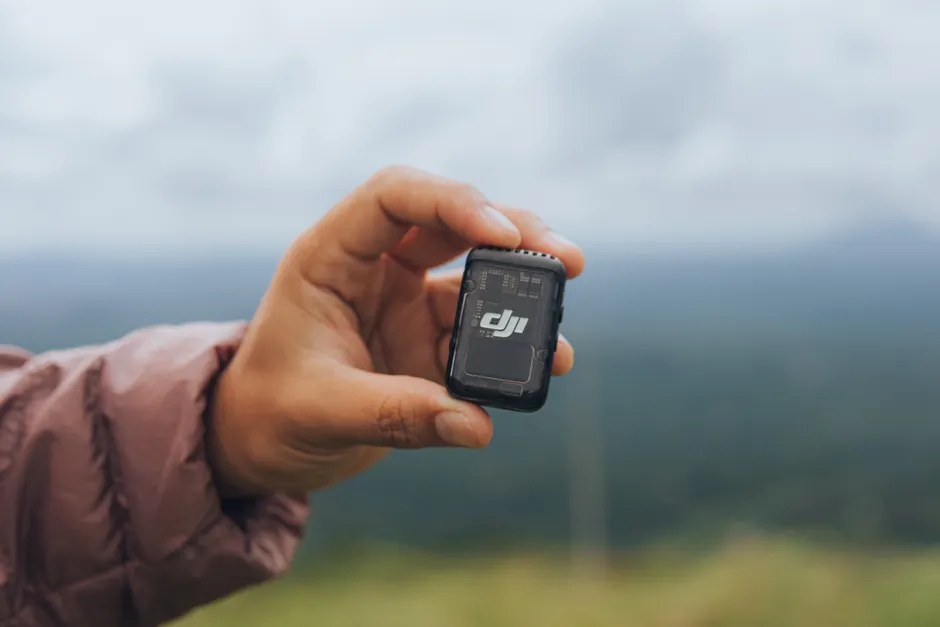
The transmitters are noticeably bigger than Insta360's own Mic Air, according to The Verge. That extra size comes from the E-Ink display, three microphones instead of one or two, and the processing hardware needed to record in 32-bit float format.
The battery is rated for 10 hours of recording, though real conditions will vary depending on how often the display updates, how far the signal travels, and the environment. A charging case included with the kit can top up the transmitters for extended sessions.
Pricing and Competition
The full kit—two transmitters, one receiver, and the charging case—costs $329.99. Individual transmitters are $99.99 each if you want to add more units to record multiple people at once.
This price puts the Mic Pro in the prosumer-to-professional range. Most established wireless microphone makers have focused on signal reliability and audio quality, but haven't invested much in making the hardware easier to see and understand at a glance. Insta360's approach is different.
The broader context here is worth noting. We've seen camera accessory categories get rethought by manufacturers willing to apply modern design and technology in ways established players overlooked. GoPro did this with action cameras—forced traditional camcorder makers to reconsider their entire approach. The Mic Pro suggests wireless microphones might be next.
Power and Design Trade-offs
Adding an E-Ink display raises some technical questions. E-Ink displays only use power when the image actually changes, which is efficient, but the extra processing to run the display and the larger overall size mean more power draw overall. The trade-offs are worth it for professional use, but they're there.
The 32-bit float recording requires significant onboard processing and storage, which explains both the larger size and the higher price compared to simpler wireless systems. This capability matters if audio quality can't slip during production. For many creators, it will be essential; for others, it may be overkill.
Direct connection to Insta360 cameras is convenient for solo creators using that camera system, but it does lock you into those specific models if you want that seamless integration. Over time, this could limit flexibility if your camera setup changes.
What This Means for Production
The E-Ink display addresses a real pain point: when multiple wireless mics are transmitting at once—say, recording two or three people simultaneously—it's easy to lose track of which units are active, which ones are low on battery, or which ones have lost connection. A display on each transmitter lets operators assign custom labels or indicators to each unit, reducing confusion during live events or multi-take shoots.
This design choice reflects how modern content creation has evolved. Productions are more complex, setups are more improvised, and visual confirmation of equipment status has become increasingly important. Insta360 is betting that content creators will value that clarity.
The Mic Pro is part of Insta360's larger push beyond just cameras into the broader ecosystem of production tools. Camera manufacturers have natural advantages here—they already have display expertise, processing power, and relationships with creators. Traditional microphone companies will likely need to add features like this to stay competitive, since high audio quality alone is no longer enough to stand out.