A $4 Million Study for a Pilbara Oil Refinery — and Why the Numbers Don't Quite Add Up

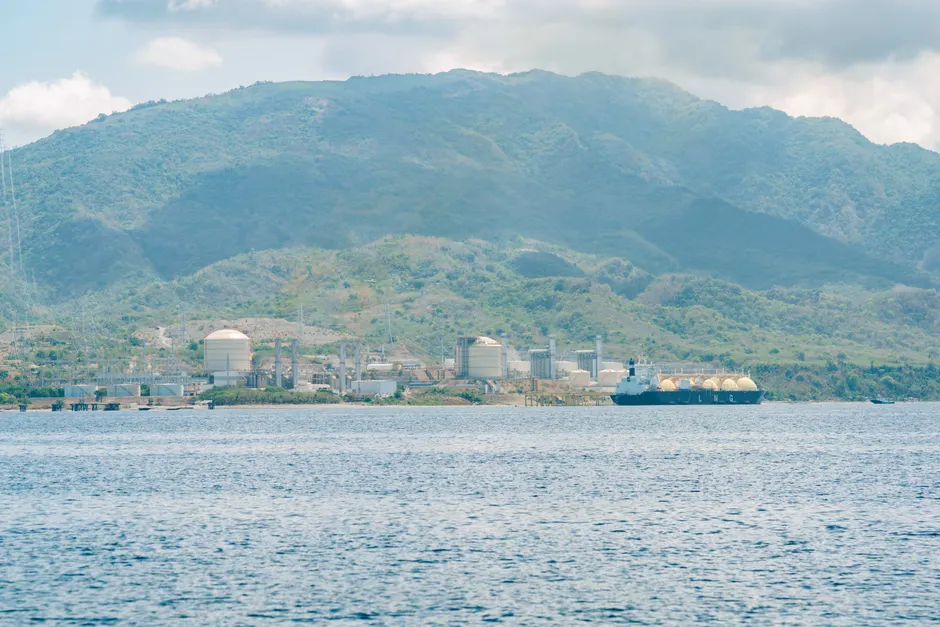
The Albanese government has committed $4 million to an early-stage feasibility study for a new oil refinery in the Pilbara, jointly announced with the Western Australian government on 28 July 2026. Prime Minister Anthony Albanese personally unveiled the proposal at a press conference in Karratha, describing it as what would be Australia's third oil refinery and its first new one since the 1960s. WA Premier Roger Cook co-announced the pre-feasibility study. The company behind the proposal is Perdaman, which would build and operate the facility if it proceeds. (ABC News, Nine, pm.gov.au)
The Reuters figure for the study sits at A$4 million, or roughly US$2.8 million. That buys a pre-feasibility assessment — the first, exploratory stage of working out whether a project is worth pursuing, not a sod-turning. The study is co-funded with the WA government and will examine whether a greenfield refinery (a facility built from scratch on undeveloped land) in the Pilbara can be made to stack up commercially and logistically. (Reuters)
Federal Resources Minister Madeleine King took the proposal to the airwaves on 28 July, giving interviews to ABC Perth's Mark Gibson and 6PR's Simon Beaumont, as well as a doorstop in Rockingham that canvassed the refinery, broader energy security, and the fuel excise. The ministerial pitch, as far as can be gathered from the public record, centres on sovereign fuel security — the idea that Australia should be able to supply its own fuel needs without relying on other countries. (minister.industry.gov.au, minister.industry.gov.au)
The problem is that the numbers behind that pitch are not encouraging. According to the Superpower Institute, Australia is now 95% reliant on foreign fuel imports, with only 4% refined locally from Australian crude. Geoscience Australia's 2025 commodity resource report goes further: domestic crude production is declining rapidly, and without new commercial discoveries, it is projected to cease within the next seven years. A refinery without domestic feedstock — the raw crude oil a refinery processes into usable fuel — is a refinery running on shipped-in crude. (The Guardian)
Baethan Mullen, chief executive of the Superpower Institute, made the point directly. A new Pilbara refinery, he said, would almost certainly refine imported crude exclusively and do little to improve Australia's sovereign fuel capability. That cuts against the national-security framing that typically accompanies fuel-security announcements. If the feedstock is imported, the supply chain is no more sovereign than the current import-dependent model, just relocated to a different point on the map.
Greg Bourne, a Climate Council councillor and former regional president of BP in Australia, went further on viability. Any potential refinery, he said, was unlikely to be economically viable. Coming from someone who ran one of the major oil companies' Australian operations, that is not a throwaway line. The global refining sector has been consolidating around large-scale, high-complexity facilities in Asia and the Middle East. A greenfield refinery in the Pilbara would be entering a market with established, efficient competitors and a declining domestic crude base.
Then there is the clean energy dimension. Professor Frank Jotzo, director of the Centre for Climate and Energy Policy at ANU, criticised the investment at the Clean Energy Summit in Sydney, calling it a signal against the clean energy transition. That critique lands in a specific policy context: the government has legislated a 43% emissions-reduction target by 2030 and has positioned itself domestically and internationally as committed to the energy transition. Public money for a new oil refinery sits awkwardly with that posture, and Jotzo is not the only voice likely to say so. (The Guardian)
The political logic here is not hard to read. WA is a resource state. The Pilbara is the engine room. A refinery proposal speaks to value-adding, job creation, and downstream processing — turning raw materials into more finished products locally rather than shipping them offshore — all of which play well in a state where the resources sector is the dominant economic story. The $4 million price tag for a feasibility study is modest enough to be low-risk politically, while the announcement itself generates headlines and signals intent to the sector. If the study finds the project wanting, the government can walk away having spent very little. If it finds something promising, the government has a policy pipeline to point to.
What remains unaddressed in the public messaging is the fundamental tension the critics have identified. The government's own resource agency is forecasting the end of domestic crude production within seven years. The Superpower Institute says a new refinery would run on imported crude. A former BP Australia chief says it probably would not make money. And a leading climate economist says it sends the wrong signal on the transition.
The feasibility study will take time. In the interim, the announcement exists in the space where most Australian energy policy lives: long on aspiration, shorter on the awkward detail. Whether a Pilbara refinery can overcome the commercial and geological headwinds is precisely what the $4 million is supposed to find out. The answers, when they come, will need to address the specific objections raised, not the general proposition that Australia would prefer to be less reliant on imported fuel. Everyone agrees on the destination. The disagreement is about whether this is a road that gets there.