The FCC Bans New Foreign-Made Ground Robots From the US Market
The FCC added foreign-produced advanced robotic devices to its Covered List on July 27, 2026, barring new foreign-made ground robots from receiving FCC authorization for import, marketing, or sale in the United States. The agency publicly announced the ban on July 28, 2026, alongside a parallel addition of foreign-produced power inverters to the same list. Bloomberg Tax
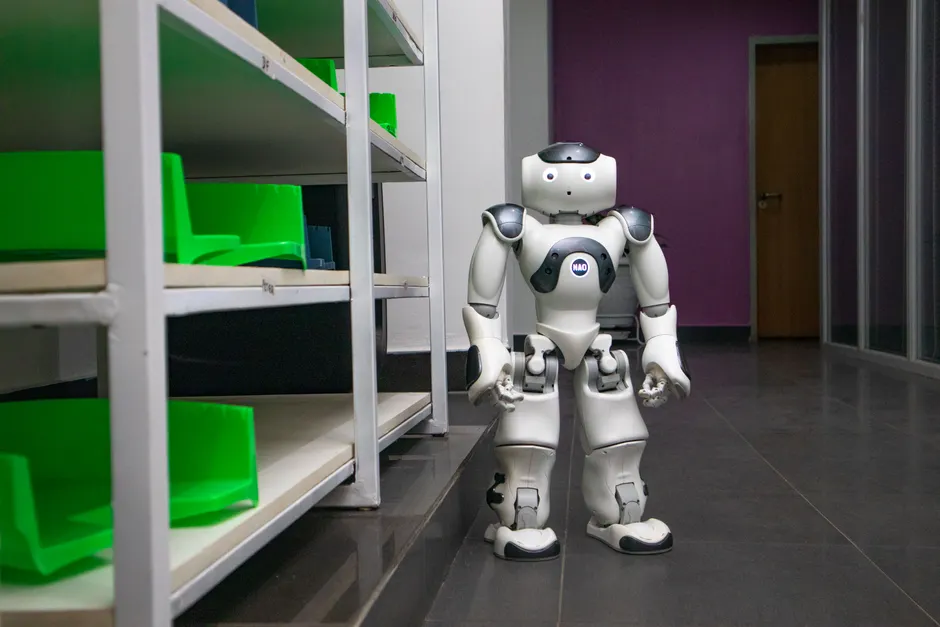
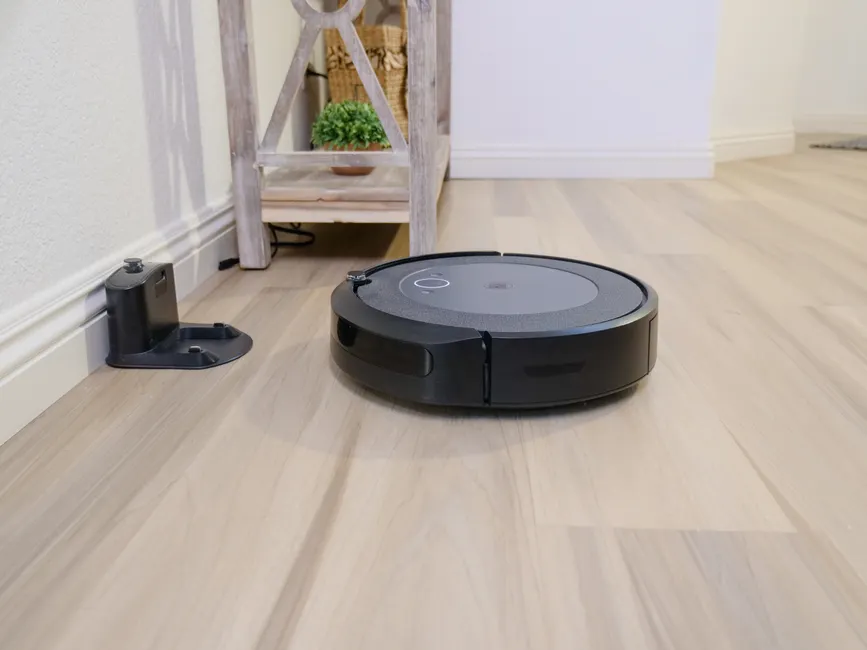
The scope is unusually broad. The ban covers almost any new software-controlled robot that travels over the ground, weighs more than 4.4 pounds (including any dock), can perceive its environment, and has wireless connectivity. FCC media relations director Katie Gorscak confirmed to The Verge that robot vacuum cleaners fall within the prohibition. The rule also reaches future robot lawnmowers, sidewalk delivery robots, warehouse robots, humanoid robots, and quadruped robots. Stationary industrial robots are exempt. The Verge DW Forbes
The FCC published a National Security Determination on July 26 to justify the import ban, stating that data collected by advanced robotic devices, especially those securing sensitive locations and critical infrastructure, must be protected. The determination explicitly cites reporting about poor security practices that allowed one person to access 7,000 DJI robot vacuums around the world as a motivating example. FCC NSD The Verge
The market structure for consumer ground robots makes the ban's impact immediate. The top five robot vacuum companies — Roborock, Ecovacs, Dreame, Xiaomi, and Narwal — are all Chinese entities. The Roomba brand is now owned by Picea, a Chinese company that was previously its contract manufacturer. This means the dominant players in the US robot vacuum market are, by entity origin, all foreign. The Verge
Companies can continue importing and selling already-approved robots under the ban, which means existing product lines and currently certified models face no immediate disruption. The prohibition applies to new devices seeking FCC authorization going forward.
The FCC has established a waiver pathway. It published guidance on July 26 for submissions seeking conditional approval for advanced robotic devices subject to the Covered List, along with an FAQ page addressing consumer-use restrictions for robots and power inverters. FCC Conditional Approval Guidance FCC FAQ
Matic, a robot vacuum brand assembled in California, illustrates the compliance challenges even for non-Chinese manufacturers. Co-founder and CEO Mehul Nariyawala indicated the company may need to apply for a waiver for new models because it does not source 65% of its components from the United States. That 65% domestic-component threshold appears in the FCC's conditional approval framework as a criterion for exemption from the general prohibition. The Verge
The FCC also added foreign-produced power inverters to the Covered List in the same July 27 update, broadening the national-security perimeter beyond robotics into grid-adjacent hardware. Power inverters convert direct current (DC) from sources like solar panels or batteries into alternating current (AC) used by the electrical grid, making them critical infrastructure components. FCC
The Covered List is the FCC's existing framework for designating communications equipment deemed to pose unacceptable national-security risks. Once a category is added, new equipment in that category from designated foreign entities cannot receive the FCC equipment authorization required for legal import and sale. The robot ban extends this framework from networking gear and surveillance equipment into a consumer-electronics category that, until now, operated under standard FCC certification procedures. FCC Covered List Update
The inclusion of DJI vacuums in the NSD's rationale is notable for its specificity. The cited incident, in which a single actor accessed thousands of connected vacuums globally, frames the security concern around embedded cameras, environmental sensors, and network connectivity in devices that physically move through homes and commercial spaces. The FCC's threshold criteria — ground-traveling, over 4.4 pounds, environment-perceiving, wirelessly connected — are designed to capture devices that can collect spatial and visual data while operating autonomously, regardless of their primary function.
For the consumer robotics industry, the practical effect is a freeze on new product introductions from foreign manufacturers into the US market. Every major robot vacuum brand, plus the newly Chinese-owned Roomba line, will need to either pursue the conditional approval pathway, restructure supply chains to meet domestic-component thresholds, or accept that future models cannot be sold in the United States. For domestic manufacturers like Matic, the 65% component-sourcing requirement sets a high bar given how concentrated the robotics supply chain is in East Asia.
The broader context here is that the FCC has now drawn a national-security perimeter around an entire category of consumer and commercial hardware based on the data-collection and physical-access characteristics of the devices themselves, rather than targeting individual companies or specific product models. This is a structural shift from the entity-list approach previously used in telecoms equipment cases, where specific companies like Huawei were named. It means any new entrant in the ground-robot space, regardless of country of origin, faces a default prohibition unless they can demonstrate compliance with US supply-chain and security requirements through the waiver process.
That is a high friction point for a category that has been moving toward commodity pricing and rapid iteration cycles. Whether the waiver process can move quickly enough to avoid stalling innovation from non-Chinese manufacturers is an open question. The 65% domestic-component threshold, in particular, will be difficult to meet for any company building price-competitive consumer robots, given the current state of US-based manufacturing for sensors, motors, batteries, and compute modules.
The ban does not affect existing inventory or already-certified devices, so consumers and businesses with current-generation robots will see no change. The disruption will come on the next product cycle, when manufacturers must navigate the new authorization regime or exit the US market entirely.