The FCC Bans Foreign-Made Robots, Targeting China Over National Security

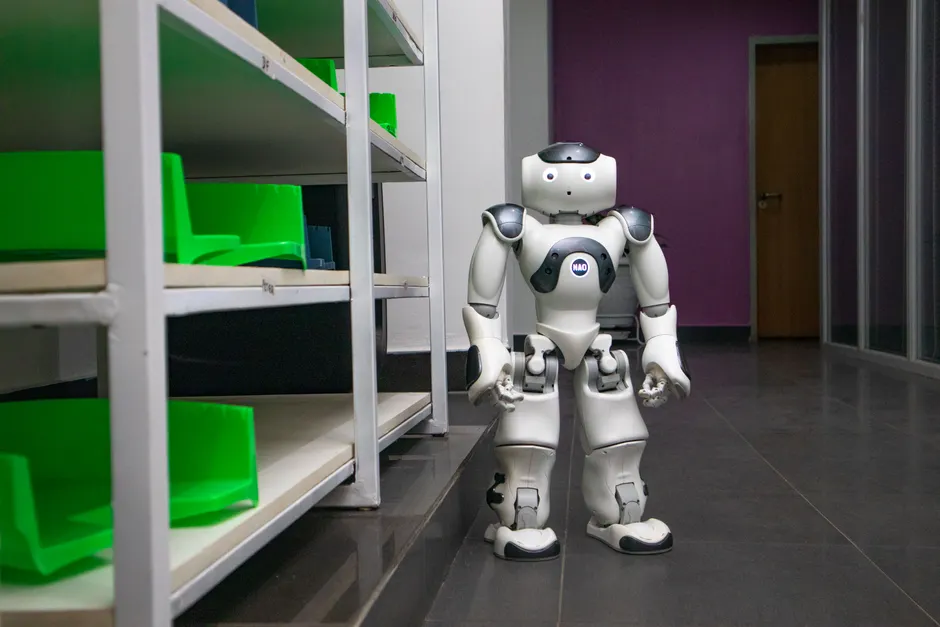
The FCC has banned foreign-made robots, citing national security concerns focused on China. The prohibition covers humanoid robots, four-legged robot dogs, robot vacuums, and foreign-made power inverters. The FCC's action is based on a White House order, according to PCMag.
The FCC defines the regulated category as "advanced robotic devices": software-controlled autonomous robots that can sense their surroundings, weigh more than 4.4 lbs including their dock, move across the ground, and connect wirelessly to the internet or other networks. That definition is broad enough to capture a large portion of the consumer and commercial robotics market, including the household robot vacuum segment dominated by Chinese manufacturers like Dreame and Roborock, as Engadget reports.
Robot vacuums currently on US shelves can continue to be sold. However, any new model a company wants to bring to market will require an application for a waiver. This means existing products are grandfathered in, so the immediate retail impact is limited. But the forward pipeline for foreign-made consumer robotics now goes through a case-by-case approval process administered by the FCC.
The robotics ban follows a pattern the FCC has already established. The commission previously banned foreign-made Wi-Fi routers and drones before turning to robots and power inverters. Each step has expanded the set of connected hardware categories subject to country-of-origin restrictions under national security authority. The inclusion of power inverters alongside robots is notable: inverters are core components in solar installations, grid-tied energy storage, and EV charging infrastructure, not consumer gadgets. Their placement in the same regulatory action signals that the FCC's scope covers hardware categories with network connectivity and potential infrastructure relevance, not narrowly consumer-facing devices.
The ban's explicit focus on China aligns with broader US policy direction. Deutsche Welle and WIVB both report that the action targets China over national security concerns, framing the robotics prohibition within the same logic that has driven restrictions on Huawei telecommunications equipment and Chinese-made drones.
The technical definition is worth examining for what it does and does not capture. The 4.4 lb weight threshold, the requirement for ground locomotion, environmental sensing, and wireless connectivity together describe a specific class of device: autonomous, mobile, networked, and physically substantial enough to carry sensors or payloads. A stationary smart speaker or a non-wireless toy robot would not meet the criteria. A networked robot vacuum with lidar mapping (the laser-based technology that lets the device build a floor plan of your home) and a companion app clearly would. A four-legged robot deployed for industrial inspection, warehouse automation, or perimeter security would fall squarely within scope.
The waiver mechanism is the operational detail that will shape market impact. Companies seeking to introduce new foreign-made robot models into the US will need to demonstrate, through an FCC-administered process, that their products do not pose the national security risks the ban is designed to address. How the FCC evaluates waiver applications, what evidentiary standards it applies, and how long the process takes are not yet defined in the publicly available materials. For manufacturers headquartered in China, the waiver path may prove difficult regardless of technical merit, given the geopolitical framing.
The practical effect on US consumers is bifurcated. Existing products remain available. Future product cycles from Chinese robotics companies face regulatory uncertainty. For US-based manufacturers or companies with non-Chinese supply chains, the ban creates a competitive opening, though the US domestic robotics manufacturing base remains limited across most product categories.
The broader context here is a steadily expanding regulatory perimeter. The FCC has moved from telecommunications infrastructure (routers) to aerial platforms (drones) to ground-based autonomous systems (robots and vacuums) to power electronics (inverters). Each expansion applies the same underlying authority, grounded in national security, to a new hardware category. The cumulative effect is a framework where any connected, autonomous, or infrastructure-relevant device manufactured outside the US now operates under the possibility of an FCC restriction, and where the default for new foreign-made entrants is a waiver application rather than open market access.
That is a meaningful shift in how connected hardware reaches US consumers and enterprises, and one that manufacturers, distributors, and procurement teams will need to factor into product roadmaps going forward.