Google's AI Overviews Are Breaking Dictionary Lookups

Google's AI Overviews Are Breaking Dictionary Lookups
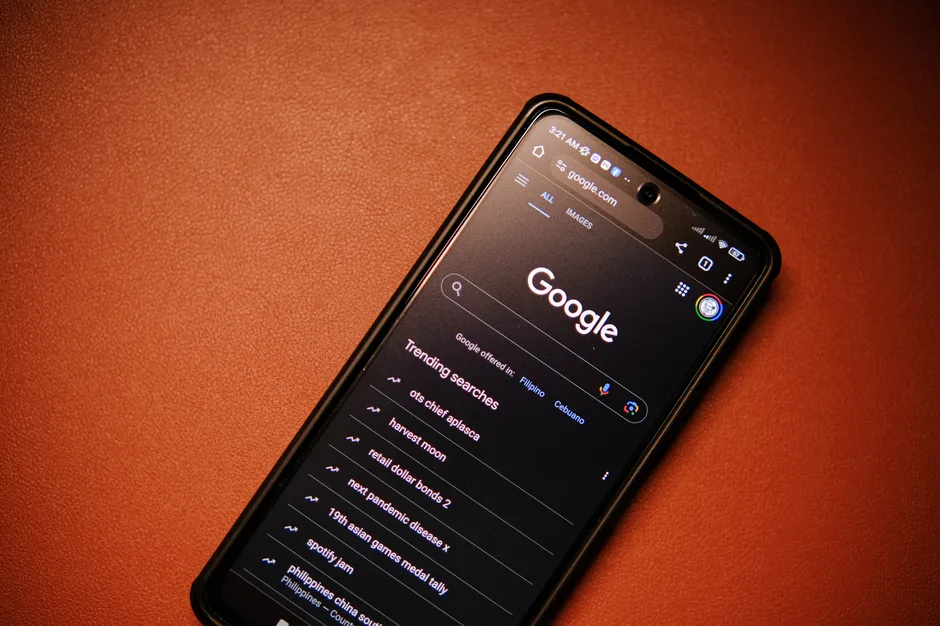
When you search for a word definition on Google, something has changed. The search engine's new AI Overviews feature now treats dictionary queries as if you're asking a question in conversation, rather than looking up what a word means. The result: you don't get the definition you expected.
9to5Google found that searching for words like "disregard" now triggers an odd result. The AI interprets your search as an instruction to ignore something, rather than showing you the definition. For years, Google handled this cleanly — it would show a definition box sourced from Merriam-Webster or similar references when you typed in a single word.
This points to a deeper shift in how Google understands what you're asking for. The system that powers AI Overviews — a process called inference, which is essentially the AI making educated guesses about your intent — now leans toward treating searches as conversational questions rather than literal search terms.
How AI Overviews Work
AI Overviews rolled out permanently across Google Search after the company announced the change at its Google I/O conference. Unlike the traditional Google search, which simply matches keywords you type to web pages that contain those words, AI Overviews use inference to generate a summary of what the top results say.
One key detail: you can't turn AI Overviews off completely, according to Google's support documentation. This means every Google user is now affected by the change, not just people who opted in to test it.
Google also offers a more advanced option called AI Mode through its Search Labs program. This experimental feature goes further than AI Overviews by doing its own web searches to find relevant links when it's not confident enough in its generated answer.
Quality and What Happens to Your Clicks
Google says AI Overviews are accurate at roughly the same level as the old Featured Snippets (those summary boxes that used to appear at the top of results). The company also reports that people seem happier with their search results when AI Overviews show up, and that when people click through to a website, they tend to spend more time there.
Google started adjusting its search rankings back in 2022 to show less low-quality or copied content. More recently, in May 2025 guidance for developers, the company published advice on how to optimize web content so it performs well in AI-powered search.
The dictionary lookup issue, however, suggests a blind spot. Words that can mean different things depending on context — like "disregard," "ignore," or "forget" — confuse the system. It picks the conversational meaning over the definitional one. This is a case where the AI's strength (understanding natural language like conversation) actually breaks something the old system did well (literal keyword matching).
The Broader Shift in Search
We have seen this pattern before, when Google moved from showing ten blue links to displaying rich snippets and knowledge panels in the early 2010s. Each time, users had to adapt to new ways of interacting with search. This time, though, the change is faster, and you cannot opt out of it.
For people building websites or writing content for the internet, this signals that the old playbook for getting found on Google may not work the same way. Optimization strategies based on keyword matching may need to shift to account for the possibility that your content will be read and summarized by an AI system, not just matched by a keyword robot.
How Google Tries to Keep AI Safe
Google has built systems to detect when someone tries to trick an AI by hiding bad instructions in web content — a technique called prompt injection. These safeguards aim to keep the AI from generating harmful responses.
Yet the dictionary problem shows there's still room for improvement. The system lacks the context awareness to tell the difference between a user searching for a definition and one giving a conversational instruction. Google's AI Mode tries to address this by falling back to web links when the AI isn't sure, but only if you use the experimental Search Labs version — the regular AI Overviews don't have that escape hatch.
What Happens Next
The dictionary lookup problem is likely a preview of other search patterns that may break as Google continues to evolve how it understands your intent. The company is fundamentally moving away from matching keywords and toward trying to understand what you really mean, in the way a person would.
For most users, this will probably feel like an improvement over time. AI systems generally get better with practice and feedback. But right now, we're in a period where some things that used to work smoothly — like looking up what a word means — no longer do. Google's promise to keep accuracy high offers some reassurance, but the dictionary issue shows that edge cases are still being worked out.