Democratic Senators Demand Answers on the Iran War's First U.S. Combat Deaths and a Troubled Casualty Count
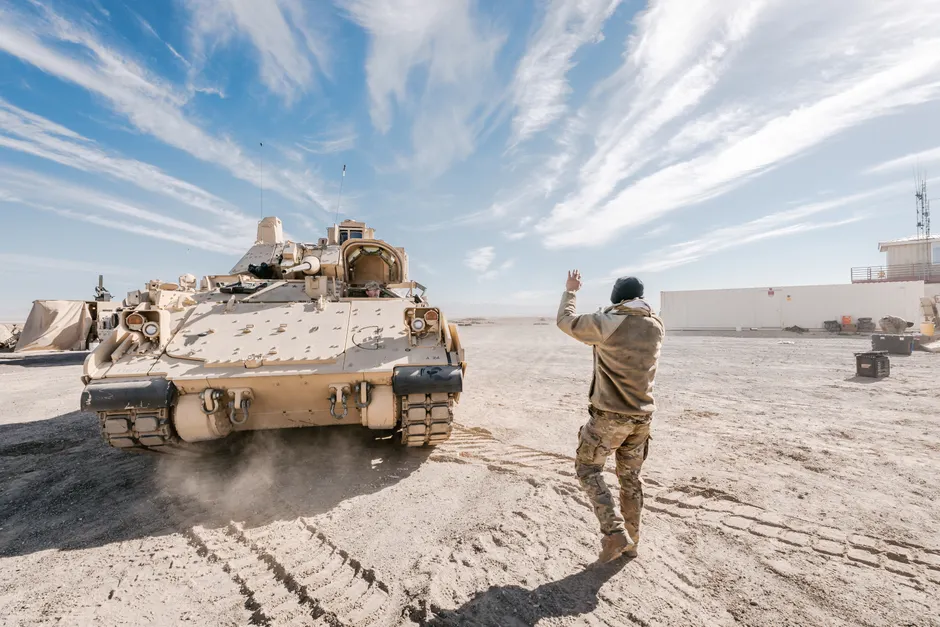
Four Democratic senators on the Senate Armed Services Committee sent a letter to Defense Secretary Pete Hegseth on July 29, 2026, asking 23 questions about the March 1 Iranian drone strike on a U.S. logistics hub in Kuwait that killed six reservists and wounded dozens more. The senators — Elizabeth Warren (D-MA), Mark Kelly (D-AZ), Kirsten Gillibrand (D-NY), and Richard Blumenthal (D-CT) — set an August 12 deadline for responses. Representative Pat Ryan, who co-led the effort, joined the senators in pressing the Pentagon on force protection (the military's term for measures that keep troops safe from attack) and medical failures tied to the incident. The Washington Post first reported the letter on July 30; The Guardian confirmed the details the same day. The Pentagon declined to comment.
The strike took place on March 1, 2026, one day after President Donald Trump launched Operation Epic Fury alongside Israel against Iran. A single Iranian drone slipped past air defenses and struck the relocated operations center of the U.S. Army's 103rd Sustainment Command at the port of Shuaiba, south of Kuwait City. The six reservists killed were from Des Moines, Iowa. Hegseth later described the drone as "powerful" and said it had penetrated "fortified" U.S. defenses. These were the first U.S. combat deaths of the war. (The Guardian)
The letter's questions center on two intertwined failures: gaps in force protection before the attack and a breakdown in medical care and record-keeping afterward. According to reporting cited in the letter, the 103rd Sustainment Command had requested additional medical staff and supplies before the March 1 strike and was turned down. After the drone hit, there was no doctor on site, no fixed medical station, and only one ambulance available. Some wounded soldiers drove themselves to a hospital in Kuwait City. It took nine days before roughly two dozen wounded personnel — some still not screened for traumatic brain injury — were flown to the U.S. military hospital at Landstuhl, Germany. Doctors at Landstuhl told the wounded they could receive only limited treatment because the soldiers had not been recorded as medical evacuees on the flight manifest or as seriously injured in the Defense Department's casualty-processing database. Soldiers later transferred to Fort Hood, Texas went weeks without seeing a doctor able to diagnose traumatic brain injury, even though they repeatedly failed post-blast cognitive tests. (The Guardian)
The letter also raises questions about the independence of the Army's internal review. One of the unit's commanders initially assigned a mid-career officer under his own command to lead the inquiry, a step the lawmakers suggest weakened the investigation's credibility.
Beyond the March 1 strike, the senators are examining what appears to be a pattern of undercounting U.S. casualties in the Iran war. The Pentagon's official fatality count dropped from 18 to 14 on July 23, 2026, a revision the department attributed to a "data problem." The letter cites reporting that officials privately acknowledged four service members killed in Jordan and northern Iraq on July 17-18 were removed from the war casualty count because their deaths occurred after Trump's declared ceasefire in April — even though Trump told Congress on July 7 that strikes on Iran had resumed. Those four deaths, along with more than 200 wounded, were reclassified under a new "Overseas Operations" category rather than counted under Operation Epic Fury. Separately, roughly 100 troops injured in strikes on Jordan had gone undisclosed until reporters made inquiries. (The Guardian)
The casualty figures have shifted noticeably over the course of the conflict. As of March 10, 2026, the Pentagon reported about 140 U.S. service members wounded. By July 20, Reuters reported that figure had risen to roughly 430, with most wounded in Iran. The July 22 Reuters count of 18 killed has since been revised downward by the Pentagon to 14. (Reuters)
The lawmakers' effort follows earlier Democratic pressure on Hegseth over the Kuwait attack. Representative Jason Crow sent a separate letter on April 22 demanding an investigation into force protection failures. Representatives Maggie Goodlander and House Democratic veterans issued their own call the following day. (Crow press release)
The broader context here is a war whose casualty dimensions remain contested nearly five months in. The reclassification of deaths and wounded under a separate accounting category, coming after a publicly declared ceasefire that the president himself acknowledged had lapsed by early July, raises questions about whether the Pentagon's reporting framework is tracking operational reality or political boundaries. Think of it like a company moving certain losses off its main balance sheet into a subsidiary — the numbers may be technically categorized, but the overall picture becomes harder to trust. The March 1 strike's medical aftermath, in which bureaucratic failures at the casualty-processing level directly limited the care wounded soldiers received at Landstuhl, suggests the problems extend well beyond the initial drone penetration. The August 12 deadline for Hegseth's response will be the next concrete benchmark. Whether the Pentagon treats the 23 questions as an opportunity for course correction or an opening to stonewall will tell Congress, the services, and the public a good deal about how the department intends to manage accountability for the remainder of Operation Epic Fury.


