Google DeepMind's Gemini Robotics 2 Splits Robot Intelligence Into Three Specialized Models
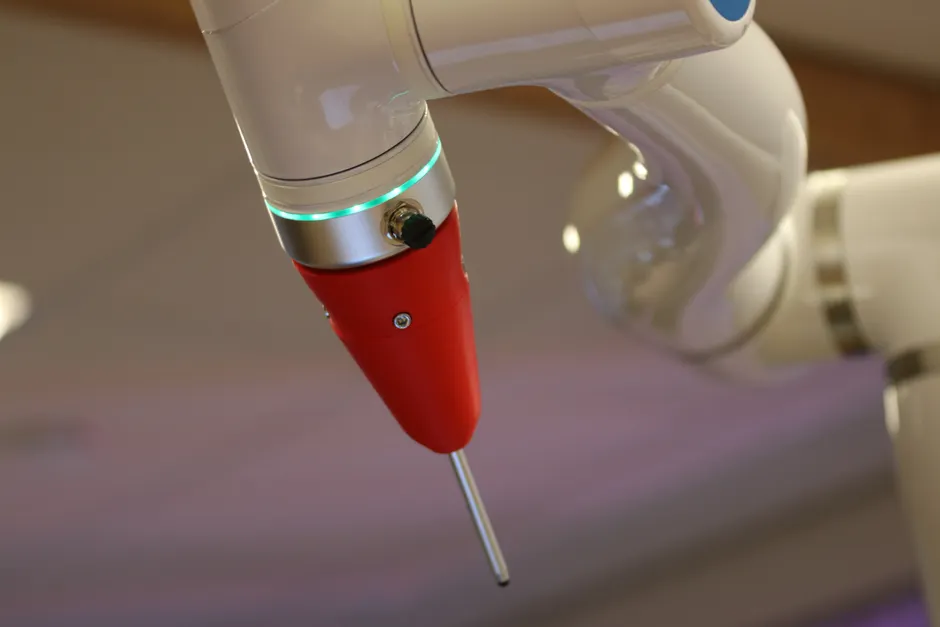
Google DeepMind announced Gemini Robotics 2 on July 30, 2026, calling it the intelligence layer for the next generation of adaptable robots. The release includes three models: Gemini Robotics 2, Gemini Robotics ER 2, and Gemini Robotics On-Device 2. Together, they tackle three different problems — translating what a robot sees and hears into physical movement, helping robots reason about the world around them, and running that intelligence locally on the robot itself. DeepMind Blog
Gemini Robotics 2 is what researchers call a vision-language-action, or VLA, model. In simple terms, it takes visual input and spoken or written instructions and converts them into motor commands. It can drive full humanoid robots — controlling everything from feet to fingertips — as well as two-armed robots. In demonstrations, a humanoid powered by the system walks, crouches, stretches, and picks up objects to clean up a cluttered room.
Gemini Robotics ER 2 focuses on what is called embodied reasoning — the ability of a robot to understand its physical environment, communicate with people, and plan tasks that take several minutes to complete. ER 2 also introduces multi-robot collaboration, meaning multiple robots can work together as a team on shared goals.
Gemini Robotics On-Device 2 is designed to run locally on a robot's own hardware rather than relying on cloud servers. Its standout feature is fast adaptation: it can learn to control a completely new robot body — a different shape, different limbs, different mechanics — using only a few hours of data. That reduces the need for massive pre-training every time someone builds a robot with a non-standard physical design.
This release builds on Google DeepMind's earlier Gemini Robotics work, which first showed that the company's Gemini AI models could translate their understanding of images and language into real-world robotic action. That earlier version proved the concept worked. Gemini Robotics 2 extends it across reasoning, physical control, and on-device execution.
The broader context here is how DeepMind has separated robot intelligence into distinct layers. By splitting motor control, task planning, and on-device adaptation into separate models, the company is effectively decoupling the high-level thinking — what task to do and in what order — from the low-level physical execution — how to move each joint. In this author's view, this separation addresses a real bottleneck in robotics, where systems that try to handle both reasoning and movement in a single model often struggle with latency and with generalizing to new situations. Putting multi-step planning in ER 2 while delegating whole-body control to the VLA model aligns with how these different compute workloads actually scale.
The multi-robot collaboration in ER 2 deserves specific attention. Coordinating several robots to work as a team requires shared awareness of what each robot is doing and a way to distribute tasks among them — something that goes well beyond controlling a single robot. The architecture suggests that ER 2 handles the shared reasoning and task allocation, while the Gemini Robotics 2 VLA model handles the physical manipulation for each individual unit.
The on-device adaptation also solves a practical deployment problem. New robot designs typically require extensive data collection before they can be controlled reliably. Gemini Robotics On-Device 2, running locally, can adapt to a brand-new physical form factor with just a few hours of data, and it does so on the robot itself without needing a continuous connection to cloud infrastructure. That lowers the barrier for hardware developers building robots that don't fit standard templates.
Looking at the deployment trajectory, the combination of whole-body control and on-device adaptation points toward a modular future for humanoid and two-armed robotics. Hardware manufacturers can iterate on physical form factors without retraining the entire intelligence stack from scratch. Having watched successive technology shifts push intelligence deeper into physical infrastructure over the decades, the introduction of a layer that explicitly abstracts away from specific hardware designs mirrors the architectural shifts that enabled scalable deployment in cloud and mobile ecosystems. A single VLA controlling everything from a humanoid's feet to its fingertips, while a separate reasoning model handles minutes-long task planning, establishes a functional division of labor that could accelerate real-world AI applications.


