France's Saumos Wildfire: Stabilized After Burning 42,000 Hectares Near Bordeaux

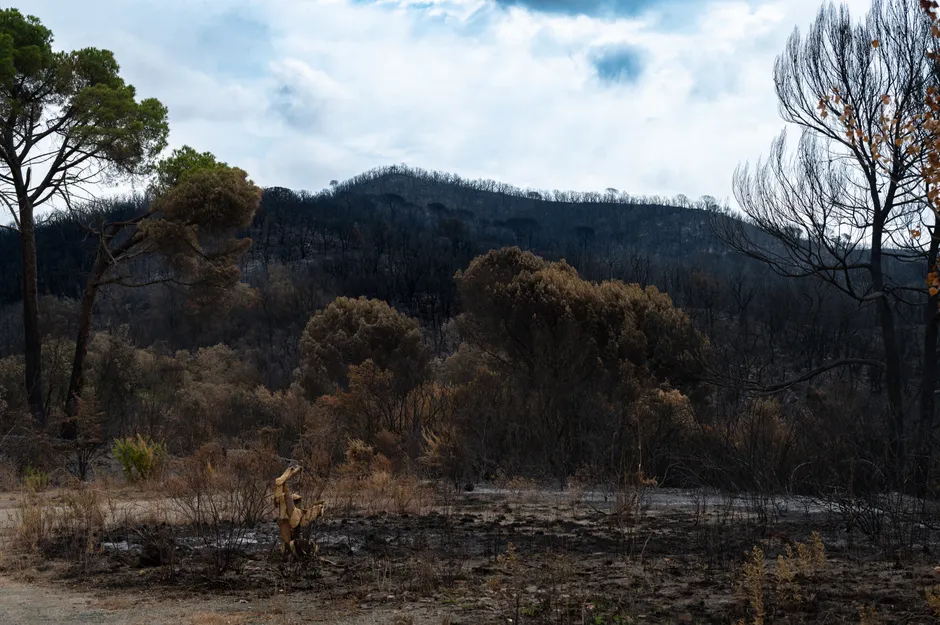
The Saumos wildfire in Gironde, southwestern France, was stabilized as of Thursday, July 30, 2026, at 16:00, after a calm night with no further spread, according to the Préfecture de la Gironde. The fire started on July 22 and has burned 42,000 hectares (about 104,000 acres), making it one of the most destructive wildfire episodes the Nouvelle-Aquitaine region has faced in recent years.
The crisis escalated quickly. On July 7, the Préfecture de la Gironde placed the entire department on ORANGE forest fire vigilance — a mid-level warning indicating that weather conditions were ripe for fire. Two weeks later, on July 22, the Saumos fire ignited. By July 24, France's FR-Alert system, which pushes emergency notifications to mobile phones in defined areas, was activated for the Nord Bassin sector due to the fire's rapid advance. By Sunday, July 26, flames were reported just 15 km (roughly 9 miles) from Bordeaux. The fire reached stabilization only late on Wednesday, July 29, at 23:00.
The human cost was severe. Two firefighters died during an intervention near Bordeaux-Mérignac airport on July 22, the same day the Saumos fire began. The prefecture reported that 120 personnel, 60 vehicles, and 3 aircraft were deployed to that specific incident. By July 29, the total firefighting mobilization across the Gironde mega-fire had grown to 2,700 firefighters on the ground.
Civilian evacuations followed the fire's path. In the neighboring Landes department, the fire was declared fixed — meaning fully contained with no risk of reactivation — and 15,000 people were authorized to return home as of July 27. Across France and Spain combined, more than 325,000 people were displaced by wildfires during this period. The disruption to daily infrastructure was tangible: 23 La Poste (postal) offices were temporarily closed, including 20 in Gironde and 3 in Landes, with 11 distribution facilities affected.
The civilian response was substantial. Bordeaux Métropole, the metropolitan authority, reported that more than 12,000 volunteers were available to provide continuous support for evacuees, with roughly 100 people rotating every eight hours to staff reception centers. Volunteers were also active on the front lines: on July 30, individuals were watering a forest near Blagon to prevent the fire from reigniting. Volunteers were documented at Saumos on July 29 and at Lanton, west of Bordeaux, on the same date.
The broader context here is the scale of operational coordination required when a mega-fire of this magnitude develops near a major city. Bordeaux, with a metropolitan population exceeding 800,000, sat within 15 kilometers of active flames. The ORANGE vigilance declared on July 7 gave authorities roughly two weeks of preparatory time before the Saumos ignition, yet the fire still consumed 42,000 hectares in under ten days. That a single fire complex burned through that much forested land despite 2,700 deployed firefighters points to the limits of suppression capacity when drought, heat, and wind converge — conditions that no amount of personnel can fully counter once a fire of this scale takes hold.
The FR-Alert activation on July 24 is worth noting as a procedural marker. France's population alerting system, designed to push emergency notifications to mobile devices in defined geographic zones, was triggered for the Nord Bassin sector, reflecting the pace at which the fire front was moving and the need to evacuate people ahead of it. The fact that 15,000 residents in Landes could return home by July 27 suggests the Landes portion of the fire complex was brought under control faster than the Gironde segment, which required nearly three additional days to reach stabilization.
The volunteer mobilization is also significant from an institutional perspective. A pool of 12,000 volunteers, with a hundred-person rotation every eight hours, amounts to a sustained civil-society logistics operation running alongside the professional firefighting effort. This was not spontaneous neighborhood help but structured reception infrastructure organized through Bordeaux Métropole, capable of continuous operation over multiple days.
As of the most recent prefectural update, the Saumos fire held its stabilized status through the night of July 29–30 with no further progression. Firefighting teams and volunteers continued monitoring and prevention activities, including forest watering near Blagon. The department remained under the conditions that first triggered ORANGE vigilance on July 7, and the return to full fixed status had not yet been declared for the Gironde fire as of the July 30 afternoon update.