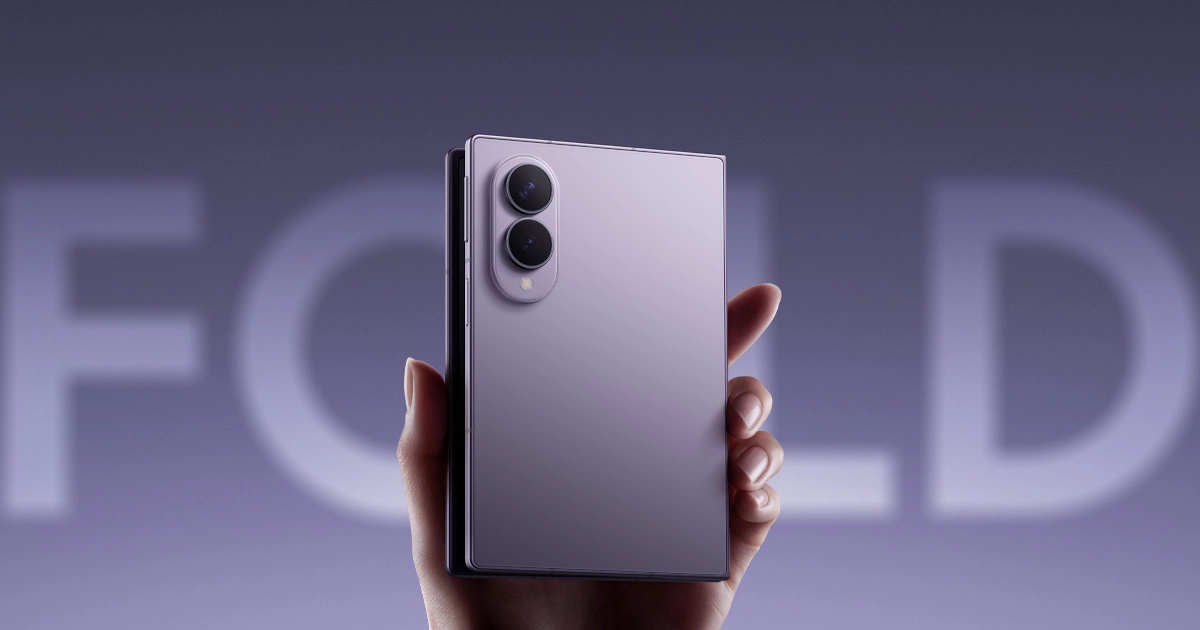
Tecno Claims a Zero-Millimeter Display Border for Its Next Smartphone Concept

Tecno, a Chinese smartphone manufacturer, has announced a bezel-less smartphone concept with a claimed zero-millimeter display border, set to be shown at IFA 2026 in Berlin this September. The company describes the zero-millimeter border as an "industry-first" and says the design will form a "distinct design language" for its future phones. The details come from a Tecno press release reported by Engadget on July 31, 2026.
The core engineering claim is that Tecno has eliminated the final millimeter of screen border — the thin frame around a phone display that typically houses internal display circuitry and safety clearances. According to the company, this was achieved through a reengineered display structure involving what Tecno calls "advanced internal stacking" alongside new screen packing techniques. No further technical specifications were provided in the press release.
The concept phone will not be viewable in person until IFA 2026 opens its doors. All current information comes solely from Tecno's own press materials.
The broader context here is that smartphone bezels have been shrinking steadily for the better part of a decade. Edge-to-edge displays became standard in flagship phones years ago; the competitive frontier moved to under-display cameras (front-facing cameras hidden beneath the screen itself), curved glass, and progressively thinner side and top bezels. A true zero-millimeter border, if it holds up to hands-on scrutiny, would push past the physical constraints that have kept every manufacturer at roughly one millimeter or above. The last millimeter is stubborn precisely because it is not cosmetic. It carries trace routing (the tiny conductive pathways that deliver signals to the screen), impact-protection margins, and structural bonding area. Removing it entirely raises immediate questions about durability, repairability, and whether the display panel can survive drops without that protective margin. None of these questions can be answered from a press release, and Tecno has not addressed them in the materials released so far.
One wrinkle worth noting: Tecno's official newsroom at tecno-mobile.com/news/ does not currently display a press release about the bezel-less concept among its listed articles, which span June 3 through July 25, 2026. The most recent entries on that page cover the SAFF Championship Bangladesh 2026 title sponsorship (July 25), the CAMON Slim phone (June 22), the SPARK 50 Pro (June 16), and the POVA 8 5G (June 11). It is possible the bezel-less announcement was distributed to media before being posted to the company's own newsroom, or that it exists on a regional Tecno page not reflected on the global site. Either way, the absence creates a gap between what has been reported and what is independently verifiable on Tecno's own channels.
Tecno rarely launches devices in Western Europe or the United States, which means IFA, held annually in Berlin, serves as one of the few venues where Western tech audiences and press can see the company's hardware directly. For a brand that is a household name in parts of Africa, South Asia, and the Middle East but largely invisible in Western markets, a concept demonstration at a major European trade show functions as much as a visibility exercise as a product preview. Whether that visibility translates into actual Western market presence is a separate question that this announcement does not address.
What the zero-millimeter claim ultimately amounts to will be testable only on the IFA show floor. If the concept device genuinely eliminates the bezel rather than visually obscuring it through curved-glass trickery or software-driven black-border masking, it would push display engineering past a threshold that major manufacturers including Samsung, Apple, and Xiaomi have approached but not crossed. Until independent hands-on evaluation is possible, the claim rests entirely on Tecno's own description.
The "distinct design language" framing suggests Tecno intends this not as a one-off concept but as a template for future product lines. If the stacking and packing techniques prove manufacturable at scale rather than just demonstrable in a single hand-built unit, the implications extend beyond a single device to the cost and feasibility of bezel-free displays across price tiers. That is a large if, and one that a trade-show concept is not designed to answer.
For now, the announcement does what concept announcements are meant to do: it stakes a claim, generates attention ahead of a major industry event, and sets expectations for what attendees will look for when they reach the Tecno booth at IFA 2026.