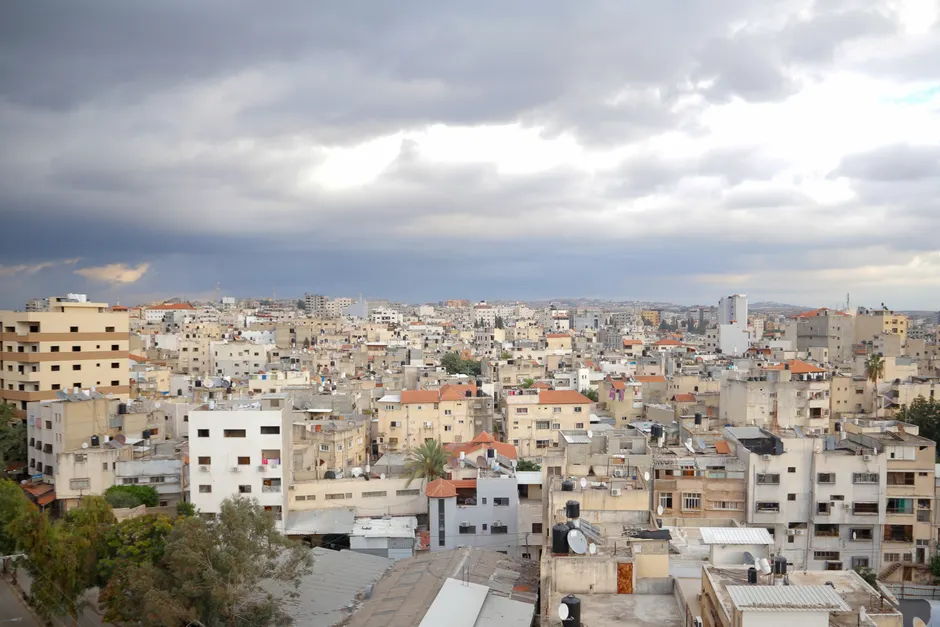
Israel Bombards Gaza as 14-Day Clock Ticks on Trump's Disarmament Deal

Israel bombarded Gaza on August 1, 2026, days after U.S. President Donald Trump announced a disarmament deal that calls for Hamas to give up its weapons and for Israel to halt its attacks in the territory (New York Times). The strikes came with a 14-day window ticking: the parties to the deal have two weeks to agree on a timetable for implementation, according to the Washington Post.
The framework, as reported, is straightforward in outline and treacherous in sequence. Hamas is to disarm; Israel is to withdraw from Gaza (Washington Post). Neither side, the Post notes, wants to go first. The deal's first phase envisions a mutual de-escalation — both parties stepping back at the same time — despite deep mutual distrust.
The bombardment on August 1 was not an isolated event. On or around July 30, Israeli strikes killed three people in Gaza, including two children, amid a new cease-fire push (Reuters). In the days before, Israel had systematically targeted senior Hamas security officials. On July 26, an Israeli strike killed Colonel Wael El-Ledawi, head of internal security in Gaza, and Major Ramez Abu Zraiq, according to medics and police (Reuters). A day earlier, on July 25, an airstrike killed Brigadier-General Abdel-Nasser, the head of the Hamas-led police force in the northern Gaza Strip (Reuters).
These targeted killings continued a pattern of Israeli strikes that have persisted throughout the nominal truce period. Israeli strikes have killed more than 950 Palestinians since the start of the truce, while Palestinian militant attacks have killed four people, according to a Reuters report from June 2026 (Reuters).
The truce referenced in that June report traces to a ceasefire agreement reached on January 15, 2025, which was expected to bring immediate relief to both Gaza and Israel (U.S. State Department). Eighteen months later, the agreement has held in form if not in substance: Israel has maintained a campaign of strikes throughout the period, while Hamas has continued to exist as a governing and security apparatus in Gaza, albeit under steadily degraded leadership.
Trump's announcement that Hamas agreed to disarm offered a measure of hope to Palestinians in Gaza, many of whom feared Israeli forces would not withdraw even under a deal (AP News). Palestinian Authority President Mahmoud Abbas praised the ceasefire announcement and expressed hope that all parties would commit to implementing its first phase. The prospect of Hamas disarming also raises the question of what governance structure would fill the vacuum in Gaza, a territory the Palestinian Authority has not controlled since Hamas's 2007 takeover. The Palestinian Authority is the internationally recognized governing body for Palestinians in parts of the West Bank; it lost control of Gaza to Hamas nearly two decades ago.
The sequencing problem at the heart of this deal is structural, not tactical. Hamas disarmament, if carried out, would leave the movement without its primary leverage. An Israeli withdrawal, if carried out first, would leave Hamas armed in a vacated territory. The 14-day timetable negotiation is, in effect, a test of whether outside guarantors can bridge a trust gap that 18 months of a broken ceasefire did nothing to narrow.
The broader context here is one of cumulative erosion. The January 2025 ceasefire was supposed to bring relief; instead, over 950 Palestinians have been killed by Israeli strikes during the truce period, and Hamas security officials have been picked off one by one in targeted strikes. Each side can point to the other's violations to justify its own. The Trump framework, by demanding simultaneous concessions, asks both parties to act against their immediate incentives. The fact that Israel continued bombardment even after the deal was announced suggests that either the parties interpret the agreement's terms differently, or that the Israeli military is operating with latitude that the diplomatic track has not yet constrained.
For the 14-day window to produce a workable timetable, a credible monitoring and verification mechanism would need to be established, and both parties would need confidence that compliance by one will be met by compliance from the other. Neither condition has been demonstrated. The deal's survival depends on whether the announcement was the beginning of a sustained diplomatic process or a momentary flash of political theater that the battlefield will swallow whole.