Framework Adds New Chips and ARM Option to Its Upgradeable Laptop Line
Framework Adds New Chips and ARM Option to Its Upgradeable Laptop Line
Framework has announced a series of updates to its modular laptop lineup, including new processor options, a third-party motherboard using ARM chips, and previews of new accessories. The company's core idea remains consistent since its 2021 launch: build laptops that you can repair and upgrade yourself, rather than replacing the whole machine when something ages out.
New Pro Model and Processor Choices
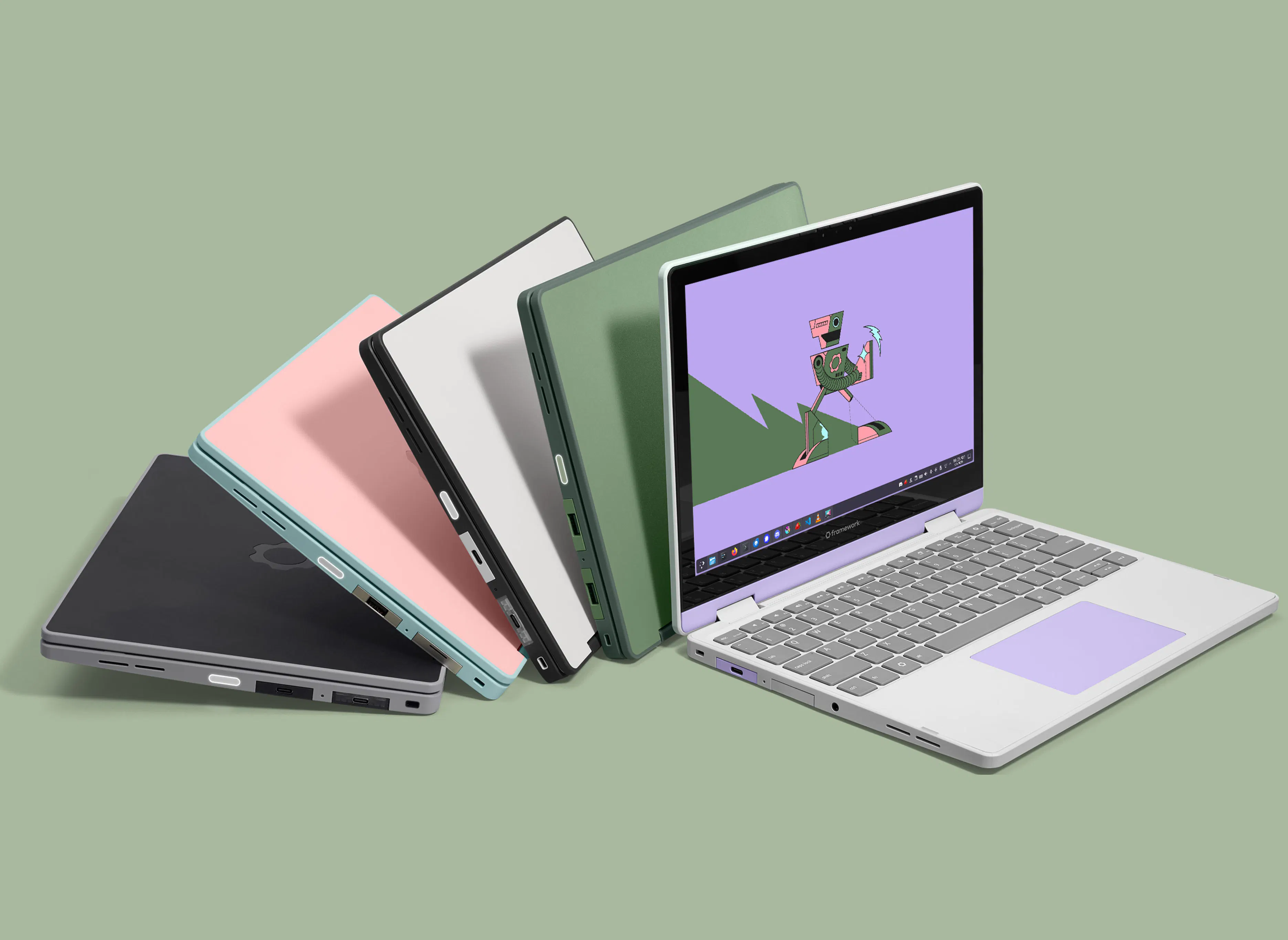
The headline announcement is the Framework Laptop 13 Pro, a refined version of the company's 13.5-inch design that's thin (15.85mm) and light (1.3kg). It joins existing models powered by Intel Core Ultra Series 1 processors, AMD Ryzen 7040 Series chips, and the newer Ryzen AI 300 Series, which you can pre-order now for April delivery.
Framework also made updates to its larger 16-inch model, though details are sparse. Across both sizes, the company offers a high-resolution display option (2880x1920, 120Hz) if you want sharper visuals on your screen.
ARM Processors Enter the Picture
Here's where things get interesting: a company called MetaComputing has designed an ARM-based motherboard that fits inside a Framework Laptop 13 chassis. ARM is a different processor architecture than the Intel and AMD chips most of us are used to — think of it as a fundamentally different way to design a processor, often favoring efficiency over raw power. This one uses a CIX P1 12-core processor and runs Linux.
The MetaComputing board costs $549 as a complete mini-PC (16GB memory, 1TB storage). The ARM motherboard is the first non-Intel/AMD option for Framework's platform.
This matters because it shows Framework's modular design works beyond just swapping between Intel and AMD. If you can fit entirely different processor types into the same chassis, the upgrade and repair possibilities expand significantly.
New Accessories on the Horizon
Framework previewed two modular add-ons at the event. The OCuLink Dev Kit would let you connect external graphics processors using a high-speed connection standard called OCuLink — useful if you want to do graphics-heavy work without hauling around a gaming laptop. The wireless touchpad keyboard is self-explanatory: a detachable input device for more flexible working setups.
Both are in early preview; no release dates yet.
A CEO's Warning About PC Hardware Supply
Framework's CEO Nirav Patel used the event to flag a broader industry concern. He warned that AI companies are consuming computer chips and memory at such high rates that traditional PC buyers might face shortages. According to Patel, this could push the industry toward renting hardware instead of selling it outright — a significant shift in how we access computing power.
Analysis: Patel's warning carries weight because Framework depends entirely on component availability and on people actually owning and keeping their laptops. He's not an uninterested observer. That said, his core concern — that AI infrastructure buildouts are straining component supplies — reflects real industry tensions worth watching.
Why Modularity Matters in a Sealed-Device World
Framework positions itself against an industry trend: most laptops today are sealed boxes where you can't swap out the processor, memory, or storage without sending the machine back to the manufacturer. Framework's approach lets you upgrade or repair these components yourself. Over its six-year history, the company has shown this model can work at a commercial scale.
Adding ARM processor options extends this philosophy. Instead of being locked into x86 chips (Intel and AMD), you could in theory upgrade from one processor family to another and keep the same chassis, screen, and accessories.
What Comes Next
Framework announced another major event scheduled for April 21, 2026 — a two-year advance notice that suggests significant development in progress, possibly new form factors or major updates to current designs.
More importantly, MetaComputing's ARM motherboard shows that Framework's platform specifications are open enough that third-party companies can design compatible hardware. That could lead to specialized configurations beyond what Framework builds internally.
Worth flagging: The MetaComputing ARM option at $549 is competitively priced against other ARM-based portable systems. The real value here is the upgrade path — you own it, you can repair it, and if a better ARM board is built for the Framework chassis later, you're not starting from scratch.
How the Pieces Fit Together
All Framework processors slot into the same 13.5-inch form factor, which means your high-resolution display and expansion modules work across Intel, AMD, and now ARM variants. That's a practical benefit: your existing accessories aren't obsolete when you upgrade the main chip.
OCuLink is a high-bandwidth connection standard originally designed for data centers and workstations. Using it for external graphics is a practical choice because USB-C and Thunderbolt can become bottlenecks if you're moving a lot of graphics data.
The wireless keyboard preview suggests Framework is exploring use cases where the laptop becomes more of a processing unit and less of a traditional clamshell. Pair it with an external display and you have something closer to a desktop, but still portable.
Framework's expansion into modular accessories and alternative processors demonstrates a fundamental belief: sealed, integrated designs (the industry norm) are not inevitable. You can build thin, light, high-performance laptops that you can still upgrade and repair. The addition of ARM processors shows this approach scales beyond traditional x86 chips, opening the door to more choices and longer device lifespans for the people who own them.