Fender CEO Compares AI Skepticism to Early Telecaster Backlash
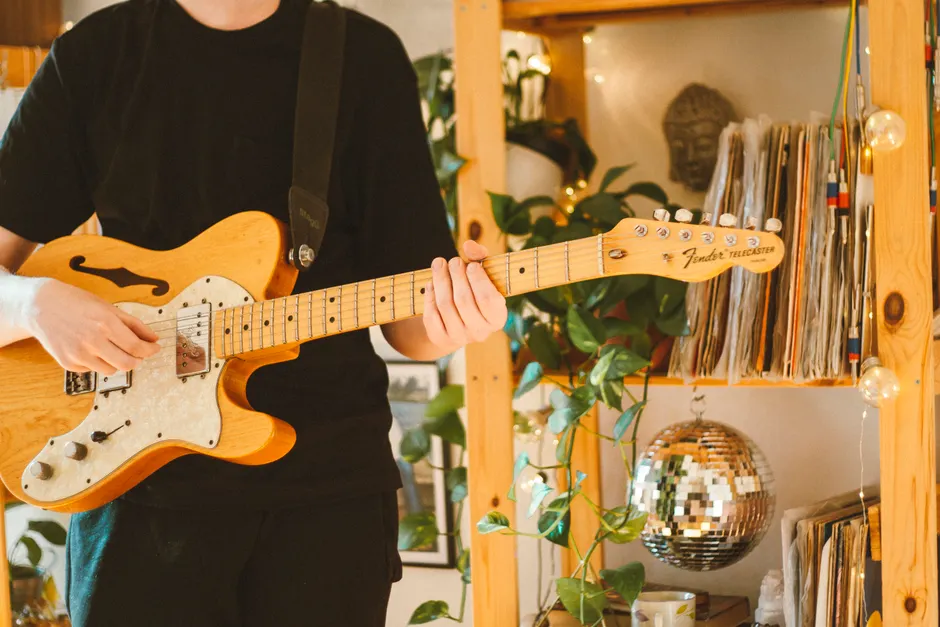
Fender CEO Edward "Bud" Cole has pushed back against criticism from the guitar community over his comments about artificial intelligence, comparing opposition to AI tools with the early backlash against the Fender Telecaster, which he says some people at the time thought "looked like a rope" (Ultimate Guitar).
Cole's remarks on AI trace back to an interview published in May 2025, and the backlash from guitar players has been building since (Guitar World). Cole subsequently elaborated on his position, framing AI as a natural extension of tools that have long existed in music rather than a break from tradition. He said AI has existed in music "for as long as there has been recorded music" (The Verge).
Central to Cole's argument is the idea that cover music has functioned as a form of "analog AI" for a long time. He described a second analogue form of AI as well: bandmates. Beginner songwriters, he said, rely on their bandmates in the same way they might rely on AI, and AI can fill that role too (The Verge).
Cole grounded the argument in personal experience. He said he listened to R.E.M., U2, The Smiths, and The Cure, and learned to play guitar because he wanted to play their songs rather than just listen to them. That impulse to move from passive listening to active participation is, in his framing, what AI can now accelerate for a new generation of players (The Verge).
He identified two barriers to entry for prospective guitarists. The biggest, he said, is the time it takes to learn the instrument. The second is writing songs. AI, in Cole's view, can lower both barriers, potentially expanding the population of active guitar players. He said AI has the potential to "help create a whole new world of guitar players" (Guitar.com).
Cole's most expansive claim is that "we are on the brink of freeing up people to move beyond the same old covers" and to work with AI the way they already work with their bands (The Verge). The Telecaster comparison is meant to reinforce that point: a design now regarded as foundational was once dismissed as absurd.
The guitar community's response has been critical, though the specific objections reported in the available sources are general rather than itemized (Guitar World; Ultimate Guitar).
The broader context here is that Cole is making a category argument, not a product argument. He is not announcing an AI-powered Fender product or partnership. He is redefining what counts as artificial intelligence in the musical context, stretching the term to cover any system that helps a musician produce work they could not produce alone, whether that system is a bandmate, a cover version learned from a record, or a generative model. That framing is doing real rhetorical work. If AI is just the latest instance of a pattern as old as recorded music, then opposing it is reflexively conservative, on par with rejecting a new guitar body shape.
Whether that analogy holds depends on a distinction Cole's comments do not fully address. A bandmate brings taste, disagreement, and creative friction to songwriting. A cover song learned from a record is a fixed artifact that a musician interprets through their own technique. Generative AI tools, as they exist today, occupy a different position: they produce output on demand, shaped by training data and prompt engineering, without the collaborative pushback that a human partner provides. The "analog AI" framing collapses these differences, and that collapse is where the criticism from the guitar community likely finds its foothold.
Cole's Telecaster parallel is also worth examining on its own terms. The Telecaster, introduced in 1950 as the Broadcaster, was a departure from hollow-body archtop construction. Critics at the time objected to its solid pine body and bolt-on neck, and the "looked like a rope" characterization, if accurate, reflects an aesthetic objection to a visually unconventional instrument. The backlash to AI in music raises different concerns: labor displacement for working musicians, the use of copyrighted training material without consent, and the potential flattening of stylistic diversity in popular music. These are structural and economic objections, not aesthetic ones, and the Telecaster analogy does not map cleanly onto them.
What Cole gets right, in this author's view, is the identification of the two barriers. Learning an instrument takes sustained effort over months and years, and songwriting is a separate skill set that many players never develop. If AI tools can reduce the friction of either, the addressable market for guitar ownership genuinely expands. Fender has a commercial interest in that outcome, but the interest does not invalidate the observation.
The open question is whether the tools that lower those barriers will also lower the ceiling. A bandmate who pushes back makes you a better songwriter. A tool that always complies may not. Cole's framing assumes the collaborative dynamic transfers. Whether it does is an empirical question that no interview can settle.


