Slate Auto Sets June 24 Launch Date for Its Electric Convertible Truck

Slate Auto Sets June 24 Launch Date for Its Electric Convertible Truck
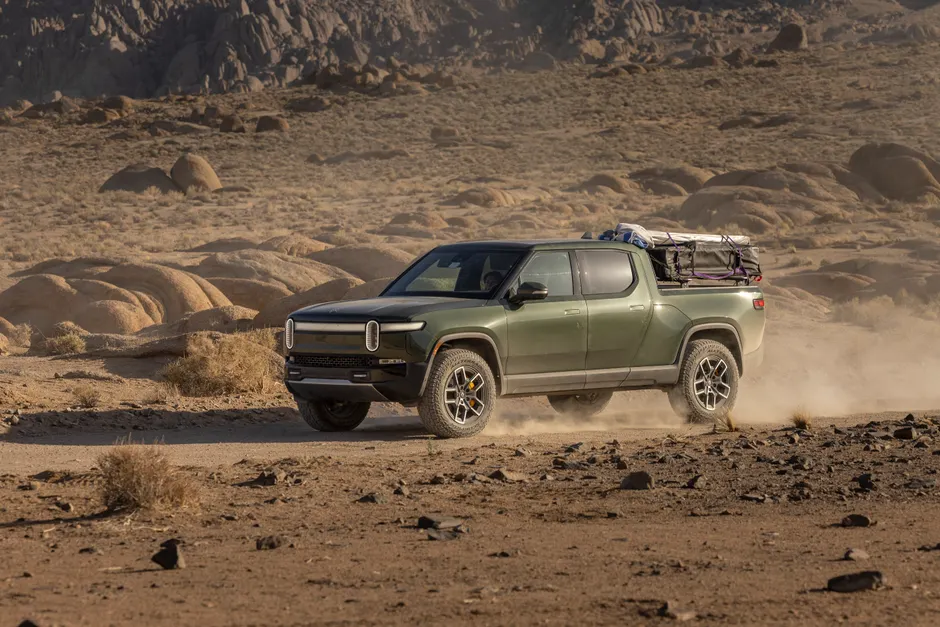
Slate Auto will open preorders for its first vehicle on June 24. The company has already lined up serious investors, including Amazon founder Jeff Bezos and Mark Walter, who runs Guggenheim Partners and owns the Los Angeles Dodgers. The vehicle itself, called the Slate Truck, is an electric pickup with an unusual feature: it can reconfigure itself to function as an SUV, though the company hasn't yet disclosed exactly how this conversion works.
This announcement puts the Troy, Michigan-based startup into direct competition with established electric trucks from Ford (the F-150 Lightning) and Rivian (the R1T), plus several newer automakers working on similar vehicles. Slate Auto's main distinguishing feature is that modularity — rather than building separate truck and SUV models, the company designed one platform that aims to do both jobs.
How the Company Got Here
Slate Auto started in 2022 as a project inside Re:Build Manufacturing, a company founded by Miles Arnone, William Barker, and Jeff Wilke. In 2024, it brought in notable investors including Mark Walter and Jeff Bezos, alongside the venture firm General Catalyst. The investor lineup is typical of how well-funded automotive startups are funded today — wealthy individuals and institutional funds betting that electric vehicles will reshape the industry.
The company has also gone through a leadership change. Chris Barman was the original CEO, but Peter Faricy, who previously worked at Amazon, took over before the first vehicle enters production. This kind of executive shift is common in venture-backed startups as they move from the idea phase into manufacturing. Faricy's background in technology and operations at Amazon reflects a broader trend of software-focused executives moving into automotive roles.
What Makes the Slate Truck Different
The Slate Truck tries to solve a real consumer problem: the need to own two vehicles. Instead of selling separate pickup and SUV models, Slate Auto is building one vehicle that can shift between both configurations. In theory, this reduces the company's manufacturing headaches and inventory burden, while potentially attracting more customers who want one vehicle to handle multiple jobs.
The convertible design could appeal to buyers looking for flexibility, especially at the high price points typical of electric vehicles. However, there is a genuine trade-off to consider. The mechanical complexity of a conversion system could affect reliability or maintenance costs in ways we won't know until these vehicles are in customers' hands for a few years.
Where Slate Auto Builds and Designs
The company operates from two locations: manufacturing in Troy, Michigan, and design work in Long Beach, California. The Michigan base gives it access to established automotive suppliers and manufacturing talent. The California studio positions the design team closer to the broader technology sector. This split mirrors strategies used by Tesla and Lucid Motors — using traditional manufacturing regions for production while anchoring software and design work in technology hubs.
The broader pattern here is worth observing. Early electric vehicle startups focused on proving that electric drivetrains could match the performance of traditional gasoline engines. Companies today are competing on different grounds: software integration, user experience, and novel form factors like Slate's convertible approach. The question has shifted from "can electric trucks work?" to "which novel designs can win in an increasingly crowded market?"
What Happens Next
The June 24 preorder date arrives as the electric truck market grows significantly. Major automakers have committed enormous resources to electric vehicles, and manufacturing capacity is expanding rapidly. Early supply chain bottlenecks have mostly cleared, but competition for customer attention has intensified sharply.
Electric trucks face their own particular challenges. Commercial and fleet operators have embraced them readily, since predictable routes allow for effective charging schedules. Consumer adoption, by contrast, still depends on broader public charging networks and the ability to drive traditional truck distances on a single charge — aspects of the infrastructure that are still being built out.
Pricing will matter enormously when Slate Auto announces it on June 24. Electric vehicles typically cost more than gas-powered equivalents, but as production volumes rise, prices are dropping. How Slate Auto prices the Slate Truck will signal whether the company is aiming for premium buyers or trying to reach a broader market audience.
The company has not yet announced when production will actually begin or how many vehicles it can manufacture at scale. Running an automotive company is capital-intensive and heavily regulated — these are barriers that software-focused startups sometimes underestimate. Several electric vehicle startups have struggled or failed at the transition from prototype to high-volume manufacturing. Slate Auto's June 24 announcement will provide the first real market test, but long-term success depends on executing across manufacturing, quality control, dealer and service networks, and software — capabilities well beyond just designing an innovative vehicle.
The convertible truck concept offers clear differentiation. Whether that differentiation is enough to justify the added engineering complexity and cost remains an open question. June 24 will be the first real public answer.