Oil Prices Drop 7% as Trump Cancels Iran Strike — but Hormuz Keeps Markets Guessing
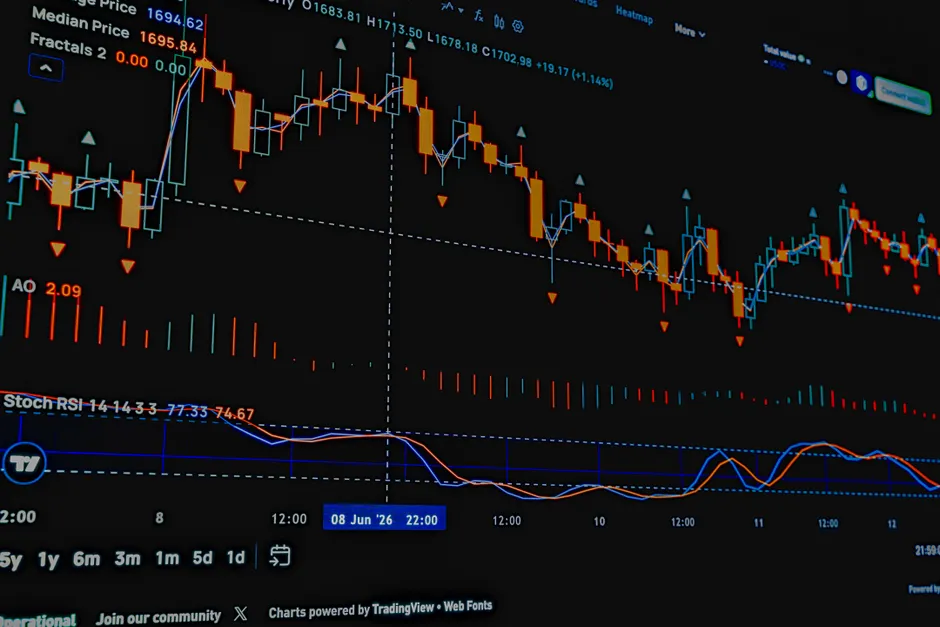
Brent crude futures (the global benchmark for oil prices) fell roughly 7% on August 3, 2026, after President Donald Trump cancelled a planned military strike on Iran. The drop pushed prices to a three-week low, briefly retreating toward pre-war levels near $70 per barrel, according to Reuters. The slide extended into August 4, with Brent settling about 7% lower as U.S.-Iran tensions eased and major equity indexes gained on the session, Reuters reported.
The de-escalation capped a five-month conflict that had periodically disrupted Gulf shipping lanes and kept a persistent risk premium — an extra amount buyers pay because of uncertainty — embedded in the crude market. Trump's announcement that the U.S. would end its war on Iran soon first surfaced in early April via a Reuters report, though the cancellation of strikes on August 3 represented the most concrete step toward unwinding the military posture. Oil prices had touched five-month highs in Sunday evening trading after U.S. strikes on Iran over the preceding weekend before reversing more than 7% lower to close the session, Reuters reported.
The pullback, however, collided with fresh supply-chain uncertainty on August 4. A ship was struck in the Strait of Hormuz, a narrow waterway between the Persian Gulf and the open ocean, leaving the status of U.S.-Iran talks uncertain, Reuters reported. Iran stated that no U.S. talks were under way and no meetings were planned, Reuters reported, complicating any read on whether the strike cancellation translates into a durable ceasefire or merely a tactical pause.
This dynamic is not new to the conflict's arc. In April, crude futures settled higher in volatile trading on risks surrounding the U.S.-Iran truce and the reopening of the Strait of Hormuz, WSJ reported. By late May, oil futures settled lower amid conflicting expectations for an agreement to end the stalemate, WSJ reported. The pattern — headline-driven rallies on escalation, sharp sell-offs on de-escalation, followed by renewed buying on unresolved logistics — has repeated through multiple cycles since the conflict began.
U.S. government inventory data provide a backdrop of ample domestic supply that has helped cap upside in crude despite the geopolitical risk. In the week covered by the June 3, 2026 report from the Energy Information Administration (EIA), U.S. crude inventories fell by 8 million barrels, double analyst expectations, with refinery utilization rising to 94.7%, Reuters reported. Earlier in the spring, the data told a looser story: crude stocks rose by 5.5 million barrels to 461.6 million in the week of April 1, by 3.1 million to 464.7 million in the week ended April 3, and by 3.8 million to 443.1 million in the March 11 report. Gasoline stocks, meanwhile, drew down by 5.4 million barrels to 244 million in mid-March and by 3.7 million to 249 million in the March 11 report.
The inventory trajectory matters for how the market absorbs the current geopolitical shock. A 7% drop in Brent is a significant single-session move, but it comes off elevated levels and against a U.S. stock picture that showed builds earlier in the spring before tightening sharply into summer. The net effect is that crude has not "gone crazy" over five months of war, as a July 21 Reuters analysis noted — prices briefly retreated to pre-war levels of $70 after Trump called off strikes, Reuters reported.
The Strait of Hormuz incident on August 4 is the variable that prevents a clean unwind. Roughly 20% of global oil consumption transits the strait under normal conditions. A single ship strike does not constitute a closure, and the verified facts do not establish a sustained disruption. But Iran's insistence that no talks are planned, combined with the physical incident on the waterway, leaves the de-escalation narrative incomplete. Markets are pricing the strike cancellation as a genuine step toward resolution while hedging against the possibility that Hormuz remains a flashpoint.
Separately, the U.S. Bureau of Labor Statistics is scheduled to release June 2026 JOLTS data on August 4 at 10:00 a.m. Eastern Time. JOLTS (Job Openings and Labor Turnover Survey) tracks job openings and worker departures, a data point the Federal Reserve monitors closely in its assessment of labor market tightness. A July JOLTS release is scheduled for September 1.
The broader context here is a market caught between two competing forces. On one side, the most direct geopolitical risk to oil supply — active U.S.-Iran hostilities — appears to be receding, and prices are adjusting downward accordingly. On the other, the infrastructure vulnerability exposed by the Hormuz incident and Iran's diplomatic posture leave a residual uncertainty that any single headline is unlikely to resolve. For traders, the interval between the August 3 strike cancellation and any confirmed diplomatic process is likely to be characterized by elevated realized volatility, with each incident in the Strait acting as an asymmetric upside risk against a fundamentally softening backdrop.


