Russia's August 5 Assault on Kyiv Exposes Ukraine's Missile Defense Gap

Russian forces struck Kyiv and surrounding areas overnight on August 5, 2026, in a combined attack using ballistic missiles, cruise missiles, and drones. At least 17 people were killed, and the assault laid bare a critical shortfall in Ukraine's ability to intercept incoming missiles Al Jazeera.
President Volodymyr Zelenskyy said Russia fired 24 ballistic missiles, four cruise missiles, and 115 drones during the assault. According to preliminary Ukrainian data as of 08:30 local time, air defense units shot down or suppressed 98 of the 115 drones Interfax Ukraine. The drone array included Shahed, Gerbera, Italmas, and other types — reflecting the mix of loitering munitions (drones that circle a target area before striking) that Moscow has deployed throughout the war. Against the ballistic and cruise missiles, however, Ukraine's interception capacity proved insufficient. Zelenskyy said the shortage of missile interceptors directly caused the casualties and destruction from the attack.
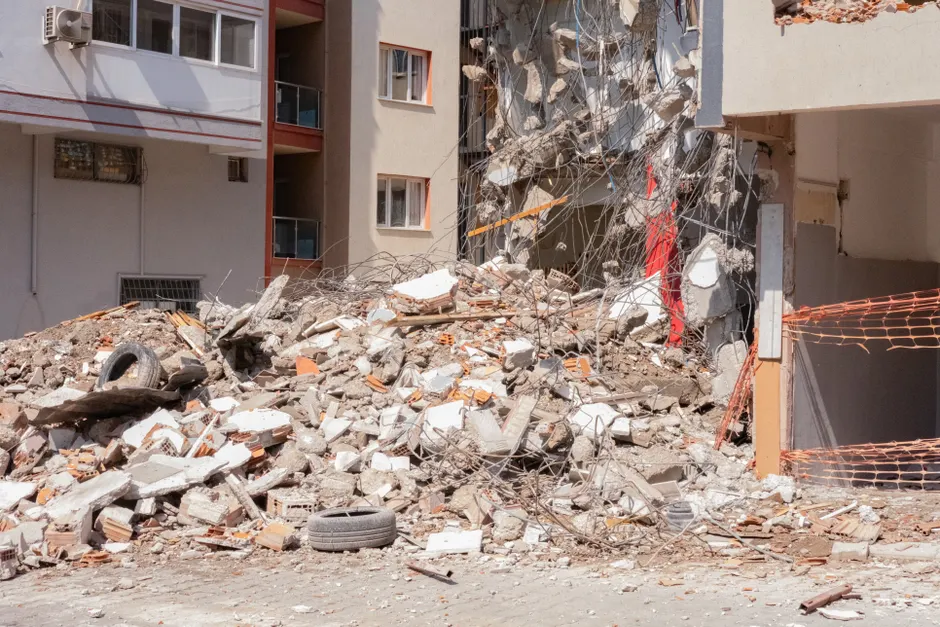
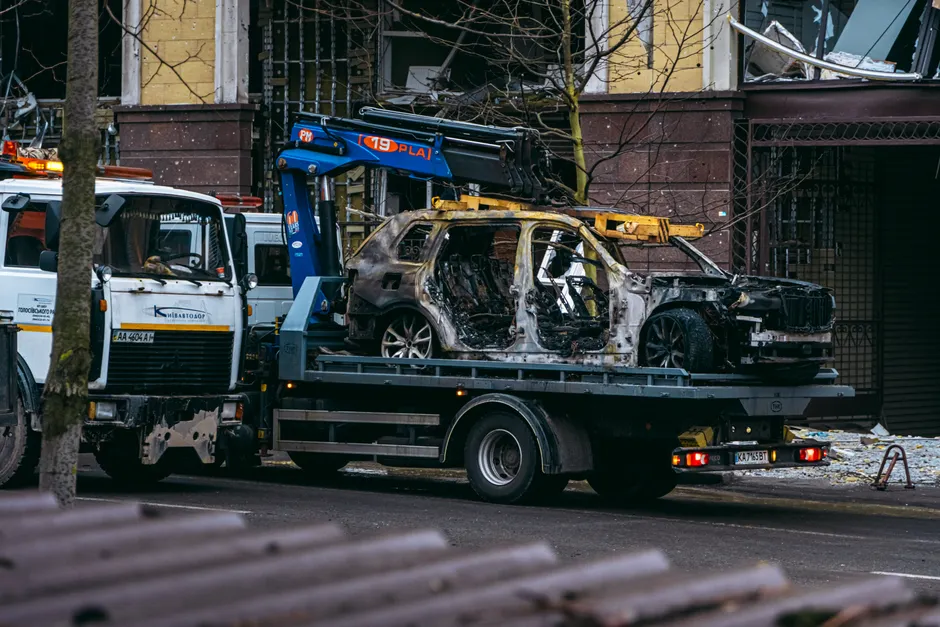
The main targets, according to Zelenskyy, were warehouse facilities belonging to civilian businesses, along with infrastructure and a railway station. Ukraine's State Emergency Service described the overnight bombardment as a "massive attack," with warehouse facilities struck in Brovary and a fire breaking out at a warehouse in Bucha. Serhii Beskrestnov, an adviser to Zelenskyy, accused Moscow of deliberately targeting civilian infrastructure. Al Jazeera reporter Audrey MacAlpine reported that Ukrainian authorities told her cluster munitions were used during the attack, and that the Epicentr retail store in Kyiv was hit. Cluster munitions disperse smaller submunitions over a wide area, making them especially devastating against soft targets in commercial and residential zones and significantly complicating post-strike cleanup due to unexploded ordnance.
This assault follows a pattern of intensifying Russian strikes on the capital. A Russian missile attack on Kyiv on August 1 killed at least nine people and wounded 33 AP News. Two days before that, a ballistic missile and drone attack across Ukraine killed at least 10 people AP News. On July 11, separate Russian missile and drone attacks killed six people, and in a distinct incident four people including a child were killed and 17 wounded when two aerial glide bombs struck AP News. A heavy drone and missile attack on Kyiv on July 2 killed at least 21 civilians AP News. The cumulative effect of this sustained tempo is a steady drain on Ukraine's interceptor inventory without matching replenishment.
Zelenskyy's attribution of the casualties directly to the interceptor shortage places the spotlight on the supply pipeline from Washington. US President Donald Trump appeared to backtrack on a promise to grant Ukraine a licence to produce Patriot missile interceptors domestically Al Jazeera. Reuters reported that US officials are discussing with Ukraine how to replenish its depleted Patriot stocks, with one option allowing Ukraine to manufacture some components domestically before final assembly in Germany. That compromise structure would keep the most sensitive production steps on NATO soil while partially addressing Kyiv's demand for domestic manufacturing capacity.
The broader context here is the strain on US munitions stocks from multiple simultaneous conflicts. Washington has reportedly exhausted much of its stockpile of key munitions during the five-month war with Iran, which is currently paused amid diplomatic efforts Al Jazeera. The Iran conflict created direct competition for interceptors and precision munitions that would otherwise be available for transfer to Ukraine. With the Iran pause holding but no formal resolution, the question of whether US production can meet competing demands from both theaters remains open.
Ukraine also launched strikes against Russian territory during the same period. Regional Governor Dmitry Milyaev said drones hit a Wildberries sorting office in the town of Aleksin in Tula oblast Al Jazeera. The strike on a commercial logistics node mirrors, on a smaller scale, the targeting pattern Russia employed against Ukrainian warehouse facilities.
What this means for the trajectory of the war is becoming clearer. The interceptor shortage is no longer a projected risk but a present-tense factor shaping outcomes on the ground. Russia's operational logic appears straightforward: saturate Ukrainian air defense with mixed drone types to deplete interceptor stocks, then deliver ballistic missile strikes against economic and logistical infrastructure once the defense layer is thinned. The August 5 assault fits that template. Ukraine's ability to intercept 85 percent of the incoming drones confirms that the drone-defense layer, which relies heavily on electronic warfare and mobile fire teams, remains functional. The missile-defense layer, dependent on scarce Patriot interceptors, does not.
The proposed component-manufacturing arrangement with final assembly in Germany, if it materializes, would address the problem on a timeline measured in months or years rather than weeks. Russia's operational tempo suggests it is calibrated to exploit exactly that gap. Zelenskyy's public framing of the casualties as a direct consequence of the interceptor shortage functions as much as a political signal to Washington as a battlefield assessment. The pressure on the Trump administration to clarify its position on Patriot licensing will intensify, but that decision now sits inside a broader munitions allocation problem that includes the Iran theater and US force-readiness requirements.
The human cost continues to mount. The 17 confirmed dead on August 5 follow the nine killed on August 1, the six killed on July 11, the 10 killed on July 30, and the 21 killed on July 2. Each of these attacks targeted or affected civilian infrastructure. Ukraine's military continues to inflict losses on Russian forces on the ground; Zelenskyy said in March that Russia lost more than 92,000 killed and seriously wounded that winter alone, each confirmed by video President of Ukraine. But the attrition dynamic is now operating on both sides simultaneously, and Ukraine's ability to sustain its defensive depth in the air is the variable most at risk.