Eight Startups Selected to Pitch at Startup Battlefield Australia
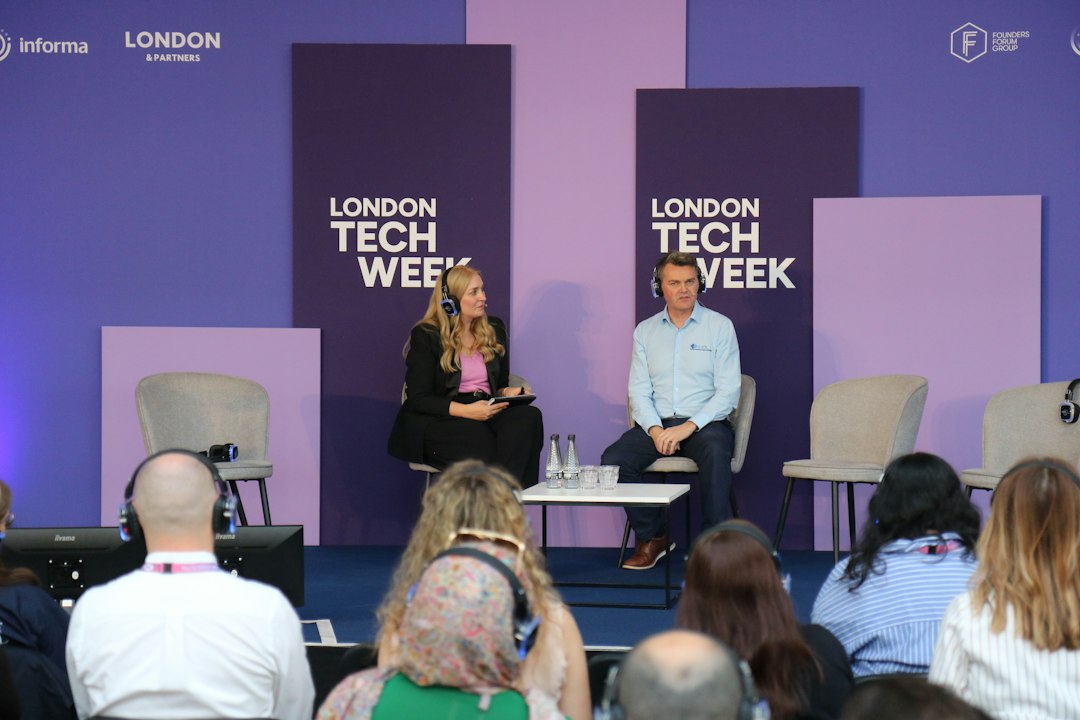
TechCrunch has named the eight startups that will pitch live at Startup Battlefield Australia on August 19 at Stripe Tour Sydney 2026. The competition, a joint effort between TechCrunch and Stripe, will be hosted by Isabelle Johannessen, Director of Startup Battlefield. TechCrunch
The finalists cover a broad set of categories: AI governance, anti-fraud, physical security, workforce management, creator marketing, personalized nutrition, video intelligence, and physical therapy automation. Each startup will pitch in front of top-tier investors, global press, and Australia's broader tech community. TechCrunch
Aigentsphere is an independent platform for managing and governing AI within large companies, aimed at helping them deploy AI safely at scale. Apate.ai fights scams by engaging scammers in live conversation and turning those exchanges into real-time intelligence for banks, telecom companies, and governments. Callease Ai is an operating system for physical security control rooms, starting with voice AI that automates welfare checks, escalation calls, and patrol calls.
Choosey App applies agentic AI (AI that can take multi-step actions on a user's behalf) to workforce management, combining instant hiring, AI-powered job matching, and same-day pay. Doomers AI helps AI and tech companies build momentum for product launches on X by coordinating a network of vetted content creators. equ builds a personalized nutrition AI engine, drawing on a decade of data and more than 100,000 users, and embeds it into health and wellness products. LeadStory offers a video intelligence layer that can find exact moments within sports, news, and finance clips using natural-language search queries. Preve automates treatment plan creation and patient adherence tracking for physical therapy clinics, aiming to improve retention and clinical outcomes. TechCrunch
Three of the eight finalists will win prizes, with the top three each receiving up to $15,000 in Stripe fee credits. The overall winner also earns a place in the Startup Battlefield 200 at TechCrunch Disrupt in San Francisco, where 200 startups exhibit, 20 pitch on the Main Stage, five reach the final round, and one takes home $100,000 equity-free. TechCrunch TechCrunch
The application window for this edition closed on July 20, 2026, after a final extension. TechCrunch
Startup Battlefield has been running for over 15 years and has featured more than 1,700 companies. Alumni have collectively raised over $32 billion in funding and achieved more than 250 exits (acquisitions, mergers, or public offerings). Notable alumni include Dropbox, Trello, Cloudflare, and Discord, all of which competed before they became widely known. TechCrunch
The Australian edition has a track record of its own. HealthMatch won Startup Battlefield Australia 2017 and went on to raise over $25 million. FluroSat, the 2017 runner-up, merged to form Regrow Agriculture, which counts Microsoft and Cargill among its backers. The 2017 alumni class has collectively raised over $147 million. TechCrunch
What stands out about this cohort is how many of the finalists are AI-native. Six of the eight build on large language models, agentic AI, or computer vision as their core technology rather than adding AI as a feature to an existing product. That is a shift from the 2017 cohort, where HealthMatch and FluroSat applied AI to clinical trial matching and agricultural analytics respectively but sat within more conventional software frameworks. The current pool reflects how thoroughly generative and agentic AI has spread through the early-stage startup pipeline. Governance (Aigentsphere), conversational anti-fraud (Apate.ai), voice-automated security operations (Callease Ai), agentic workforce matching (Choosey App), creator network orchestration (Doomers AI), and natural-language video search (LeadStory) are all products that would not have been feasible without the AI model capabilities that have emerged over the past three to four years.
The two non-AI-native finalists, equ and Preve, still rely on machine learning for personalization and automation respectively, though their value is anchored in domain-specific data rather than general-purpose model capability.
The broader context here is the prize structure relative to what is at stake. A $15,000 Stripe fee credit is modest as direct capital goes. The real value, as with previous Battlefield cohorts, lies in the visibility pipeline: investor attention at the live event, press coverage from TechCrunch, and the path to the Disrupt Main Stage in San Francisco. For the 2017 Australian cohort, that exposure translated into nine-figure collective fundraising. Whether the 2026 finalists convert similarly depends on execution, market timing, and the funding environment they enter, which is considerably more constrained than the near-zero-interest-rate conditions that buoyed the 2017 class.