Mirendil Inks $100M+ Google Cloud Deal to Scale Self-Improving AI Research
AI lab Mirendil has signed a multi-year partnership with Google Cloud worth more than $100 million to secure computing power for its self-improving AI research, as TechCrunch reported on August 6, 2026.
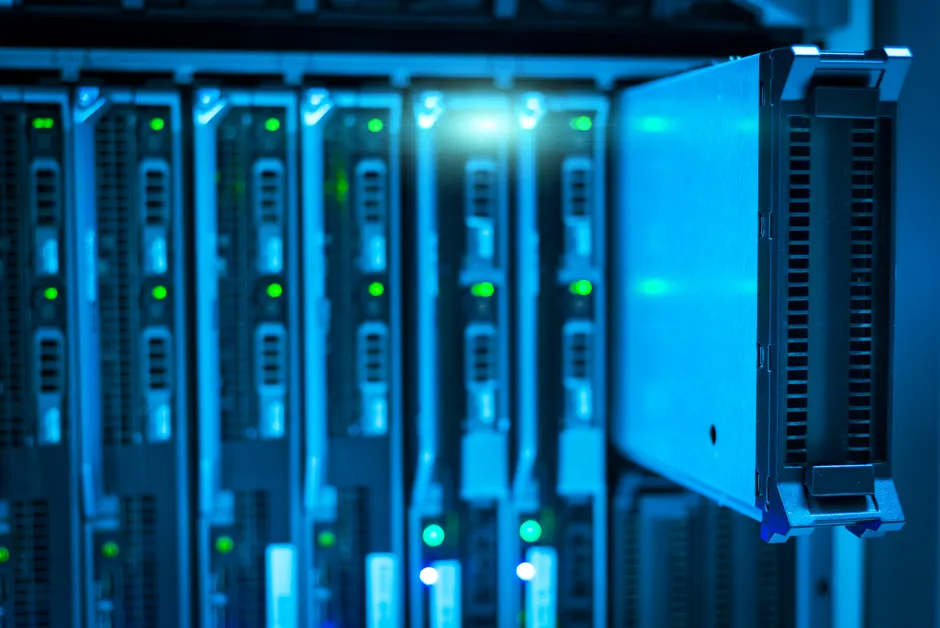
The deal, confirmed by Mirendil co-founder and CEO Benham Neyshabur, gives the San Francisco-based startup access to Google's TPU inventory, Nvidia GPUs, and managed training clusters. That mix matters: it means Mirendil is not betting on a single chip platform for a workload that will demand sustained, high-throughput training and inference cycles. Google Cloud's ability to offer both its proprietary TPU fabric and Nvidia GPU capacity under one contract is the kind of flexibility that a research program with unpredictable compute scaling needs.
Mirendil's co-founders, Neyshabur and Harsh Mehta, previously worked at Anthropic before leaving to build the company. They raised seed funding at a $1 billion valuation in late June 2026, roughly double the value of the Google Cloud deal. That valuation, achieved within weeks of the founders' departure from Anthropic, signals investor appetite for the specific bet Mirendil is making. The Google Cloud commitment is significant but not existential capital; it is infrastructure procurement against a well-capitalized balance sheet.
Google's side of the equation is represented by Amin Vahdat, SVP and chief technologist of AI and infrastructure. Vahdat's involvement indicates the deal sits within Google Cloud's highest-priority AI infrastructure track, not a generic startup program. For Google, locking in a well-funded AI lab with an Anthropic pedigree is a competitive positioning move as cloud providers compete to be the default computing platform for the next wave of frontier-model development.
Mirendil's technical ambition is where the deal takes on real weight. The company aims for its self-improving AI to eventually take on the work of an entire frontier AI lab. The platform is designed to let scientists create their own AI, and the self-improvement loop will be developed with the help of reinforcement learning sandboxes — controlled environments where models can be evaluated, selected, and iterated before deployment.
The concept of self-improving AI, where a system progressively refines its own capabilities through automated experimentation and feedback signals, is not new as a research direction. What is new here is the scale of computing power being applied to it. A $100 million-plus cloud commitment gives Mirendil the capacity to run the kind of parallel training sweeps and large-scale reinforcement learning experiments that the approach demands. Reinforcement learning sandboxes are computationally expensive by nature — each iteration cycle involves training, evaluation, and selection across potentially thousands of model variants. Without dedicated access to TPU and GPU clusters at this scale, the loop slows to the point where self-improvement becomes an academic exercise rather than a practical engineering process.
Looking at the competitive landscape, Mirendil's pitch differs from the standard frontier-lab thesis. Rather than building a single flagship model to compete with the output of Anthropic, OpenAI, or Google DeepMind, Mirendil is building infrastructure for the process of model improvement itself, and opening that infrastructure to scientists who want to build domain-specific AI systems. The analogy, imperfect as any analogy is, would be building an automated research pipeline rather than a single researcher. If the self-improvement loop can be made to work at scale, the cost of producing capable models for new scientific domains could drop substantially.
The risk is that self-improving AI remains one of the field's harder problems. Automated model selection, reward design, and the avoidance of degenerate optimization loops — situations where a model optimizes for the wrong thing and degrades rather than improves — are open research questions, not settled engineering. The compute budget Mirendil now controls buys the ability to run experiments at a pace that could surface answers, or could surface the depth of the problem. Either outcome is informative, but only one is commercially viable on a $1 billion valuation's implied timeline.
For Google Cloud, the deal is straightforwardly positive: a well-funded tenant with an Anthropic pedigree and a research agenda that demands exactly the kind of flexible, high-end computing power Google is built to provide. The deeper question is whether Mirendil's bet on self-improvement as the key lever produces compounding returns, or whether, like other ambitious AI automation bets before it, the difficulty of the problem outpaces even a nine-figure compute budget.