Bumble's Revenue Decline Pushes a Swipe-Free Future and Real-World Meetups
Bumble reported a 15.2% year-over-year revenue decline to $210.5 million for Q2 2026, with fewer paying customers and a disappointing quarterly forecast that pushed its stock lower. But the earnings call was anchored not by the financials but by a strategic shift: CEO Whitney Wolfe Heard said Bumble is building a new interaction model to replace the swipe and is pushing harder into real-life, in-person experiences.
The most concrete piece of that shift is Plans, a new app that connects people in low-pressure group settings. Plans lets users meet up for small-group drinks and dinners at local spots, with the goal of building friendships that could later grow into closer friendships or romantic connections. Bumble said early tests looked promising. Users who connect through Plans can keep talking on Bumble's main app without swiping or exchanging phone numbers, which keeps the conversation inside Bumble's ecosystem rather than losing it to iMessage or WhatsApp.
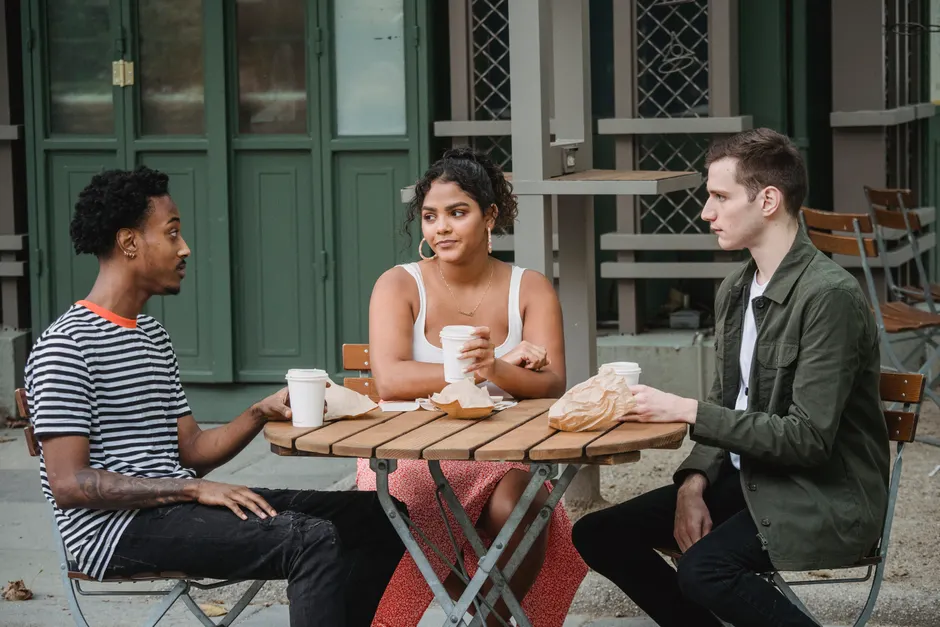
Wolfe Heard framed the in-person push as a response to generational behavior. Group socializing, she said, is genuinely how Gen Z prefers to meet, and Bumble wants to position itself as the bridge from meeting to socializing to dating. The company had previously tested platonic, real-world connections through Bumble BFF, its friend-making feature, which gained particular traction among Gen Z women.
The bigger change is the tease of a swipe-free interaction model. Wolfe Heard said Bumble wants to move away from optimizing for swipe speed toward what she called "more intentional, fewer, better, more considered signals." The company was clear that the transition would be gradual, intended to avoid disrupting its existing ecosystem. That caution makes sense: the swipe has been Bumble's core interaction since launch, and a sudden removal would risk alienating users who have not yet been introduced to an alternative.
Bumble also said it plans to use more AI tools to improve matching outcomes, though it was careful to caveat that this would not mean becoming an "AI-driven experience." The distinction matters. Bumble is signaling that AI will function as an enhancement layer — think relevance ranking, recommendation, or conversation support — rather than replacing the human judgment that governs whether two people actually want to meet.
The broader context here is that Bumble is attempting a product strategy overhaul under real financial pressure. A 15.2% revenue decline with shrinking paying users is not a gentle headwind. Dating app companies broadly have struggled with retention and monetization as user fatigue with swipe-based mechanics has grown, and Bumble's moves read as an attempt to address both the engagement problem and the revenue problem at the same time. Plans creates a new funnel into the core app. A swipe-free model, if it increases match quality and session depth, could improve the retention metrics that translate directly into paid conversions.
There is genuine risk in replacing an interaction paradigm that, for all its flaws, is proven to drive engagement and is deeply habituated in the user base. The swipe is fast, low-friction, and gamified. "Fewer, better, more considered signals" is a compelling product philosophy, but it runs against the dopamine-loop dynamics that have made swipe-based apps commercially viable. Bumble's gradual approach suggests the company is internally aware of this tension.
The in-person angle faces a different kind of risk. Group meetup products have been tried before across the social landscape with mixed durability. The key question is whether Plans can maintain enough local activity in enough markets to feel alive for new users, or whether it falls into the cold-start problem — the difficulty of building momentum when a product has few initial participants — that has plagued hyperlocal social products for years. Bumble's existing user base gives it an acquisition channel that standalone meetup apps lack, which could be a meaningful advantage.
Bumble did not provide a timeline for the full swipe-free transition or for Plans' broader rollout. The company's Q2 2026 results and forward guidance suggest the market is skeptical of near-term improvement. The strategic announcements on the call are a bet that product evolution, not incremental optimization of the current model, is what will reverse the trajectory. Whether that bet pays off will depend on execution speed and on whether Gen Z's stated preference for group, low-pressure socializing translates into sustained engagement on a platform historically built for one-to-one swiping.


