This $8 USB-C Adapter Powers Your Older Devices Without Modifications
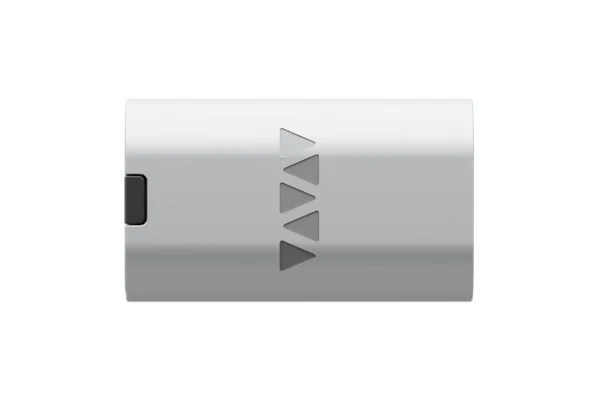
A company called Werewolf has built a small, programmable adapter called the VFLEX that lets older electronics with round DC power ports (commonly called barrel jacks) accept power from USB-C chargers. No internal modification to the device is needed. The Verge published a hands-on preview of the device on August 7, 2026 (The Verge).
The dongle costs $8, with interchangeable barrel-jack tips priced at $4. Together, they address a gap that has persisted throughout the industry's shift to USB-C: millions of devices, from monitors to retro consoles, still use barrel-jack power inputs that cannot directly accept USB-C.
The technically interesting part of the VFLEX is not voltage conversion but voltage negotiation. USB-C Power Delivery (PD) is a protocol that lets a charger and a device communicate about how much voltage and current should flow. The VFLEX uses this protocol to request a specific voltage from the charger, then passes that voltage through to the barrel-jack output. There is no buck-boost circuitry (the type of electronics that steps voltage up or down) doing the work. The charger itself must be capable of supplying the requested voltage level.
Users configure the target voltage by plugging the USB-C end of the VFLEX into a phone and selecting the desired level in an app. The setting is saved in non-volatile memory, meaning it persists even when the dongle is unplugged or loses power. It can be reprogrammed when repurposed for a different device (The Verge).
The supported voltage range spans 3.3V to 48V (werewolf.us). Standard USB-C PD voltage levels include 5V, 9V, 15V, 20V, 28V, 36V, and 48V (The Verge). Werewolf claims the VFLEX can support up to 48V when paired with a 240W USB-C power adapter capable of delivering that level (The Verge).
The practical constraint is that USB-C PD does not offer every voltage a legacy device might expect. Apple's 140W USB-C power adapter, classified as an Extended Power Range (EPR) charger, can deliver 5V, 9V, 15V, 20V, and 28V but cannot supply the 19V that some monitors require (The Verge). The VFLEX cannot produce a voltage the charger does not offer; it can only request from the available PD voltage levels and pass it through. For a device with non-standard voltage requirements, users will need a charger that happens to include the right level or accept the closest match at their own risk.
Verge writer Sean Hollister tested the VFLEX across three devices powered from a single Shargeek 300 portable battery: an Asus desktop monitor drawing 24W, a Super Famicom drawing 2W, and an RCA-to-HDMI adapter drawing under 1W (The Verge). That spread, from sub-watt to 24W, illustrates the dongle's range across device classes that share nothing except a barrel-jack power input.
The VFLEX is made by Werewolf, a company based at werewolf.us (The Verge; werewolf.us).
The broader context here is that USB-C PD has matured into a power standard with a surprisingly wide voltage range, but the ecosystem of devices that consume DC power has not kept pace. Barrel-jack inputs remain common in monitors, routers, external drives, retro hardware, and a long tail of embedded and industrial equipment. The VFLEX effectively turns any USB-C PD charger into a configurable barrel-jack power supply, which is a different proposition than keeping a drawer full of device-specific power adapters.
The $8 price point matters. Universal USB-C PD triggers and cables exist, but most are fixed at a single voltage or require a separate programming tool. A dongle that can be reconfigured from a phone, retains its setting in non-volatile memory, and costs less than a decent cable is cheap enough to justify keeping several on hand. For anyone who has consolidated on USB-C charging but still owns legacy hardware, the VFLEX removes the last barrier without soldering or modification.
The limitation to keep in mind is that the VFLEX's usefulness depends entirely on the charger's PD capabilities. A device needing 19V from a charger that tops out at 20V is not a clean match, and barrel-jack devices generally expect tight voltage tolerance. The adapter requests and passes through; it does not regulate. Users pairing it with devices that have narrow voltage tolerances should verify that the available PD voltage level falls within spec.