Houthi Drone Strike on Saudi Refinery Meets a Region in Flux: Defence Pacts, Hormuz Ultimatums, and an Absent Supreme Leader
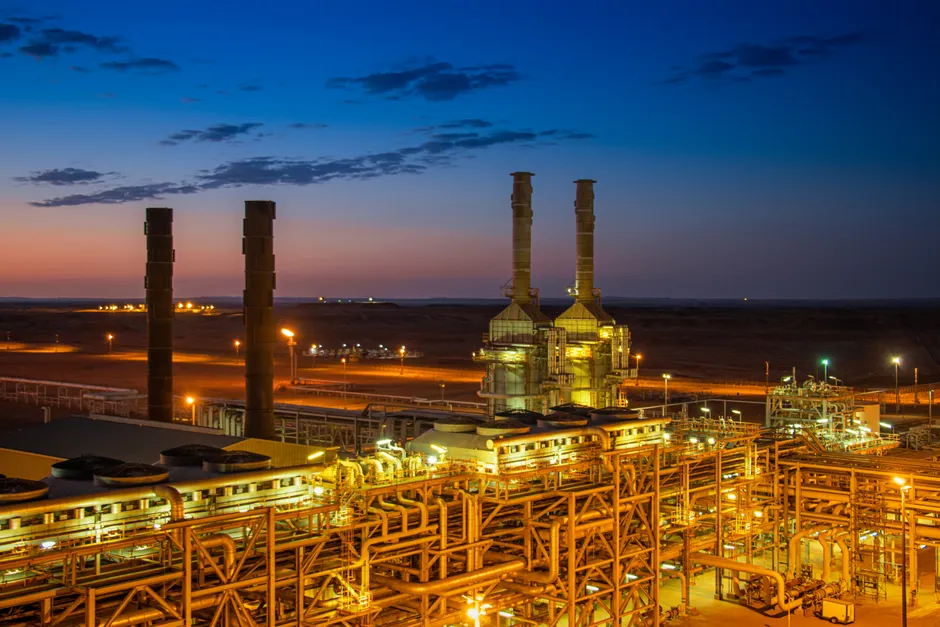
Yemen's Houthis, aligned with Iran, claimed responsibility for a drone attack on a Saudi oil refinery on Sunday 9 August 2026, intensifying a campaign against Saudi energy infrastructure that now overlaps with Iran's far-reaching demands over the Strait of Hormuz and a newly signed Saudi-Turkish-Pakistani defence pact. Houthi military spokesperson Yahya Saree said the group used a drone to target the Aramco refinery in Jizan, in south-west Saudi Arabia, claiming a direct hit. The Saudi energy ministry confirmed that a fire broke out at Aramco's Jazan refinery early Sunday but was later extinguished with no injuries, without specifying a cause (The Guardian). The Jazan refinery processes 400,000 barrels of crude oil per day.
The strike came two days after Saudi Arabia signed a defence pact with Turkey and Pakistan. According to The Guardian, Riyadh concluded the agreement in response to regional instability generated by the US-Israel war on Iran. The timing is relevant: the Houthis declared a naval blockade (a blockade is an effort to prevent ships from entering or leaving a particular area) against Saudi Arabia in the Red Sea last month, citing what they called a Saudi siege on their forces, an allegation Riyadh denies. Houthi spokesman Saree framed Sunday's drone strike as retaliation for alleged Saudi drone strikes against Houthi positions (Yeni Safak / Facebook).
The refinery attack follows a pattern of Houthi escalation against Saudi energy assets. On 5 August 2026, the Houthis said they attacked Saudi oil tankers in the Red Sea and Gulf of Aden, including a missile strike on a Saudi oil tanker off the kingdom's Red Sea coast (Reuters). Gulf shipping traffic fell in the aftermath (Reuters). In late July 2026, the Houthis fired on Saudi oil installations in two Red Sea port cities (Reuters). They had previously struck Aramco sites in both Jazan and Yanbu.
Iran's Hormuz Ultimatum
While the Houthis pressed their Red Sea campaign, Iran's supreme national security council issued a set of sweeping demands on Sunday for reopening the Strait of Hormuz. The Strait of Hormuz is a narrow waterway at the mouth of the Persian Gulf through which roughly a fifth of the world's seaborne oil passes. The statement, issued by council secretary Mohammad Bagher Zolghadr, a former Islamic Revolutionary Guard Corps (IRGC) commander, declared that the strait would not open until the US corrected its "behaviour." Iran demanded that Washington never threaten Iran again, permanently end the war with Tehran and its armed allies in the region, end its naval blockade of Iranian ports, and withdraw its military from the area. Tehran further demanded that the US "completely compensate" Iran for war damage, lift sanctions (government-imposed restrictions that limit trade and financial transactions with a target country), and unconditionally release frozen assets (The Guardian).
These demands go well beyond the terms of a June 2026 memorandum of understanding signed by the US and Iran, under which a timetable to end sanctions and a plan for compensation would form part of a final peace deal. Iranian foreign minister Abbas Araghchi, speaking on Saturday 8 August, blamed the Hormuz crisis on what he called the US violation of that June MOU. Araghchi also said Iran and Oman were close to reaching an agreement on a transit route through the strait. Oman, mediating the Hormuz talks, said on Saturday that discussions were proceeding in a positive and constructive atmosphere and condemned attacks on ships in the strait.
The gap between Araghchi's diplomatic framing and Zolghadr's hardline ultimatum is wide, even if both officials serve the same government. The foreign ministry has been negotiating a technical transit arrangement with Muscat's facilitation, while the national security council, led by a former IRGC commander, has issued maximalist preconditions that would require a wholesale US policy reversal. Whether these represent a coordinated good-cop/bad-cop posture or genuine institutional divergence within Tehran is not determinable from public statements alone.
The stakes sharpened further when the United Arab Emirates reported that one of its ships had been targeted by an Iranian missile (The Guardian). That disclosure places the Hormuz crisis squarely in GCC territory — the Gulf Cooperation Council, a bloc of six Arab Gulf states — not only on the Iranian side of the waterway.
Iranian Leadership in the Shadows
Iran's supreme leader, Mojtaba Khamenei, has not appeared in public since an airstrike killed his father and predecessor on the first day of the US-Israel war on Iran. Iranian state media reported on Sunday that President Masoud Pezeshkian met Khamenei in late July 2026, an apparent effort to signal continuity of leadership. The reliance on a state-media-confirmed meeting, rather than a public appearance, leaves the question of Khamenei's operational authority unresolved for outside observers.
The Threads Converge
The broader context here is one of simultaneous pressure across multiple fronts. Saudi Arabia has responded to the US-Israel war on Iran by formalising a defence arrangement with two large Muslim military powers, Turkey and Pakistan, a move that recalibrates Riyadh's security posture beyond its historical reliance on the United States. The Houthis, Tehran's most active regional proxy (a proxy is an armed group that receives support from a foreign government to advance that government's interests), are simultaneously tightening a naval blockade on Saudi Arabia and striking its refineries. And Iran itself is holding the Strait of Hormuz hostage to a set of demands that extend far beyond the framework its own foreign minister helped negotiate in June.
For energy markets, the Jazan refinery fire was contained, but the accumulated effect of Houthi strikes on Saudi infrastructure and the Hormuz standoff compounds the risk premium on Gulf crude — the extra cost that buyers are willing to pay for oil when supply disruption seems likely. For the diplomatic track, Oman's mediation may yet produce a transit-route agreement, but the gap between a technical navigation arrangement and the comprehensive US policy reversal that Zolghadr's council is demanding suggests that the Hormuz crisis is not close to resolution. The June MOU between Washington and Tehran established that sanctions relief and compensation would be negotiated as part of a final peace deal; Iran's national security council now appears to be treating those provisions as insufficient, demanding not a negotiated timetable but unconditional capitulation.
Whether that posture is a negotiating tactic or a genuine hardening of terms may depend on factors not visible in public statements, including the influence of the IRGC, the authority of a supreme leader who has not been seen in public, and the calculations of a US administration whose own response to Iran's demands has not yet been articulated.


