Trump Taps Will Scharf as White House Counsel Ahead of Midterms

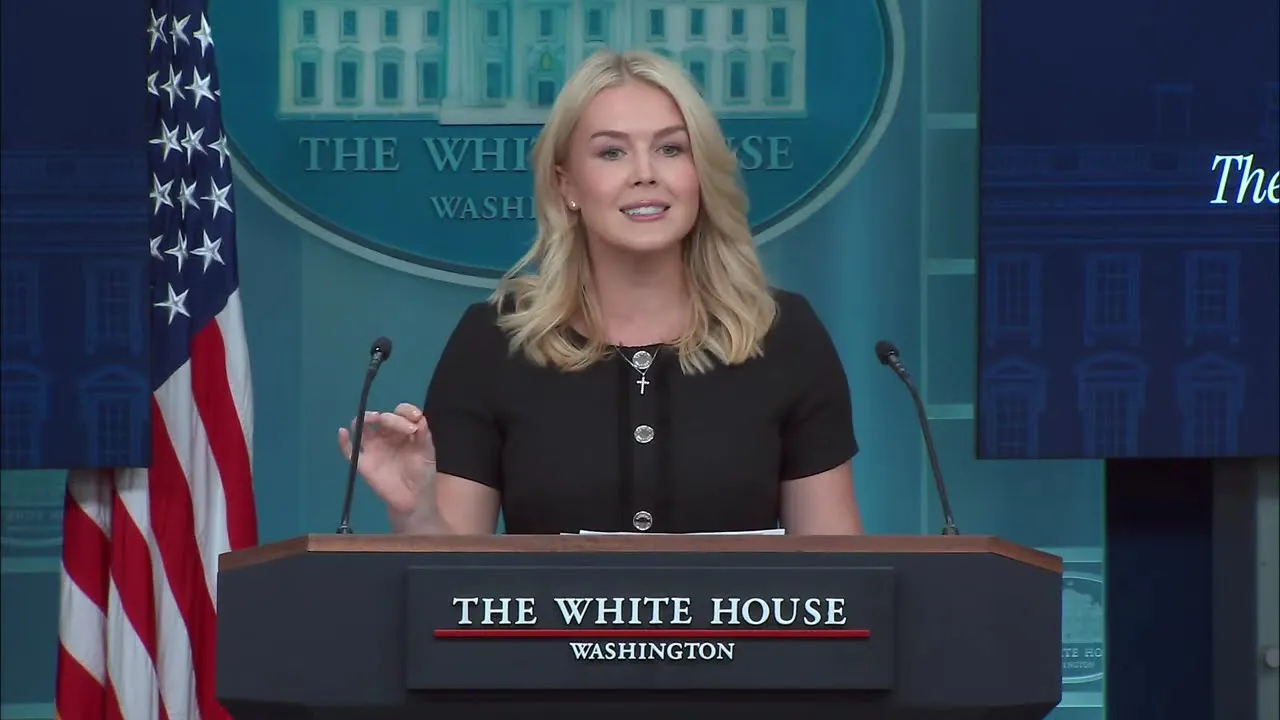
President Donald Trump announced on August 10, 2026, that White House Staff Secretary Will Scharf will replace David Warrington as White House counsel, effective September 1. Scharf will also hold the title of assistant to the president. Warrington is leaving the administration for the private sector. Al Jazeera
Trump announced the appointment on Truth Social, praising Scharf as "Tough, Strong, and Smart" and pointing to his background as a federal prosecutor and his work representing Trump personally in legal matters. The choice puts a lawyer who has already worked inside both Trump's personal legal team and his White House structure into one of the most important legal positions in the executive branch.
Scharf joined Trump's legal team in 2023 and worked on the federal election interference case brought by former Special Counsel Jack Smith. That case intersected directly with the Supreme Court's 2024 ruling establishing broad presidential immunity from criminal prosecution for official acts — a decision that fundamentally shaped the legal landscape Trump navigated in returning to office. Presidential immunity, in this context, means a sitting or former president cannot be criminally charged for actions taken as part of their official duties. Scharf's involvement in that defense gives him firsthand experience with the boundary between official and unofficial presidential conduct, a distinction the White House counsel must navigate on everything from executive privilege (the president's right to withhold certain information from Congress) to compliance with congressional oversight.
During Trump's first term, Scharf worked on the confirmation of federal judges, including Supreme Court Justices Brett Kavanaugh and Amy Coney Barrett. That experience placed him inside the judicial selection machinery that remade the federal judiciary during Trump's initial four years. After Trump returned to office in January 2025, Scharf became White House staff secretary on January 20, 2025, a role that controls the flow of paper to the president's desk. White House He was also appointed chairman of the National Capital Planning Commission in July 2025.
Scharf's tenure as NCPC chairman proved consequential. The commission approved Trump's proposed $400 million White House ballroom, planned for the site of the demolished East Wing. A federal appeals court subsequently upheld an order halting aboveground construction, ruling that a major alteration of that magnitude requires explicit congressional approval. Scharf maintained that the planning commission possessed authority over construction decisions but not over the demolition that preceded the project — a legal argument that sought to split the commission's jurisdiction in a way that preserved the administration's preferred sequence of action. Trump has said he will take the case to the Supreme Court.
The White House counsel serves as the president's chief in-house legal advisor, distinct from the attorney general, who heads the Justice Department and represents the federal government in legal matters. The counsel's office handles executive orders, ethics compliance, judicial nominations strategy, and oversight responses. Think of the counsel as the president's personal legal gatekeeper inside the building, while the attorney general operates across town at the Justice Department as the government's top law enforcement official.
Warrington's departure for the private sector comes roughly nineteen months into Trump's second term. No reason beyond the private-sector move has been specified in the reporting. His replacement by Scharf consolidates within one official a set of legal experiences that few White House counsel have combined: personal representation of the president, judicial confirmation strategy, staff-level control of presidential document flow, and leadership of a federal commission now at the center of a constitutional separation-of-powers dispute.
The timing, roughly two months before the November midterms, places Scharf's transition into the counsel's office during a period when the administration's legal posture toward congressional investigations, executive privilege claims, and potential post-election litigation disputes will face heightened scrutiny. Unlike the attorney general, the White House counsel does not require Senate confirmation, so Scharf can step into the role immediately.
The broader context here is that Scharf's background in the election interference case and his familiarity with the Supreme Court's immunity framework give him operational knowledge of the legal doctrines most likely to govern any post-election challenges. For an administration that has tested the limits of presidential authority across multiple fronts, from immunity doctrine to physical alterations of the White House itself, the counsel's role is a choke point where legal risk meets political intent.