Cartels, Crowds, and the World Cup: How Mexico Is Policing Its Biggest Security Test Yet
A Tournament Kicks Off Inside Cartel Territory
Two days from now, on 11 June 2026, the Estadio Azteca in Mexico City will host the opening match of the 23rd FIFA World Cup — the first edition of the tournament to expand to 48 teams and 104 matches across 16 host locations spanning Canada, Mexico, and the United States. The spectacle is enormous by any measure. So is the security problem.
Nowhere is that tension sharper than in Guadalajara, Mexico's second city, where Estadio Guadalajara is scheduled to host four group-stage matches. The city sits in Jalisco state, home base of the Jalisco New Generation Cartel — CJNG — one of the most operationally sophisticated and territorially aggressive criminal organizations in the Western Hemisphere. Hosting tens of thousands of foreign visitors, international press, and a global broadcast audience in a city where CJNG has long exercised coercive influence over public space raises questions that go well beyond stadium logistics.
What Mexico Is Doing — and Why It May Not Be Enough
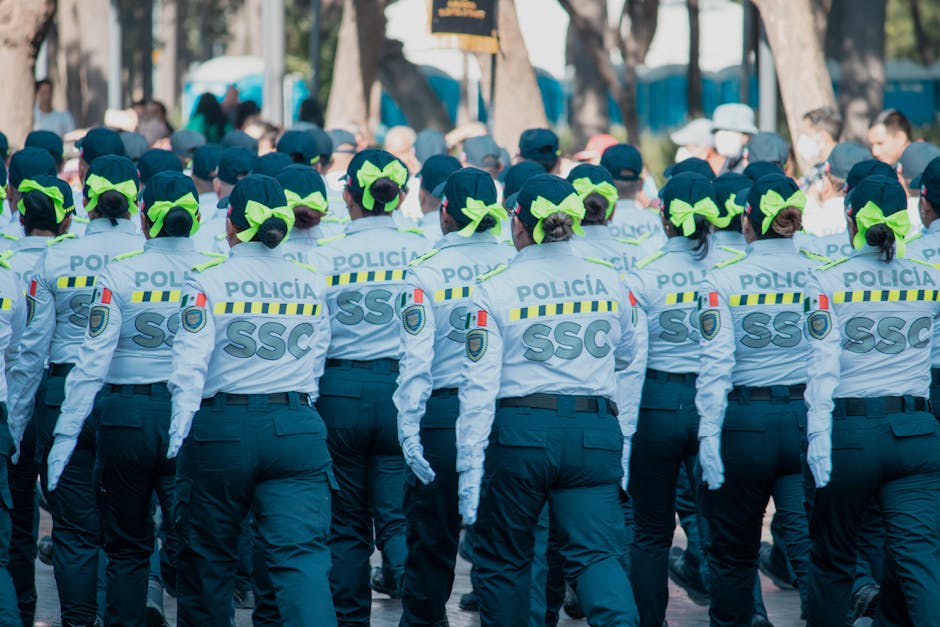
Mexico has ramped up security preparations across its World Cup host cities in the months leading up to the tournament. The measures include enhanced federal police deployments, military coordination, and intelligence-sharing frameworks with U.S. and Canadian counterparts — standard architecture for a major international event, but applied here against an adversary that routinely outmaneuvers conventional law enforcement.
The challenge is structural. Mexican cartels, and CJNG in particular, do not operate as insurgencies seeking territorial control against a state — though they sometimes do that too. They operate as diversified criminal enterprises embedded in local economies. Extortion rackets, fuel theft, construction kickbacks, and narco-retail networks give them economic roots that security deployments cannot simply uproot by adding checkpoints. A World Cup footprint — hotels, vendors, transport contractors, ticketing intermediaries — is, from a cartel perspective, a temporary expansion of the taxable surface area.
Amnesty International has warned that the tournament risks becoming a "stage" for organized crime activity across the North American host region. The language is deliberately broad. Amnesty is pointing not just at violence — which cartels have strong tactical reasons to suppress during a high-visibility event — but at the quieter exploitation of money flows, procurement chains, and the informal economy that mushrooms around major sporting events.
This is a distinction that matters for anyone working on risk in the region. The threat calculus for a visiting delegation or a multinational sponsor is not primarily about getting caught in crossfire. It is about operating in an environment where informal protection payments, contract steering, and reputational exposure to illicit networks are ambient conditions rather than exceptional risks.
The Historical Backdrop
We have seen this pattern before. The 2014 FIFA World Cup in Brazil drew sustained attention to the role of Rio de Janeiro's milícias — armed groups with roots in law enforcement — in controlling favela territories adjacent to fan zones and stadium approaches. Brazilian authorities launched high-profile pacification programs in the lead-up; assessments varied on whether they reduced violence or simply displaced it. The structural conditions those groups exploited — informality, weak municipal governance, economic exclusion — were not resolved by the tournament's end. They were paused, or rerouted.
Mexico's situation is distinct in important ways. CJNG operates at a scale and with a transnational footprint that Rio's milícias never approached. Its reach into supply chains, logistics, and local government in Jalisco is well-documented. But the underlying dynamic — a major state investing heavily in surface-level security while deeper structural factors remain unaddressed — rhymes closely with what Brazil experienced a decade ago.
The Tri-National Dimension
The security architecture for this World Cup is necessarily more complex than any previous edition, because jurisdiction is split three ways. The United States, Canada, and Mexico each bring different legal frameworks, law enforcement capacities, and political relationships with the cartels operating within or across their borders.
For U.S. authorities, the concern is less about violence at American host venues and more about the tournament functioning as a cover for cross-border logistics — people, cash, and contraband moving in the slipstream of legitimate World Cup traffic. The U.S. Department of Homeland Security and DEA have both elevated their posture in the border region. Canadian authorities face a different problem: CJNG and allied networks have expanded significantly into Canadian cities, particularly in the distribution of fentanyl precursors, and a mass international gathering creates new vectors for coordination and recruitment.
FIFA, for its part, has limited direct levers here. Its security obligations are contractual with host associations and national organizing committees; it does not have an independent enforcement capability. The organization's reputational stake is, however, enormous — which is why the Amnesty International framing lands with force. A World Cup associated in the public record with cartel exploitation, even at an operational remove, is a liability FIFA cannot afford a year after its governance reforms were supposed to have drawn a line under the corruption scandals of the previous decade.
The View From Guadalajara
For residents of Guadalajara, the World Cup is both an economic opportunity and a source of complicated civic feeling. The city has a genuine footballing culture and a legitimate pride in hosting. But the presence of CJNG is not an abstraction for Jalisco residents — it shapes daily life in ways that the security briefings handed to incoming delegations rarely capture.
Local journalists and civil society organizations have for years documented how CJNG manages public behavior in parts of the state, including periodic bans on certain kinds of visible activity during periods of operational sensitivity. A World Cup may, paradoxically, represent a moment of enforced calm — cartels benefit from not being associated with international incidents — but it does not represent a structural change. The tournament will last from 11 June to 19 July 2026. The cartels will still be there on 20 July.
What to Watch
For practitioners tracking this space, a few markers are worth monitoring through the tournament period. First, whether any extortion or protection-payment incidents involving World Cup contractors or vendors surface in Mexican investigative media — outlets like Animal Político and Quinto Elemento Lab have the sourcing to break such stories if they emerge. Second, whether U.S. or Mexican authorities make any significant cartel-related arrests linked to World Cup infrastructure or logistics, and how those are characterized politically on both sides of the border. Third, whether Amnesty International or other monitoring organizations produce a post-tournament assessment of organized crime activity, which would allow for a more grounded retrospective judgment than is possible in the pre-event window.
The opening whistle at Estadio Azteca will draw a global audience measured in the hundreds of millions. Much of what this article describes will remain invisible to that audience. That is, in part, by design — both Mexico's and the cartels'.


