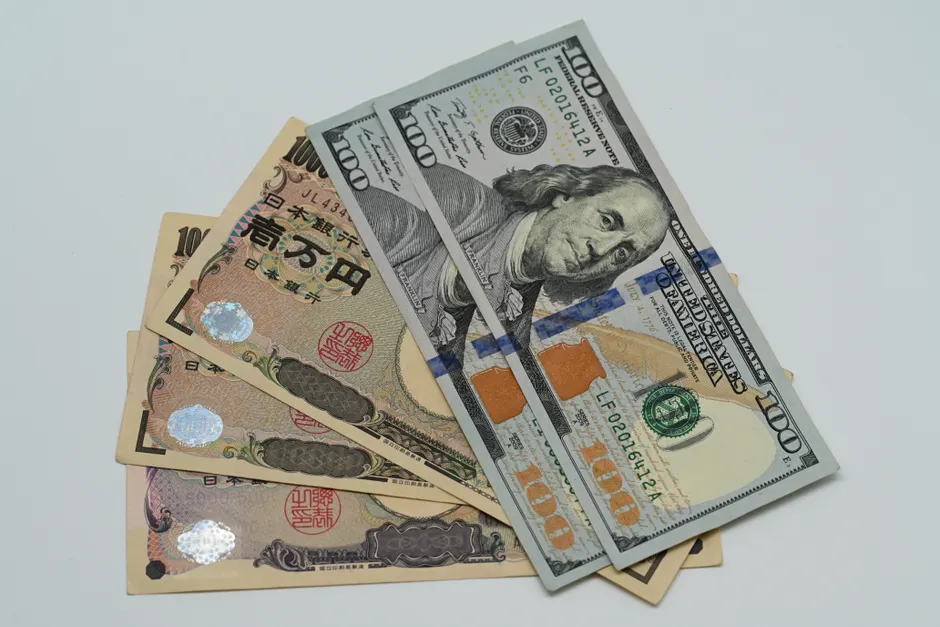
WSJ Dollar Index Slips to 96.50 as Fed Rate-Hike Expectations Weigh on Asian Currency Markets

The Number That Moved
The WSJ Dollar Index — a weighted measure of the U.S. dollar's value against a basket of major currencies — fell 0.10% to 96.50 on June 8, 2026, as Asian currency markets traded in mixed territory against a backdrop of growing expectations that the Federal Reserve will resume its tightening cycle.
A 0.10% move in the WSXJ Index is, in isolation, noise. But the context in which it landed is not.
What the WSJ Dollar Index Actually Measures
For practitioners who work primarily with the DXY — the ICE U.S. Dollar Index, which tracks the dollar against a six-currency basket heavily weighted toward the euro — the WSJ Dollar Index is a distinct instrument. As described when it was first introduced, the WSJ Dollar Index is a weighted composite designed to provide a broader read on dollar strength across major trading partners. The two gauges frequently diverge at the margins, particularly when currencies with outsized DXY weighting — the euro sits at roughly 57.6% of the ICE basket — move independently of the broader EM and Asia-Pacific complex.
That divergence matters today. A dollar that ticks lower on the WSJ measure while Asian currencies trade mixed is not the same signal as a uniform dollar retreat. It is a granular read: some regional currencies are absorbing appreciation pressure, others are not.
Growing Fed Rate-Hike Expectations: The Transmission Mechanism
The proximate driver cited for the mixed session is the market's evolving Fed pricing. Rate-hike expectations feed through to currency markets via a well-worn channel: higher expected short-term U.S. rates raise the relative yield on dollar-denominated assets, attracting capital flows that bid up the dollar. When those expectations build at the margin, high-beta EM and Asian currencies — those with thinner reserve buffers, wider current-account deficits, or elevated external financing needs — tend to underperform.
The word "growing" in the WSJ's framing is important here. Markets are not repricing from zero. The question is whether the current dot-plot trajectory is being pulled forward, and by how much. Fed funds futures are the cleanest real-time read on that repricing, and any sustained upward shift in the implied terminal rate will continue to generate cross-currency pressure across Asia, particularly in currencies with carry profiles that depend on a stable or softening dollar.
Asian Currency Markets: Why "Mixed" Is a Technically Precise Description
"Mixed" in a currency market context means the dollar did not move in a single direction against the full regional basket — some pairs strengthened against the dollar, others weakened. That is not an editorial hedge; it is the technically accurate characterization of a session in which idiosyncratic factors cut across the directional macro impulse.
In Asia, those idiosyncratic factors are rarely absent. Current-account dynamics differ sharply between, say, a current-account surplus economy like Japan — where the yen's sensitivity to U.S. rate differentials is structural and well-documented — and deficit economies with external debt denominated in dollars, where a rising-rate environment tightens financial conditions through multiple simultaneous channels: wider spreads, weaker currencies, and reduced capital inflows all at once.
The net effect, a modest 0.10% slip in the WSJ Dollar Index to 96.50, is best understood as the arithmetic of those competing pressures washing out at the index level.
Putting 96.50 in Framework
The absolute level of 96.50 carries meaning only in relation to recent range. Without a stated 52-week high or low from the available sourcing, the precise positioning in that range requires caution. What can be said cleanly: a level in the mid-90s on the WSJ Index has historically corresponded to a dollar that is neither at crisis-era extremes nor in outright freefall — it sits in the zone where central bank rhetoric and incremental data surprises do the heavy lifting, rather than emergency intervention or panic hedging flows.
We have seen this pattern before. In 2018, as the Fed marched through a tightening cycle against a backdrop of mixed global growth, Asian currency markets spent months in precisely this kind of fractured equilibrium — the dollar neither surging nor retreating, regional FX moving on local fundamentals as much as on the dollar's direction, and index-level moves of tenths of a percent masking significant dispersion underneath. The Indonesian rupiah and Indian rupee bore the brunt then, while the Singapore dollar and Korean won held relative stability. The lesson from that episode was that index-level dollar moves are a poor substitute for understanding the cross-sectional distribution of pressure within the Asian FX complex.
What the Rate-Hike Narrative Means for the Path Forward
If Fed rate-hike expectations continue to build — whether driven by a resilient labor market, sticky core services inflation, or an upside surprise in activity data — the dollar's trajectory will depend heavily on whether those expectations are already priced into forward curves or represent genuine new information. Markets that are fully priced for a hike do not necessarily react to confirmation of it; they react to surprises relative to what was priced.
That is the analytical frame worth holding: the WSJ Dollar Index at 96.50, down 0.10%, tells you where the market cleared on June 8, 2026. It does not tell you where it will clear when the next FOMC statement lands, or when the next CPI print hits the tape. What it does tell you is that Asian currency traders are not yet operating in a regime of dollar dominance — the mixed session suggests positioning remains two-way, which is consistent with genuine uncertainty about the Fed's next move rather than a consensus short-dollar trade.
Operational Takeaways for Market Participants
For fixed income desks with Asia-Pacific exposure, the building rate-hike narrative warrants close monitoring of the spread between U.S. Treasury yields and local-currency sovereign yields across the region — that differential is the mechanical driver of carry flows and, by extension, of currency support or pressure.
For currency overlay managers, the 0.10% slip in the WSJ Dollar Index to 96.50 is not a trigger for rebalancing in isolation, but the "mixed" characterization of the session is a signal to decompose exposure at the pair level rather than relying on index-level hedges. Index-level moves can mask significant pair-level divergence when idiosyncratic factors dominate, and in a rising-rate environment, idiosyncratic factors in Asian FX — political risk, intervention risk, current-account trajectories — tend to reassert themselves.
For anyone monitoring dollar liquidity conditions in global funding markets, a dollar that edges lower on growing rate-hike expectations is a somewhat counterintuitive signal — typically, rate-hike repricing is dollar-positive. The 0.10% decline may reflect positioning unwinds, month-end flows, or technical factors that temporarily offset the rate-differential impulse. It warrants watching, not acting on.
The dollar at 96.50 is a data point. The growing Fed rate-hike expectations behind it are the story.