Zamfara Bandits Lure Villagers to "Peace Talks," Abduct 39 and Demand $92,000 Ransom

A Trap Dressed as a Truce
Armed bandits in Zamfara State abducted 39 people after inviting them to a forest meeting ostensibly aimed at reconciliation with a bandit leader's family, Nigerian police confirmed on 9 June 2026. The victims were residents of Magamin Diddi village in the Maradun Local Government Area — one of the most consistently volatile corridors in Nigeria's northwest — who attended what they understood to be a good-faith dialogue. Once inside the forest, they were seized. The bandits subsequently demanded 125 million naira, roughly $91,880 at current exchange rates, for their release, according to Reuters.
The mechanics of the abduction are as significant as the numbers. Using the language and choreography of peacemaking — an invitation, a family gathering, a neutral space — the armed group converted a community's own conflict-resolution instincts into a vulnerability. That is not improvisation; it is doctrine.
Who, Where, and the Stakes of Maradun
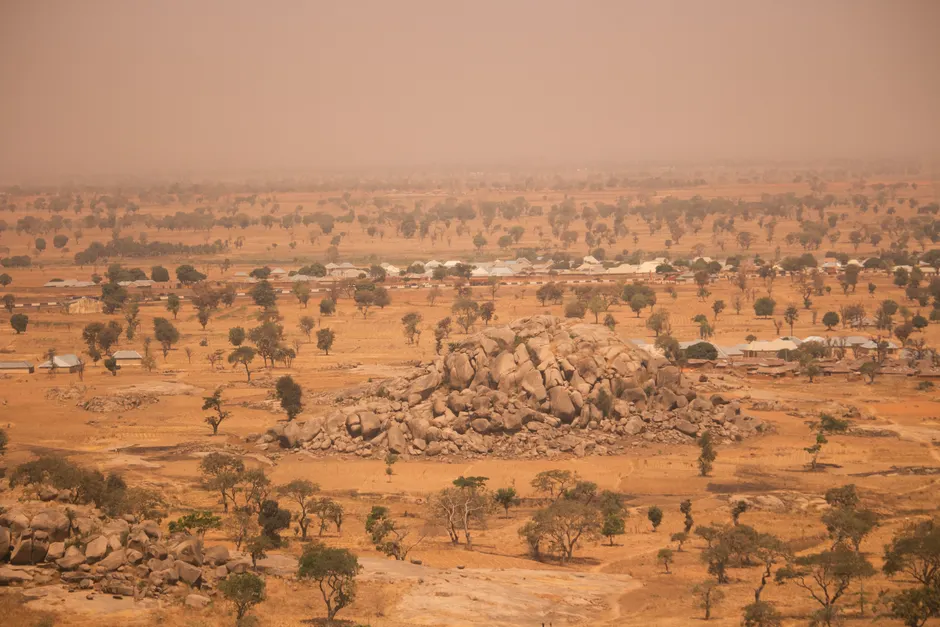
Zamfara State has functioned as a kind of laboratory for Nigeria's banditry crisis since at least 2011, when armed cattle rustlers began metastasising into something closer to an insurgent economy. Maradun LGA sits in the state's center-west and has seen repeated cycles of mass abduction, village burning, and state-negotiated releases over the past decade. The Nigerian government has oscillated between kinetic operations and brokered ceasefires — neither approach producing durable pacification.
The people abducted were villagers who had traveled to a forest near Magamin Diddi at the invitation of individuals connected to a bandit leader's family, The Guardian reported. The framing — a reconciliation mission — implies that at least some victims may have had prior contact or attempted dialogue with the group, making the betrayal operationally precise rather than opportunistic. Police confirmed the figure of 39 abductees, per The Washington Post.
The ransom figure — 125 million naira — is worth contextualizing. At Nigeria's parallel market rate, $91,880 is not an extraordinary sum for a group operating at scale, but it is calibrated to be unaffordable for a rural village and negotiable enough to attract state or NGO intermediaries. Bandit economics in the northwest have long relied on a tiered ransom model: headline figures set high, settlement figures negotiated through community leaders or traditional rulers, with the gap absorbed as a transaction cost of doing business in a fragile state environment.
The Fake Peace Gambit Is Not New
We have seen this pattern before — most systematically in the Sahel, where jihadist affiliates of JNIM and ISGS have repeatedly exploited ceasefire processes and community dialogue mechanisms to gather intelligence, identify local interlocutors, and, in some cases, abduct or assassinate them. In Nigeria's northwest specifically, the tactic of weaponizing reconciliation has appeared in documented incidents in Kebbi and Sokoto states, where community vigilantes and traditional leaders who engaged with bandits in good faith subsequently became targets. What is notable about the Magamin Diddi incident is its relative brazenness: the meeting was not covert. Residents appear to have traveled openly, in a group, to a known location — suggesting either that the bandits calculated that daylight legitimacy would lower the community's guard, or that their operational confidence has grown to the point where concealment is no longer considered necessary.
The Structural Context: Why Zamfara Remains the Epicenter
Nigeria's federal security architecture has struggled to impose coherence on the northwest's banditry problem for a cluster of structural reasons. Zamfara's terrain — a combination of dense forest reserves, ungoverned border zones with Niger, and degraded infrastructure — gives armed groups freedom of maneuver that air assets alone cannot neutralize. The dissolution of traditional conflict-mediation channels under successive administrations has left communities with few legitimate pathways to negotiate local security arrangements, which paradoxically increases the appeal of direct engagement with bandit leaders — exactly the dynamic the Magamin Diddi perpetrators exploited.
The Nigerian military and the Joint Task Force Northeast (though the northwest falls under a separate command architecture) have launched periodic operations in Zamfara. President Bola Tinubu's administration has maintained a public posture of non-negotiation with bandits, a position complicated by the fact that state governors — including in Zamfara — have historically pursued their own backchannel deals, sometimes with federal acquiescence. That ambiguity in the official stance creates space for communities to attempt their own outreach, often without institutional protection.
What Comes Next: The Ransom Clock and Community Exposure
The 125 million naira demand initiates a well-worn negotiation cycle. Community leaders, local government officials, and in some cases Islamic scholars acting as interlocutors will likely enter talks. The Nigerian state's formal posture of non-payment rarely survives contact with the reality of 39 missing neighbors. Historical precedent in Zamfara suggests that releases — when they come — arrive weeks to months after abduction, with some victims held as leverage in ongoing disputes even after partial ransom payment.
The deeper problem is what the incident signals about community-level security dialogue as a viable tool. If residents of Magamin Diddi — or neighboring villages — conclude that any outreach to armed groups carries an abduction risk, the space for bottom-up conflict resolution contracts sharply. That leaves communities dependent on state security forces whose reach in rural Maradun is intermittent, or on vigilante groups whose own human-rights record is contested.
Looking at what this incident means for Nigeria's broader northwest stabilization calculus: the fake-peace model, if it spreads as a tactic, has a corrosive second-order effect beyond the immediate hostages. It poisons the well for future reconciliation attempts, making every invitation to dialogue suspect. International partners — including the UN's West Africa office and ECOWAS's early warning apparatus — have flagged community dialogue as a critical component of non-military stabilization. An incident that weaponizes that dialogue directly undermines the framework those partners are trying to build.
Immediate Unknowns
As of 9 June 2026, the identities of the perpetrating group have not been publicly confirmed by police. Zamfara hosts multiple competing bandit factions — some with fluid, transactional relationships to jihadist networks including Ansaru, others operating as purely criminal enterprises. Attribution matters because it shapes both the negotiating track and the security response. A purely criminal group is more likely to accept a monetary settlement; a group with ideological affiliations may use the hostages for purposes beyond ransom, including prisoner exchanges or public propaganda.
Nigerian authorities have not yet announced any rescue operation or formal negotiating mechanism. The 39 residents of Magamin Diddi remain, as of this writing, unaccounted for.