Shell CEO Wael Sawan: Oil Price Upside Is a Structural Story, Not a Conflict Premium

The Headline Number Is Not a Number — It's a Structural Claim
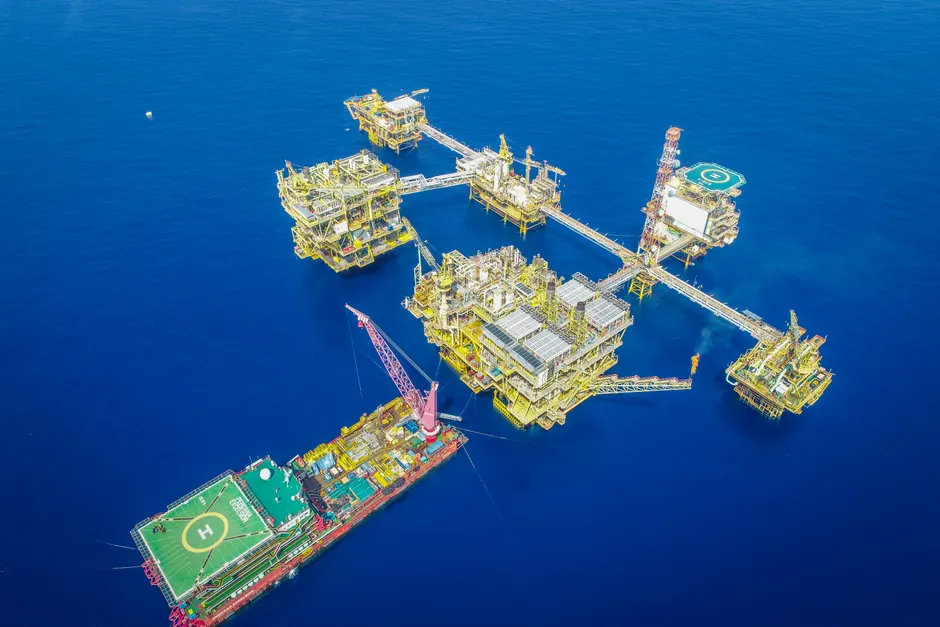
At the WSJ Leadership Institute CEO Summit on Wednesday, June 10, Shell chief executive Wael Sawan delivered what amounts to a supply-side thesis in six words: "All the easy oil and gas has been found." The statement, reported by The Wall Street Journal, was not a forecast dressed up in executive caution. It was a geological and economic argument — that the marginal barrel is getting harder, deeper, more capital-intensive, and more technically demanding to extract, and that this has durably altered the long-run supply cost curve.
Sawan also stated that upside pressure on oil prices will be a story for the longer term. Read together with the geological framing, the implication is unambiguous: whatever geopolitical premium the market has embedded in crude over recent months is, in Shell's view, masking a more persistent structural floor.
The Iran Conflict as Signal Noise
Context matters here. Shell, like its supermajor peers, has seen a material windfall from the oil price spike tied to this year's conflict, per the same WSJ report. That's a straightforward P&L tailwind — higher realized prices on upstream production flow almost directly to operating cash flow at the margin, given that exploration and production capex is largely sunk or committed on multi-year cycles.
But Sawan's framing explicitly decouples the near-term geopolitical premium from the longer-dated supply argument. The conflict, in this reading, is a demand-side shock to risk premia — a temporary repricing of the probability of supply disruption in a key producing and transit region. What Sawan is pointing to is something different: a supply-side constraint that would apply even in a world of frictionless geopolitics.
This distinction matters for anyone running a forward curve, hedging a refinery margin, or pricing long-dated capital allocation decisions. A conflict premium is mean-reverting by definition once the risk dissipates. A structural supply constraint, if credible, reprices the long end of the forward curve and raises the hurdle rate for any business or government that is implicitly short oil.
What "Easy Oil" Actually Means in Upstream Economics
The "easy oil" framing has a precise technical meaning in the upstream industry. Conventional reservoirs with high API gravity crude, onshore or shallow-water locations, low sulfur content, and natural pressure drive represent the lowest-cost, lowest-complexity end of the supply spectrum. Fields like the giant Ghawar in Saudi Arabia or the legacy Permian Basin conventional plays were, in an earlier era, exactly this: high flow rates, low lifting costs, minimal processing requirements.
What remains — and what constitutes the marginal supply increment today — skews heavily toward deepwater, tight rock requiring hydraulic fracturing, extra-heavy oil requiring upgrading, or frontier basins with limited infrastructure. Each of these categories carries structurally higher break-even prices, longer lead times from discovery to first oil, and greater capital intensity per barrel of recoverable resource.
We have seen this pattern before. In the mid-2000s, the "peak oil" debate consumed enormous intellectual energy in the commodity world. The bear case on supply was ultimately wrong in its timing — not because easy oil wasn't depleting, but because unconventional technology, particularly shale fracturing and horizontal drilling in North American tight formations, effectively redrew the supply curve. Between roughly 2008 and 2019, U.S. tight oil added more than 7 million barrels per day of productive capacity, single-handedly offsetting decline curves in legacy fields globally. The lesson the market drew from that episode was that technology can perpetually rescue supply. Sawan's statement, implicitly, is a caution against over-indexing on that lesson — particularly as the Permian's core inventory thins and productivity per new well trends show visible deceleration in the data.
OPEC+, Depletion, and the Capital Starvation Argument
Sawan's thesis intersects with at least two other structural vectors that upstream analysts have been tracking for several years.
The first is depletion. Giant legacy fields — which account for a disproportionate share of global production — decline at rates that require continuous, expensive drilling just to hold output flat. The IEA and independent analysts have repeatedly flagged that without sustained upstream investment, natural field decline of roughly 4–5% per year would erode global productive capacity significantly over a decade. The surge in ESG-driven capital reallocation away from fossil fuel development between 2020 and 2023, followed by the uncertainty introduced by energy transition timelines, has left upstream investment in a complicated place: higher than the trough, but structurally below what some supply models require to meet demand even in moderate growth scenarios.
The second is OPEC+ spare capacity. The group has periodically signaled — and the market has periodically believed, then disbelieved — that it holds several million barrels per day of readily deployable spare capacity. The credibility of that claim is not easily audited from the outside. If spare capacity is lower or more costly to bring on than officially stated, the market's implicit insurance policy against supply shocks is thinner than priced.
What the Shell CEO's Forum Choice Signals
It is worth noting where Sawan made these remarks: a WSJ event specifically convened for CEO-level leadership. This is not a commodity trading conference or a sell-side energy summit. The audience is cross-sector, boardroom-level, and includes executives whose capex, logistics, and energy procurement decisions are directly exposed to oil price risk. The choice of venue, and the directness of the "easy oil" framing, reads as a deliberate effort to shape long-horizon capital allocation thinking across industries — not just to manage Shell's own investor narrative.
For Shell specifically, the structural argument serves an obvious internal purpose. The company has been navigating persistent investor pressure over its energy transition strategy, its pace of decarbonization, and its capital allocation between hydrocarbons and lower-carbon investments. A CEO who can credibly argue that the upstream business faces a multi-year structural tailwind on pricing — not merely a cyclical bounce — has a stronger internal and external case for maintaining or growing E&P capex envelopes and resisting pressure to accelerate asset disposals.
The Forward Curve Implication
The structural supply argument, if internalized by the market, has a specific mechanical effect: it flattens or inverts the typical contango structure in longer-dated crude futures, and potentially shifts the market toward backwardation even in periods of near-term demand softness. A market that believes the long-run supply cost is rising will price longer-dated contracts higher relative to front-month than it would otherwise.
That repricing, if it occurs, has cascading effects. It raises the net present value of in-ground reserves on upstream balance sheets. It changes the economics of strategic petroleum reserve releases as a policy tool. It widens the hurdle rate for energy-intensive industries considering long-term capacity investments. And for sovereign wealth funds and pension allocators with existing commodity exposure, it is a relevant input to duration and weighting decisions — though not, it should be said, a sufficient one on its own.
Sawan's remarks do not resolve the demand side of the equation. The pace of EV adoption, the trajectory of Chinese industrial activity, and the efficiency improvements embedded in new-build infrastructure all remain live variables. But on the supply side, the Shell CEO's position is clear: the geological endowment is finite, the easy portion is largely behind us, and the cost of the next barrel will reflect that reality over time.