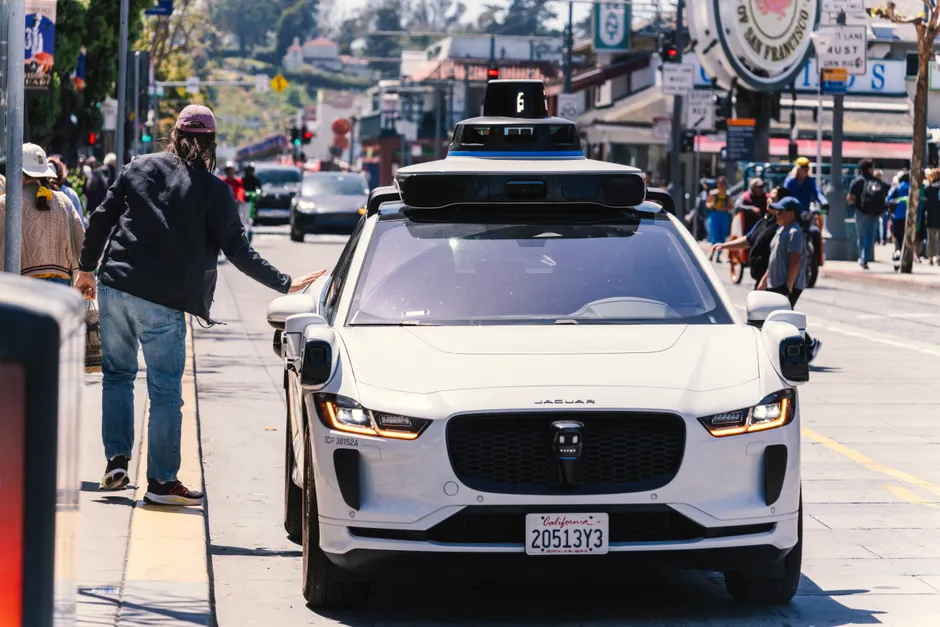
Waymo's ReD System: A Virtual Human Driver to Benchmark Autonomous Safety

Waymo on 10 June 2026 published details of a cognitive reference model it calls ReD — short for Reference Driver — a virtual representation of how human drivers avoid collisions, built explicitly to evaluate the safety performance of its autonomous vehicle stack. The announcement on the Waymo blog accompanies the company's broader push toward fully autonomous operations under its 6th-generation Driver platform.
What ReD Actually Is
ReD is not a simulation environment in the conventional sense, nor is it a dataset of human driving footage. It is a computational model of human collision-avoidance cognition — an attempt to encode the decision logic, perception limits, and behavioural responses that allow human drivers to navigate roads without incident. Waymo uses ReD as a reference baseline: given a specific scenario, how would a competent human driver respond, and does the Waymo Driver meet or exceed that threshold?
The framing matters technically. Most AV safety benchmarking historically relied on miles-driven metrics, disengagement rates, or comparisons against population-level crash statistics. Each of those approaches carries well-understood weaknesses — they are either too coarse, too dependent on operational design domain, or too slow to accumulate statistical power in rare-event regimes. A human-cognition reference model offers a different axis: scenario-level, behaviour-level comparison against a defined human baseline.
Waymo's blog post describes ReD as modelling "how people stay safe on roads," positioning it as the standard against which the Waymo Driver's crash-avoidance capability is assessed. In practice, this means ReD likely encodes perception response times, gap-acceptance thresholds, hazard anticipation windows, and evasive manoeuvre envelopes — the kind of parameters that vehicle safety researchers have spent decades quantifying from instrumented naturalistic driving studies.
Why a Human Reference Model, and Why Now
Waymo's timing is not incidental. The company confirmed in February 2026 that its 6th-generation Driver will operate in fully autonomous mode — no human safety operator in the loop. That transition raises the evaluative bar considerably. When a human fallback exists, safety claims carry an implicit hedge; in a fully driverless deployment, the system's own judgement is the final line of defence.
Building a formal human-driver reference model is, in that context, an engineering prerequisite as much as a communications move. If the Waymo Driver is to be deployed without a human in the seat, Waymo needs an internally consistent, reproducible method to answer the question: safer than what? ReD provides a structured answer — safer than a modelled competent human driver — that can be applied repeatably across the long tail of edge-case scenarios that define AV safety engineering.
There is also a regulatory dimension worth noting here. As jurisdictions from California to Arizona to parts of Europe begin constructing formal AV safety frameworks, the question of how operators demonstrate safety equivalence or superiority to human drivers is becoming a compliance question, not merely a product question. A documented, peer-reviewable reference model is exactly the kind of artefact that safety regulators and standards bodies are likely to request. Waymo publishing the conceptual architecture of ReD now — ahead of regulatory frameworks that are still being drafted — puts the company in a position to influence what those frameworks ultimately look for.
How This Fits into Waymo's Evaluation Architecture
The Waymo Driver has, for several years, been evaluated through a combination of real-world operational data, structured test scenarios, and large-scale simulation. ReD appears to slot into the simulation and scenario-evaluation layer as a behavioural comparator. Rather than asking "did the system crash?", the model enables the question "did the system respond in a way that a competent human driver would have, or better?"
That is a meaningful shift in evaluation granularity. A system could, in principle, avoid a crash through a manoeuvre that no human driver would execute — one that is technically successful but brittle in ways that don't surface until a novel variant of the scenario appears. A human-reference comparator introduces a behavioural consistency check on top of outcome metrics.
It is worth being precise about what ReD is not claiming. A reference model of human driving is not a model of perfect driving. Human drivers cause and are involved in millions of crashes annually. The baseline is competent, safety-oriented human behaviour — which sets a meaningful but not especially high bar in absolute terms. Waymo's intent, as stated, is that the Waymo Driver should be able to avoid the crashes a competent human would avoid, and ideally more. Whether ReD's parametric representation of human cognition accurately captures the full distribution of competent human responses in complex, multi-agent scenarios is precisely the kind of methodological question that external researchers will want to scrutinise.
The Broader Evaluation Landscape
The industry has been grappling with AV safety benchmarking methodology for as long as serious autonomous programmes have existed. RAND Corporation's early work on miles-to-failure modelling established that statistically validating AV safety against human baselines through real-world driving alone would require hundreds of billions of test miles — an impractical threshold. That insight accelerated investment in simulation and in structured scenario-based testing, which is where most serious programmes now live.
We have seen this pattern before — the moment when an engineering discipline matures past anecdote and operational statistics into formalised reference models. In network security, the shift from perimeter-based intuition to structured threat modelling frameworks like STRIDE took years to propagate but ultimately became the foundation of how the industry talks to regulators and auditors. AV safety is in an analogous transition: from "here is how many miles we drove without incident" to "here is our formal model of the risk space and here is how our system performs within it." ReD looks like an early, visible artefact of that transition for Waymo.
What Comes Next
Waymo has published the conceptual framing of ReD without, at this stage, releasing the model itself for external validation. The gap between describing a methodology and making it auditable is one the safety research community will notice. Whether Waymo moves toward publishing the model's parameterisation, subjecting it to independent review, or incorporating it into regulatory submissions will be telling.
The 6th-generation Driver's fully autonomous operational rollout is the immediate practical context. As that deployment scales — more cities, higher trip volumes, a broader operational design domain — the scenarios the Waymo Driver encounters will increasingly stress-test any reference model's coverage. ReD's value will ultimately be measured not by how well it characterises today's known scenario space, but by how well it generalises to the edge cases that will inevitably emerge.
For the AV safety engineering community, this is a development worth tracking closely. A rigorous, documented human-cognition reference baseline, if it holds up to scrutiny, would be a genuine methodological contribution — not just to Waymo's internal evaluation pipeline, but to the broader question of how the industry validates that autonomous vehicles belong on public roads.