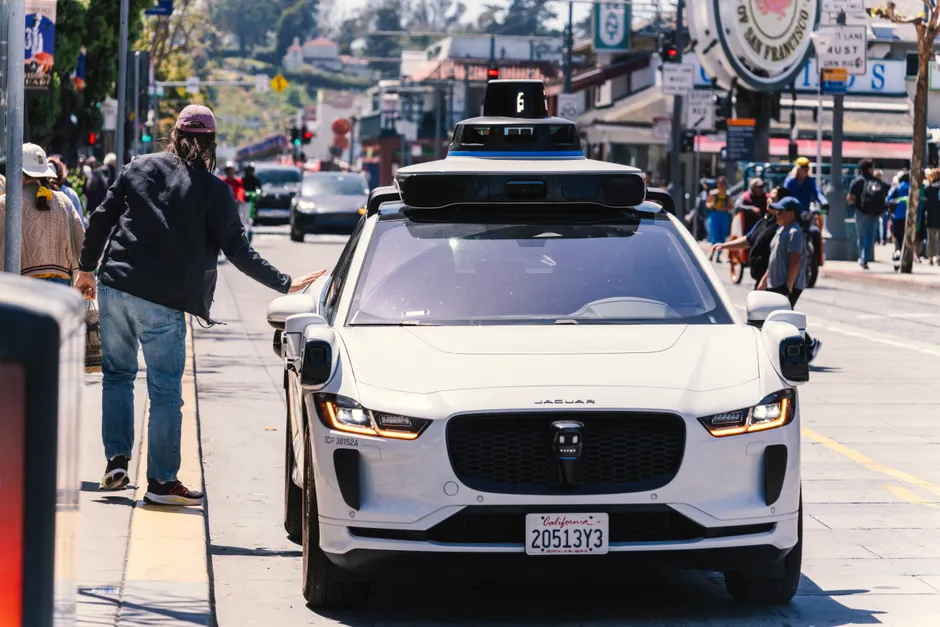
Waymo's Autonomous Vehicle Program: Nearly Two Decades of Development Amid Industry Competition

Waymo's Autonomous Vehicle Program: Nearly Two Decades of Development Amid Industry Competition
Waymo has been developing self-driving car technology since 2009, positioning the Alphabet subsidiary as one of the longest-running autonomous vehicle programs in the industry. The company's extended development timeline spans nearly seventeen years, predating many competitors and encompassing multiple technology generations and regulatory environments.
Fleet Operations and Technical Infrastructure
The company has built its autonomous fleet around Chrysler Pacifica minivans, reaching a deal in January to purchase thousands of additional vehicles for expansion. These minivans are equipped with sensor arrays capable of detecting objects hundreds of yards in any direction, providing the comprehensive environmental awareness required for Level 4 autonomous operation.
Waymo's sensor suite centers on proprietary lidar technology, which became the subject of significant intellectual property litigation. The company sued Uber over alleged trade secret theft related to confidential information about Waymo's lidar sensor designs. This legal action highlighted the strategic importance of sensor technology in autonomous vehicle development and the competitive pressures surrounding proprietary hardware innovations.
As of 2018, Waymo was preparing to expand passenger operations beyond its initial testing markets, signaling confidence in its technology maturity for multi-city deployment. This geographic expansion represents a critical phase in autonomous vehicle commercialization, where companies must demonstrate system reliability across different urban environments and traffic patterns.
Safety Performance in Urban Deployment
Real-world deployment data from San Francisco provides concrete metrics on autonomous vehicle performance. Cruise and Waymo together reported 102 crashes across roughly 6 million driverless miles in the city. This crash rate, while representing actual incidents, occurs within the context of dense urban driving conditions that present complex scenarios for autonomous systems.
The San Francisco deployment serves as a high-stakes proving ground for autonomous technology, given the city's challenging topography, diverse traffic patterns, and regulatory scrutiny. The combined crash data from both companies offers insight into current system limitations while demonstrating the scale of autonomous miles being accumulated in real urban conditions.
Competitive Landscape and Technology Assertions
Industry competition has intensified as multiple companies pursue autonomous vehicle commercialization. Waymo's CEO has made public statements claiming the company's technology would have safely handled incidents that affected competing systems, including Uber's self-driving program. Such assertions reflect the competitive dynamics in an industry where safety performance becomes a key differentiator.
The longer development timeline provides Waymo with extensive data collection and system refinement opportunities compared to newer entrants. However, this extended development period also reflects the complexity of achieving reliable autonomous operation across diverse driving conditions and edge cases.
Looking at the broader trajectory here, we have seen this pattern before with complex technology platforms — extended development cycles followed by rapid scaling once core technical challenges are resolved. The personal computer industry followed a similar arc in the 1980s, where years of incremental improvements in processing power and software culminated in mainstream adoption. The autonomous vehicle sector appears to be navigating a comparable transition from research and development to commercial deployment.
Infrastructure and Scaling Considerations
The decision to standardize on Chrysler Pacifica minivans provides operational consistency but also represents significant capital allocation toward a specific vehicle platform. This fleet standardization enables economies of scale in sensor installation, maintenance procedures, and driver training protocols for safety operators.
Multi-city expansion introduces new technical challenges beyond basic autonomous navigation. Different municipalities maintain varying traffic regulations, infrastructure conditions, and emergency response protocols. Successfully scaling across multiple markets requires not only robust core technology but also adaptive systems that can accommodate local regulatory requirements.
The sensor technology at the heart of Waymo's system — capable of hundreds of yards of detection range — provides the temporal buffer necessary for safe decision-making at highway speeds and in complex urban intersections. This detection range exceeds typical human visual capabilities and represents one of the fundamental advantages autonomous systems can offer over human drivers.
Technical Development Timeline
Waymo's 2009 start date places its initial development during the early smartphone era, before cloud computing infrastructure and machine learning frameworks reached current maturity levels. The company has necessarily evolved its technical architecture across multiple generations of computing hardware, networking capabilities, and artificial intelligence methodologies.
This extended development period has allowed for comprehensive data collection across diverse driving conditions, weather patterns, and traffic scenarios. The accumulated dataset serves as training input for machine learning models and validation data for safety systems, representing a competitive asset built through sustained investment over time.
The company's approach contrasts with newer autonomous vehicle programs that benefit from more advanced starting points in machine learning and sensor technology but lack the extensive real-world data collection that comes with longer operational history.
Today's autonomous vehicle landscape reflects the convergence of multiple technology trends — advanced sensor miniaturization, machine learning model sophistication, and cloud computing infrastructure — that have matured during Waymo's development timeline. The company's position as an early mover provides both advantages in data accumulation and challenges in adapting legacy system architecture to evolving technical capabilities.