Curiosity at 13: NASA Extends a Tiring Rover's Scientific Life With New Operational Tricks

NASA's Curiosity rover completed 13 years of surface operations on Mars in August 2025, with engineers at the Jet Propulsion Laboratory actively developing new capabilities to sustain and expand its scientific output — even as the rover's onboard power supply continues its slow, irreversible decline.
A Machine That Has Outlasted Its Design Expectations
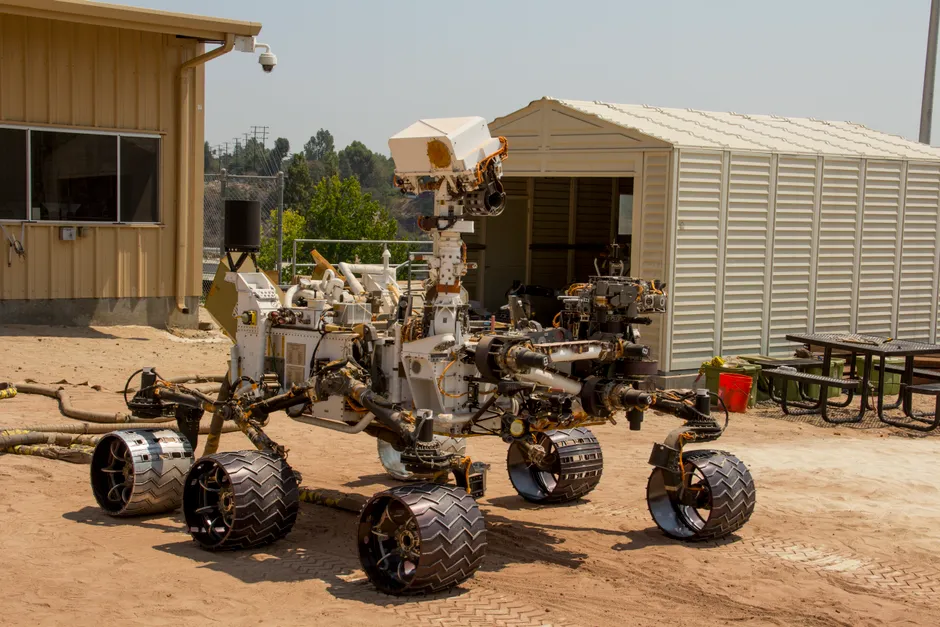
The Mars Science Laboratory (MSL) rover landed in Gale Crater on August 6, 2012, beginning what was designed as a two-year primary mission. At the time of launch in 2011, Curiosity was the largest and most capable rover ever dispatched to Mars — a one-tonne, car-sized platform carrying ten science instruments, a robotic arm with a percussive drill, and a laser-firing remote-sensing suite. Thirteen years later, it is still operating, still drilling, and still returning data from a surface roughly 225 million kilometers away at average conjunction.
That longevity is not accidental. It is the product of continuous ground-in-the-loop engineering: teams at JPL periodically retool the rover's operational software, onboard scheduling logic, and fault-response parameters to keep pace with hardware degradation and to extract maximum science from narrowing energy budgets.
The Power Constraint That Shapes Everything
Unlike solar-powered rovers, Curiosity runs on a Multi-Mission Radioisotope Thermoelectric Generator (MMRTG). The MMRTG converts heat from the radioactive decay of plutonium-238 into electricity — a design that frees the rover from dependence on sunlight and dust-storm seasonality that crippled earlier solar platforms. The tradeoff is decay: plutonium-238 has a half-life of approximately 87.7 years, and the MMRTG's electrical output drops by roughly 4–5 watts per year.
At landing in 2012, the MMRTG delivered approximately 110 watts. More than a decade of decay has pulled that figure down meaningfully. According to JPL, the generator now requires longer recharge cycles, which compresses the window of energy available for science operations on any given Martian sol. Every experiment, every drive segment, every transmission slot now competes within a tighter energy envelope than the rover's architects originally planned for at this mission age.
This is the central engineering problem of Curiosity's third decade: not a failed component or a software fault, but the quiet arithmetic of nuclear decay.
What "New Skills" Actually Means
JPL's response has been to treat Curiosity less like a fixed platform and more like a system that can be progressively re-optimised from Earth. The new capabilities announced around the 13-year milestone are aimed squarely at doing more science per watt — a discipline that will be familiar to anyone who has worked on embedded systems, edge inference hardware, or any power-constrained compute environment.
The specifics involve updates to the rover's autonomous scheduling and fault-protection routines, improvements to how it prioritises onboard data processing relative to transmission queuing, and refinements to its drive planning that reduce unnecessary actuator use. In aggregate, the goal is to recover productive science time that would otherwise be lost to overhead — charging, thermal management, and system health checks — within each sol.
This pattern of software-side life extension is not new to the MSL programme. JPL has previously pushed updated versions of the AutoNav autonomous navigation system to Curiosity, allowing it to traverse more complex terrain without requiring Earth-in-the-loop approval for each individual wheel placement. The new capabilities follow the same philosophy: push intelligence groundward where possible, and let the rover do more with what it has.
The Science Rationale Has Not Diminished
The reason to sustain Curiosity's productivity is straightforward. Scientists believe that if microbial life ever gained a foothold on Mars, it would have done so 3 to 4 billion years ago, during the Noachian and early Hesperian periods when liquid water was present at the surface and subsurface. Gale Crater — a 154-kilometre-wide impact basin that Curiosity has been climbing since landing — contains a central mound, Aeolis Mons (informally Mount Sharp), whose layered sedimentary stratigraphy encodes that exact geological window. Each new drill hole, each APXS spectrum, each ChemCam laser shot is another data point in a record that spans billions of years of Martian history.
Curiosity has covered more than 21.3 kilometres of surface traverse across its first seven years alone, sampling lake-bed mudstones, sulfate-bearing units, and cross-bedded aeolian sandstones along the way. The ongoing climb of Mount Sharp continues to expose progressively younger geological units, meaning the rover's remaining operational life still has genuine scientific frontiers ahead of it.
Placing This in a Longer Arc
There is a pattern here that anyone who has followed aerospace robotics over the past three decades will recognise. The Voyager probes, launched in 1977, are still returning telemetry from interstellar space because engineers have repeatedly shed non-essential systems and squeezed more from aging power supplies. The original Mars Exploration Rovers, Spirit and Opportunity, were given multiple software updates mid-mission that extended both their capable life and scientific scope well beyond their 90-sol design baseline. In each case, the machines outlasted their own design documents because the teams behind them refused to treat initial specifications as a ceiling.
Curiosity is in that tradition. The MMRTG will keep delivering power — diminishing, but present — for years to come. The question has never been whether the rover will fail suddenly; it is whether JPL can keep matching its operational tempo to what the power budget allows.
Worth flagging here is what this sustained investment signals about NASA's broader surface operations philosophy. Perseverance, Curiosity's successor in Jezero Crater, carries its own MMRTG and is currently in its fourth year of operations. The lessons being encoded into Curiosity's updated fault-protection and scheduling logic are not siloed to this mission. Engineering knowledge about power-aware science scheduling, autonomous navigation under energy constraints, and graceful degradation management is transferable — and some of it will almost certainly inform how Perseverance and any future landed assets are operated as they age.
What Comes Next
No formal end-of-mission date has been announced for Curiosity. JPL's operational teams continue to sequence the rover's activities sol by sol, prioritising the sulfate-bearing geological units in the upper sections of Mount Sharp that were identified as high-value targets when the mission's extended science objectives were defined. The rover's camera suite, spectrometers, and drill remain functional.
The honest framing is that Curiosity is operating in bonus time — every sol is a product of engineering decisions made years before landing, refined continuously since, and now being refined again. That is not a small thing. It is what 13 years of sustained, unglamorous operational excellence actually looks like.