After Years of Jihadist Attacks, Mauritania Tries to Rebuild Its Tourism Sector
After Years of Jihadist Attacks, Mauritania Tries to Rebuild Its Tourism Sector
Mauritania is attempting to revive a tourism industry that was effectively dismantled by jihadist violence in the mid-2000s, even as the broader Sahel security environment grows more volatile around it.
Armed groups linked to al-Qaeda launched attacks in Mauritania beginning in the mid-2000s, driving foreign visitors away from a country that had marketed itself on its Saharan landscapes and ancient trans-Saharan trade routes. A combination of security measures — intelligence cooperation, military operations, and community outreach — succeeded in halting the attacks. For over a decade, Mauritania has been a relative island of stability in a region convulsed by insurgency. That stability is now the pitch to tourists. It is also fragile in ways the government cannot fully control.
The regional threat picture has not improved. JNIM — Jama'at Nusrat al-Islam wal-Muslimin, al-Qaeda's Sahel franchise — has been pushing to consolidate political dominance across Mali, Burkina Faso, and Niger, with a surge in attacks documented by Reuters reporting. JNIM's territorial ambitions place pressure on Mauritania's eastern borderlands, where the Sahara offers both cover and transit corridors. The country shares a long, porous frontier with Mali, and that border has become increasingly consequential.
The Mali Variable
The displacement crisis next door adds a further layer of complexity. Malian refugees sheltering in Mauritania have said they will not return home until Russian forces — Wagner Group personnel operating under the rebranded Africa Corps — leave Mali, according to France 24 reporting from April 2026. That condition is not close to being met. Mali's military junta has deepened its reliance on Russian security contractors since expelling French forces, and there is no credible timeline for a withdrawal. The refugee population in Mauritania is therefore an indefinite feature of the landscape — a population with acute economic needs and, for Nouakchott, a humanitarian and fiscal burden.
The Russia-Mali dynamic also matters for Mauritanian security planners in a more structural sense. Wagner/Africa Corps operations in Mali have not produced the counterinsurgency results the junta advertised. JNIM has adapted, expanded, and in some areas thrived during the period of Russian deployment. That trajectory raises the probability of continued spillover pressure on Mauritania's border.
The historical record on jihadist engagement with Mauritania adds a further wrinkle. Reuters reported in 2016 that al-Qaeda's North African affiliate, AQIM, had drawn up plans for a potential peace arrangement with Mauritania — one that would have committed the group to halt military operations in the country. Whether that informal détente, or something like it, has continued to shape AQIM's and subsequently JNIM's calculus toward Mauritania is not publicly established. But the relative quiet on Mauritanian soil since the mid-2000s has been anomalous enough to invite the question.
Tourism, Economy, and the Domestic Picture
Against this backdrop, Mauritania's tourism ambitions are inseparable from its economic pressures. The country recently held a national election in which nearly 2 million people voted, with regional security and the economy as the dominant concerns. A tourism revival would serve both agendas — generating foreign exchange and signaling normalcy — but the sector cannot be rebuilt on security optics alone. Infrastructure, hospitality capacity, and accessibility all require sustained investment.
Domestic crime conditions add a ground-level complication. The U.S. Overseas Security Advisory Council has documented government-reported increases in violent crime in Mauritania, including murder, assault, robbery, kidnapping, and carjacking. These are not insurgency-level threats, but they bear directly on the visitor experience and on travel advisories that shape tourist flows from Western markets.
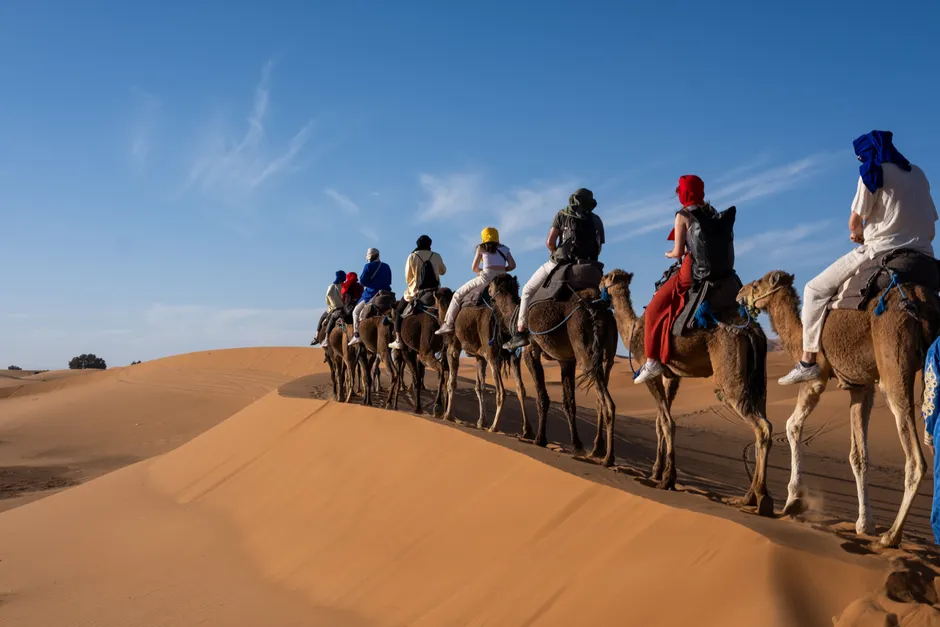
The strategic logic of the tourism push is coherent. Mauritania's stability — real, if contingent — is a comparative advantage in a subregion where most destinations are active conflict zones or recovering from recent ones. The Saharan geography that once made the country a niche adventure-travel destination is unchanged. The question is whether the government can sustain the security environment that makes the pitch credible, while managing the spillover from a Malian crisis it has no power to resolve. Those two variables will determine whether the revival attempt is a footnote or a turnaround story.